





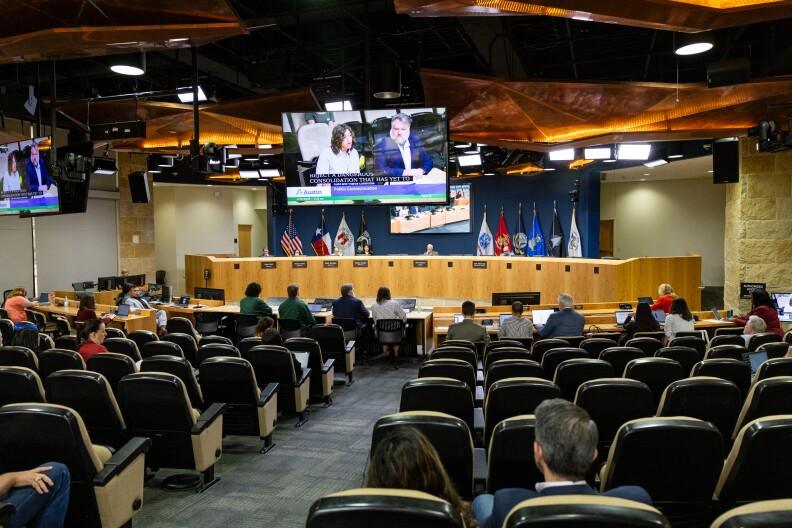
The city of Austin faces significant financial challenges as it prepares to finalize its budget for the upcoming fiscal year. Key programs aimed at supporting low-income families, individuals experiencing homelessness, and survivors of domestic violence may be at risk of funding cuts due to a projected budget deficit.
A preliminary draft of the budget was unveiled recently, outlining anticipated expenditures for fiscal year 2027. The forecast is based on a property tax rate that is expected to maintain revenue levels, allowing for only a 3.5% increase compared to the previous year. This approach means that homeowners with properties valued at approximately $495,000 would see their annual tax bill rise to around $2,074.
Despite this, city officials have indicated a looming budget shortfall of $26.4 million. City Manager T.C. Broadnax previously noted the necessity of reducing social service contracts by nearly $17 million to prevent the deficit from escalating.
The latest forecast reaffirms these concerns, singling out potential reductions in funding for essential services, including permanent supportive housing, workforce development initiatives, and adult education programs. However, the budget does account for a $30 million increase in personnel costs tied to public safety contracts, $3 million to maintain the Marshalling Yard emergency shelter, and $2.8 million earmarked for hiring new firefighters.
These proposed cuts come in the wake of heightened affordability issues within the city, especially following the rejection of Prop Q by voters last November. This measure would have generated $110 million for park enhancements and support for the homeless population. Residents are also grappling with rising costs for everyday necessities such as fuel and groceries.
Mayor Kirk Watson emphasized the importance of transparency in the budget process, stating that sharing potential cuts allows the community to engage in meaningful discussions about priorities and resource allocation. “What we look at in our day-to-day lives — everything from gas to food to just inflation generally is making it less affordable,” he remarked. “So I think it’s appropriate for us to look at what would happen if we didn’t raise people’s maintenance and operations property taxes. Now what that also shows is, in order to do that, do we have to make cuts?”
The property tax framework comprises two components: maintenance and operations, which funds the city’s general expenses, and debt service, which covers bond projects and long-term loans. City officials have indicated that the general fund will receive some additional property tax revenue as new properties are added to the tax rolls.
In addition, the Austin City Council is contemplating a new bond package that would be presented to voters for approval. This package aims to finance enhancements at libraries and city parks, as well as improve pedestrian safety on busy streets like Sixth Street in downtown Austin.
The City Council is anticipated to finalize its budget in the coming months, with budget work sessions scheduled to commence in July and a final adoption expected in August. Residents will have multiple opportunities to express their views on the city’s financial priorities and spending decisions in the months ahead.