







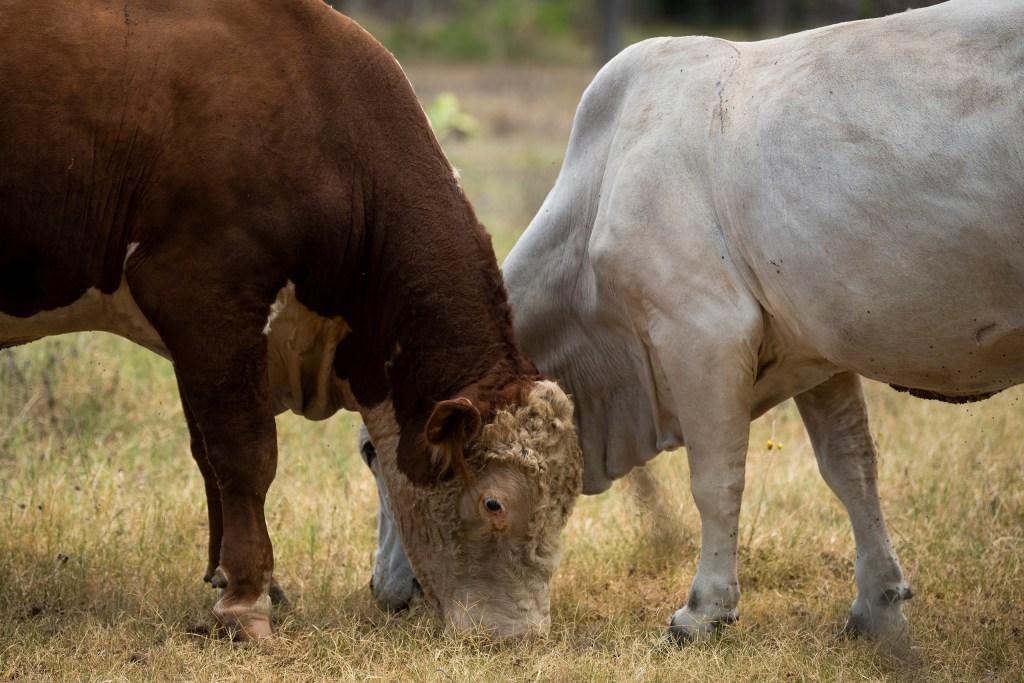
McALLEN — The U.S. Department of Agriculture (USDA) has reported a possible case of New World screwworm, a parasitic fly that poses a significant threat to Texas’s $15 billion cattle industry, in South Texas.
The agency is currently analyzing a sample of the suspected infestation at its National Veterinary Services Laboratories in Ames, Iowa. This announcement was made via social media on Wednesday.
The USDA has already deployed personnel to the area and is collaborating with local partners to address the situation.
This news follows a day after Secretary Brooke Rollins refuted claims from a state lawmaker who suggested that the screwworm was located less than a mile from the U.S.-Mexico border. State and federal authorities have been on high alert for the potential arrival of the screwworm, concerned about its detrimental effects on livestock and the broader agricultural sector.
The screwworm is known to target the living flesh of warm-blooded mammals, particularly cattle and various wildlife. It infects its hosts by laying larvae in open wounds, which then feed on the flesh, resulting in severe injuries or even death. Infections in humans and domestic animals are rare.
The screwworm was eradicated in the United States during the 1960s, having been driven back into Central America. However, cases have since emerged in countries such as Panama, Costa Rica, Nicaragua, and Honduras, with Mexico reporting its first case in 2024.
To prevent the screwworm’s spread, the USDA prohibited live animal imports from Mexico in May 2025, restricting the entry of cattle into the U.S. and impacting Texas’s cattle supply.
U.S. officials are also coordinating with counterparts in Mexico and Panama to once again eradicate the screwworm using the sterile fly technique. This method involves breeding male sterile flies that produce unviable eggs when they mate with females, who typically reproduce only once in their lifetime.
When the screwworm began its spread from Central America to Mexico, there was only one sterile fly production facility in Panama. Since then, U.S. officials have assisted in establishing another facility in Metapa, Mexico, and are currently constructing one in Edinburg, Texas.
Additionally, two fly dispersal facilities have been launched in Tampico, Mexico, and Edinburg, aiding in the distribution of sterile flies to critical locations.
On Monday, state Rep. Don McLaughlin, a Republican from Uvalde, asserted that the fly was just a mile away from Texas. Rollins later dismissed these claims during a news conference, stating that McLaughlin, while well-intentioned, was mistaken.
In response to the USDA’s announcement regarding the suspected case, McLaughlin tweeted, “Well… maybe we should listen to our state representatives.” He further stated, “If this case is confirmed I will stand lockstep with every local, state, and federal agency to work together and fight this horror. As we gather more information and work with different agencies, we will keep South Texas informed and protected.”
In February, Florida officials discovered screwworm larvae in an imported horse from Argentina during the animal’s required importation process. However, they assured that no cases of screwworm had been found outside the quarantine area or in any animals based in Florida.
This story is ongoing and will be updated as more information becomes available.