






What is the story behind the Samurai Blue?
This question may be on the minds of many as the excitement surrounding the FIFA World Cup 2026™ unfolds across the United States, Canada, and Mexico. The Japanese men’s national soccer team, known as the “Samurai Blue,” has captured attention, particularly after their match in North Texas, which has amplified their presence in local media.
Many may have learned that Japanese fans selected this nickname in January 2006, just before that year’s World Cup, while the iconic blue jerseys trace their origins back to the pre-World War II era. However, it may lead some to ponder deeper cultural questions, like “What exactly is a samurai?”
According to Sara Greenberg, Director of Museum Experience at the Crow Museum of Asian Art, the samurai were not merely warriors; their societal roles were multifaceted. “They defined style, represented the upper class, and excelled in literature and the arts,” she explained. The museum, located in Dallas’s Arts District, is currently hosting an exhibit titled “Paper Knife: Objects of Beauty in Early Modern Japan,” which runs until August 29, 2027. This exhibit showcases artifacts that reflect the aesthetic preferences of the samurai and provides insights into their cultural influences.
A brief description in the exhibit highlights the evolution of the samurai class: “Established in the Heian period (794–1185) as warriors, the samurai transitioned into a bureaucratic class by the Edo period (1603–1868), and were ultimately dissolved as a distinct social class during the Meiji period (1868–1912).”
While a samurai might have felt disheartened by the bureaucratic changes that diminished their status, the intrigue surrounding soccer is a positive development. With Japan scheduled to play two matches in Arlington, local fans may find themselves drawn to the team’s rich heritage. The nearby museum exhibit offers an accessible way to explore this cultural connection.
Greenberg emphasizes the invaluable experience museums provide: “They allow visitors to discover new art forms and cultures, igniting curiosity and encouraging further exploration.” International competitions like the World Cup can similarly inspire curiosity and engagement. I attended a special event at the Crow Museum titled “From Dallas to the World: A Toast to a Summer of Soccer,” where guests could explore exhibits in a lively atmosphere. The museum aimed to attract soccer enthusiasts who might be unfamiliar with its offerings, fostering a broader appreciation for Asian cultures through art. I encountered a couple supporting Colombia in the World Cup, marking their first visit to the Crow Museum.
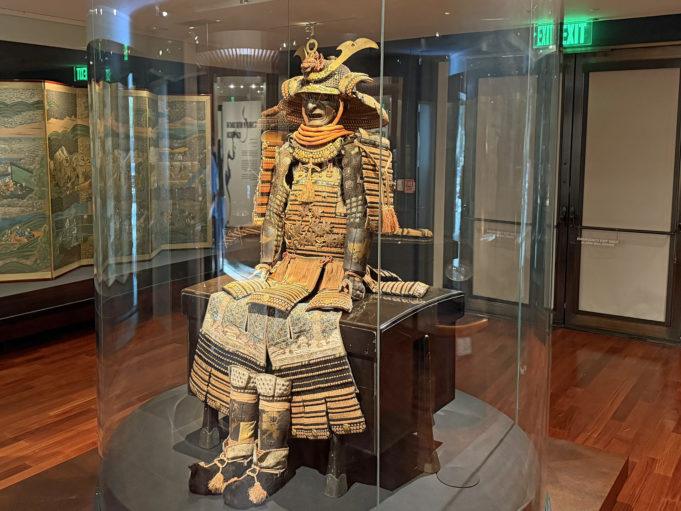
One intriguing aspect I learned was that the samurai class, despite their diminishing role in warfare during the peaceful Edo period, continued to embrace symbols of violence. This may have served to bolster their sense of identity in a time of relative calm. The museum features a striking suit of armor, which, interestingly, was never used in battle. This phenomenon mirrors the role of international sports, which can symbolize nationalism in a non-violent context, although instances of hooliganism and aggressive fouls can occasionally mar the experience.
The design theme for the museum event prominently featured the color blue, representing Japan, who faced off against the Netherlands, characterized by their traditional orange. Before their match, thousands of Dutch fans participated in a peaceful Orange March through Arlington’s Entertainment District, while Japanese supporters and fans from other nations enjoyed the vibrant atmosphere.
During the event, attendees sampled various Japanese beers, and I particularly enjoyed the IPA from the Japanese craft brewery Echigo, which fittingly comes in a blue can. The Sunday match in Arlington concluded with a 2-2 draw, following a late equalizer by Japan. My hope is that supporters from both the Dutch and Japanese teams could gather after the match, regardless of the outcome, to share a drink—be it Japanese, Dutch, Texan, or even the official World Cup beer, Michelob Ultra. This embodies the essence of sports: bridging cultural divides in a multitude of ways.