





A significant dispute has emerged between the state of Texas and the federal government regarding border wall construction near Big Bend. Texas Land Commissioner Dawn Buckingham has issued cease-and-desist letters to federal agencies after a contractor allegedly cleared over a mile of state-owned land without acquiring the necessary permissions.
This action follows Buckingham’s accusations against a federally contracted company for unauthorized land clearance in Presidio County, Texas. She emphasized that this issue transcends border security, focusing instead on the management of Texas land.
The Texas General Land Office claims that the contractor’s actions involved not just the removal of vegetation but also alterations to the terrain on state land. In her cease-and-desist communication, Buckingham warned that legal action may be pursued due to the alleged damage caused by these actions.
Local opponents of the border wall project express growing concerns about the potential environmental repercussions. Yolanda Alvarado, a representative from the No Big Bend Wall Coalition, highlighted the significance of preserving the largely untouched landscape of Big Bend, stating that the introduction of steel barriers could drastically alter the region. She expressed her gratitude for an elected official’s intervention in this matter, emphasizing the importance of safeguarding the environment.
In a statement, Buckingham condemned the actions of the federal contractor, declaring, “It is absolutely unacceptable for any federal contractor to enter and deface Texas state lands.” She reinforced her commitment to protecting Texas’s interests and ensuring that such actions do not go unchallenged.
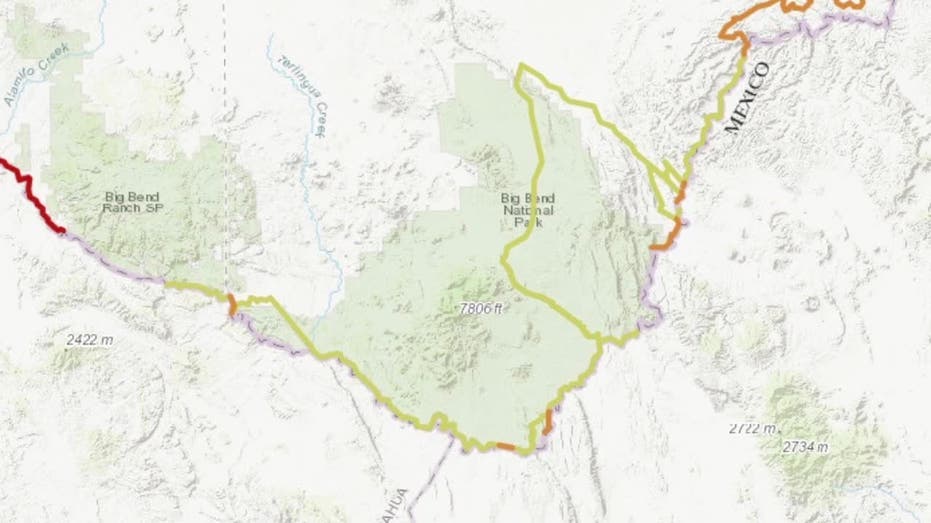
The ongoing situation coincides with changes in the publicly available border infrastructure maps issued by U.S. Customs and Border Protection (CBP). The most recent updates indicate that no physical border wall is planned in or around Big Bend National Park or Big Bend Ranch State Park. However, there are plans for other border infrastructure in West Texas, including a bollard barrier system near Big Bend Ranch State Park, raising additional concerns among local environmental advocates.
Alvarado pointed out that the evolving infrastructure plans have heightened fears regarding potential environmental damage, particularly related to flooding risks associated with any developments along the river.
Further complicating the debate, opponents of the border wall question the necessity of such infrastructure, especially given that the Big Bend sector has historically experienced significantly lower migrant crossings compared to other regions along the Texas-Mexico border. In the midst of the recent border crisis, the Del Rio Sector documented nearly 481,000 migrant encounters in fiscal year 2022, while the Big Bend Sector reported fewer than 32,000.
As this situation unfolds, attempts to obtain a response from U.S. Customs and Border Protection regarding Buckingham’s allegations remain unanswered.