




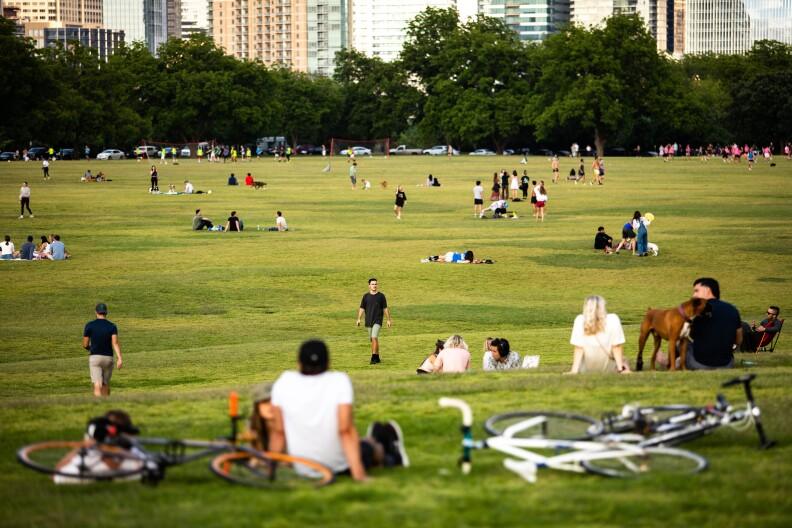
The Austin City Council has taken a significant step forward by endorsing a bond proposal totaling $295 million, aimed at enhancing the city’s parks and libraries. The decision, made on Tuesday, paves the way for voters to consider this funding in the upcoming November election, despite recommendations from city financial staff advocating for a two-year delay.
The council’s vote was 8-3, with Mayor Kirk Watson and council members Marc Duchen and José Velásquez opposing the measure. This decision marks the conclusion of nearly two years of discussions surrounding the need for a tax increase to support capital improvement projects, particularly after last fall’s unsuccessful Proposition Q. While some council members voiced urgency regarding the deteriorating state of local parks and libraries, others, including Watson, argued for a postponement until 2028.
“This bond proposal is small enough that it doesn’t require a major burden on taxpayers,” remarked Council Member Mike Siegel. “City parks and recreational facilities provide excellent opportunities for healthy activities at little to no cost.” The council had initiated plans for a 2026 bond election as early as 2024, forming a task force to address community needs. Initially, staff identified a need exceeding $4 billion, but by early 2026, the Financial Services Department advised limiting any bond election to $750 million due to the city’s financial outlook.
The debate has seen varying opinions among council members, with some advocating for a more modest bond package under $400 million focused on parks and community facilities, while others, including Watson, aligned with financial staff in pushing for a delay. Opponents of this year’s election expressed concerns that the recent defeat of a tax increase indicated a lack of voter readiness for additional property taxes aimed at infrastructure improvements.
If voters endorse the proposal this fall, homeowners with an average property value of approximately $495,000 would face an annual tax increase of about $40, although the actual financial impact would be less if the funds are expended over several years.
Allocation of Funds
The approved bond proposal allocates $260 million specifically for parks and $35 million for library enhancements. The breakdown for parks funding includes:
- $65.5 million for park buildings and facilities
- $65 million for parkland improvements
- $29.5 million for infrastructure upgrades
- $65 million designated for four city pools
- $35 million for new parks and trails
The $35 million earmarked for library funding will be directed toward:
- $20 million for renovation and expansion of the Hampton Branch at Oak Hill Library
- $15 million for a new library and public health center in Colony Park
While the council approved the details of the bond proposal, a separate vote is scheduled for Thursday to finalize its placement on the November ballot and confirm the language that will appear for voters.
Timing Disagreements
Following the rejection of Proposition Q, Mayor Watson has been proactive in pushing initiatives to restore public trust in City Hall’s financial management. This included implementing a “decision tree” to evaluate the appropriateness of calling a bond election in 2026. City financial staff determined that previous bond programs had not reached their defined completion threshold, suggesting a wait until 2028 for a new package. Watson expressed his agreement with this cautious approach.
“We have spent months earning the public’s confidence. We shouldn’t abandon that process because it becomes inconvenient,” Watson stated before the vote. “I’m not against parks or investment; I advocate for disciplined government.”
Advocates for the parks system highlighted the urgent need for funding, noting that the Parks Department has not received bond funding since 2018. Alyssa Vargas, advocacy manager at the Austin Parks Foundation, emphasized the critical condition of local pools and playgrounds, which require immediate attention and repair.
Council Member Duchen, who opposed the bond, raised concerns about the city’s failure to adhere to a consistent five- to six-year bond cycle, which is standard among large cities. “We need to avoid ad hoc bond elections every two years. A strong commitment to systemic changes is necessary for a sustainable approach,” Duchen remarked.
Transportation Funding Excluded
During the council meeting, numerous residents spoke in favor of a bond election, urging funding for parks, community facilities, and transportation improvements. However, a proposal for $92 million dedicated to transportation projects was ultimately excluded from the bond package. Amy De Luna, a resident, cautioned against neglecting active transportation funding, which is crucial for achieving climate and safety goals.
In light of the transportation funding exclusion, Council Member Chito Vela indicated his intention to explore alternative financing solutions for urgent transportation projects, as the city prepares for a possible transportation bond package in the near future.