








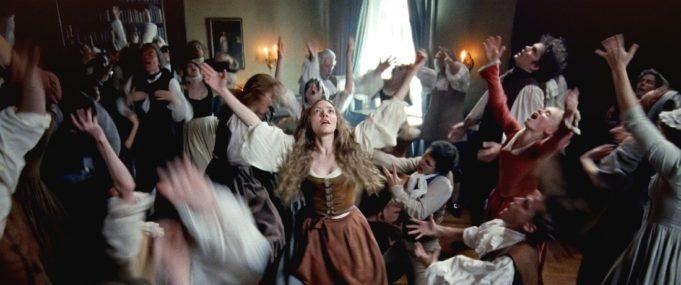
“The Testament of Ann Lee,” a captivating Shaker musical, blends exquisite craftsmanship with profound spiritual themes. This film, featuring Amanda Seyfried, stands out as a remarkable entry in the genre of Christian musicals, even if the competition includes titles like “Godspell,” “Sister Act,” and “The Fighting Temptations.” Unlike many others, this film deliberately distances itself from traditional Broadway influences, presenting a uniquely eccentric narrative that resonates with viewers on a deeper level.
Narrated by Sister Mary, portrayed by Thomasin McKenzie, the film chronicles the life of Ann Lee, played by Seyfried, who rises from humble beginnings in 1730s Manchester. Despite being seemingly destined for a life of factory labor, Ann finds inspiration in the fervent preaching of the time, particularly from the Methodists and Quakers. These influences lead her to challenge the established Anglican church and embrace a vision of God encompassing both male and female attributes. After facing persecution for her boldness in preaching, Ann embarks on a journey across the Atlantic with her followers, ultimately settling in the soon-to-be independent American colonies.
The film is directed by Mona Fastvold, who co-wrote the script with Brady Corbet. Although Fastvold’s previous work, “The World to Come,” did not resonate with all audiences, the musical numbers in “The Testament of Ann Lee” infuse the narrative with an energetic dynamism that elevates the overall experience. The film deftly balances its devotional tone with vibrant choreography, particularly evident in the number “John’s Running Song,” where an elderly financial supporter joyfully runs through the wilderness, singing about their future church.
In moments of true emotional depth, music plays a crucial role, such as in Ann’s poignant rendition of “Beautiful Treasures,” which accompanies a montage depicting her struggles with motherhood and loss. Choreographer Celia Rowlson-Hall injects a sense of ecstatic spontaneity into the Shakers’ movements, particularly in the exhilarating number “Worship,” where dancers create intricate patterns around a stationary camera.
Composer Daniel Blumberg enhances the film’s auditory landscape with a blend of traditional Shaker hymns and contemporary elements, incorporating handbells, electric guitar, and celesta to convey the distinctiveness of the Shakers’ faith. Supporting performances, such as Lewis Pullman’s portrayal of Ann’s supportive yet tormented brother, add layers of complexity to the musical’s rich tapestry.
However, it is Seyfried who captures the audience’s attention with her ethereal soprano in “All Is Summer” and her dynamic stage presence. Her portrayal of Ann Lee transcends typical depictions of religious figures, showcasing a character whose fervent faith is both passionate and tumultuous. Notably, Ann’s arrival in New York City and her vehement protest against a slave auction highlight her commitment to social justice and equality, a theme that underscores the Shakers’ beliefs.
While the film does not fully explore the complexities surrounding Ann Lee’s identity and the claims made about her, Seyfried’s performance remains compelling. She convincingly embodies Ann’s spiritual visions and her role as a leader within her community, guiding a weary new follower through a moment of vulnerability and confession. The nuances of her character reflect the challenges of portraying such a significant figure in Christian history, especially within the context of a musical narrative. Ultimately, Seyfried’s portrayal of Ann Lee feels irreplaceable, marking “The Testament of Ann Lee” as a standout film in its genre.
The Testament of Ann Lee features Amanda Seyfried and Lewis Pullman. Directed by Mona Fastvold, with a screenplay by Fastvold and Brady Corbet. Rated R.