




Recent data from the U.S. Census Bureau reveals a trend of decreased migration to Texas cities amid a nationwide decline in immigration. Nevertheless, Texas remains home to some of the fastest-growing cities in the United States.
Celina, situated roughly an hour north of downtown Dallas, emerged as the fastest-growing city in the country last year, according to the newly released census data. The city experienced a remarkable growth rate of 24.6%, welcoming over 12,710 new residents between July 2024 and July 2025.
Texas boasts eight of the fifteen fastest-growing cities in the U.S., predominantly in the suburbs of the Dallas-Fort Worth area, which is the state’s largest metropolitan region. Conversely, major cities such as Houston, San Antonio, and Fort Worth continue to gain tens of thousands of residents, despite a slowdown in international migration and decreasing birth rates.
However, some larger Texas cities are facing challenges, with six out of the state’s fifteen largest cities—Dallas, El Paso, Arlington, Plano, Irving, and Garland—experiencing population declines. Although Texas remains a high-growth state with a robust economy, the slowdown in immigration under the previous administration has significantly impacted growth rates. Lloyd Potter, the state demographer, noted that El Paso’s population drop likely correlates with the reduced international migration, as many residents relocated elsewhere.
Several other factors are contributing to the state’s population trends. The birth rate in Texas is declining, while the number of deaths is on the rise, according to Potter. Economic uncertainty may also deter individuals from relocating, leading those who do to seek out more affordable areas with better job prospects.
“Texas is still experiencing more growth than any other state,” Potter stated. “I don’t foresee a sudden shift toward population loss or a dramatic slowdown in growth.”
Celina exemplifies the explosive growth of Dallas’ outer suburbs, having more than doubled its population over the past five years. Since 2020, Celina has nearly quadrupled its size, adding over 46,000 residents. Among cities in the U.S. with populations exceeding 20,000, Celina ranks fourth for numerical growth.
Mayor Ryan Tubbs, who relocated to Celina from Allen in 2017, sought a quieter, family-oriented environment with quality schools and a slower pace of life. This appeal has drawn many young families to the area, attracted by perceptions of strong public safety and proximity to major job centers in nearby Frisco and McKinney. While the typical home value in Celina exceeds $500,000, it remains more affordable than in Frisco and McKinney, Tubbs noted.
“It attracts many like-minded young families looking for new communities,” Tubbs explained.
However, Tubbs envisions Celina evolving beyond a mere bedroom community, aiming to compete for major employers within the highly competitive Dallas suburbs. Six of the fifteen fastest-growing cities last year were in the Dallas-Fort Worth suburbs, including Princeton, Melissa, Anna, Forney, and Greenville.
Fulshear and Hutto, located about 45 minutes from downtown Houston and Austin respectively, also ranked among the nation’s fastest-growing cities.
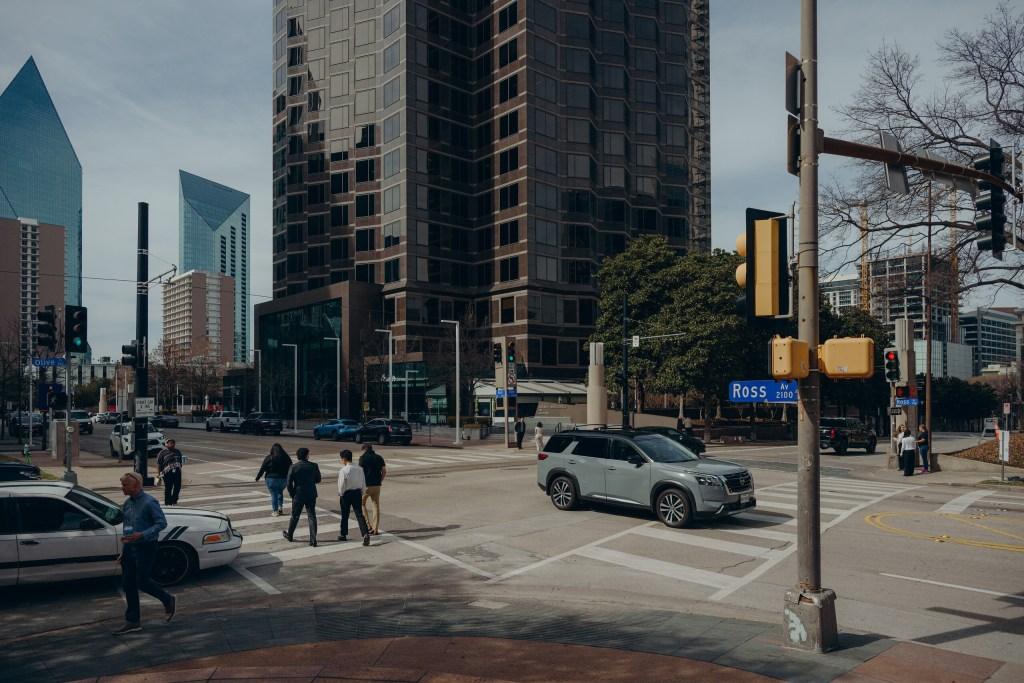
While the suburbs of Dallas are thriving, the core cities are struggling to keep up. Dallas remains the nation’s ninth-largest city and Texas’ third-largest, yet it lost over 1,800 residents in 2025 after witnessing growth for most of the decade. Other major cities in the Dallas-Fort Worth area, including Irving, Garland, Carrollton, and Arlington, also saw declines of over 1,000 residents.
The rapid growth of the suburbs can be attributed to more affordable housing options compared to core cities, as well as proximity to modern schools, parks, and commercial areas. Cullum Clark, director of the George W. Bush Institute’s Economic Growth Initiative, pointed out that perceptions of better public safety also enhance the suburbs’ appeal. In contrast, older areas like Dallas, Arlington, Plano, and Irving are not adding housing or redeveloping at a comparable rate.
“The newness is what draws people in,” Clark remarked.
However, not all urban centers are facing decline. Fort Worth surpassed 1 million residents in 2024, becoming the nation’s 10th largest city in 2025, overtaking Jacksonville, Florida. Fort Worth also recorded the highest numerical population increase in Texas, with 19,512 new residents, placing it second nationally behind Charlotte, North Carolina, which added 20,731 individuals.
San Antonio achieved the third-highest growth in the country, welcoming 14,359 new residents. Houston and Fulshear each added around 11,000 residents, while McKinney saw an increase of approximately 8,500. Austin, too, surpassed the 1 million resident mark, overtaking San Jose, California.
In total, around 65 cities in Texas saw populations grow by at least 1,000 residents between 2024 and 2025, predominantly within the Texas Triangle, which encompasses the Dallas-Fort Worth, Houston, San Antonio, and Austin regions.