








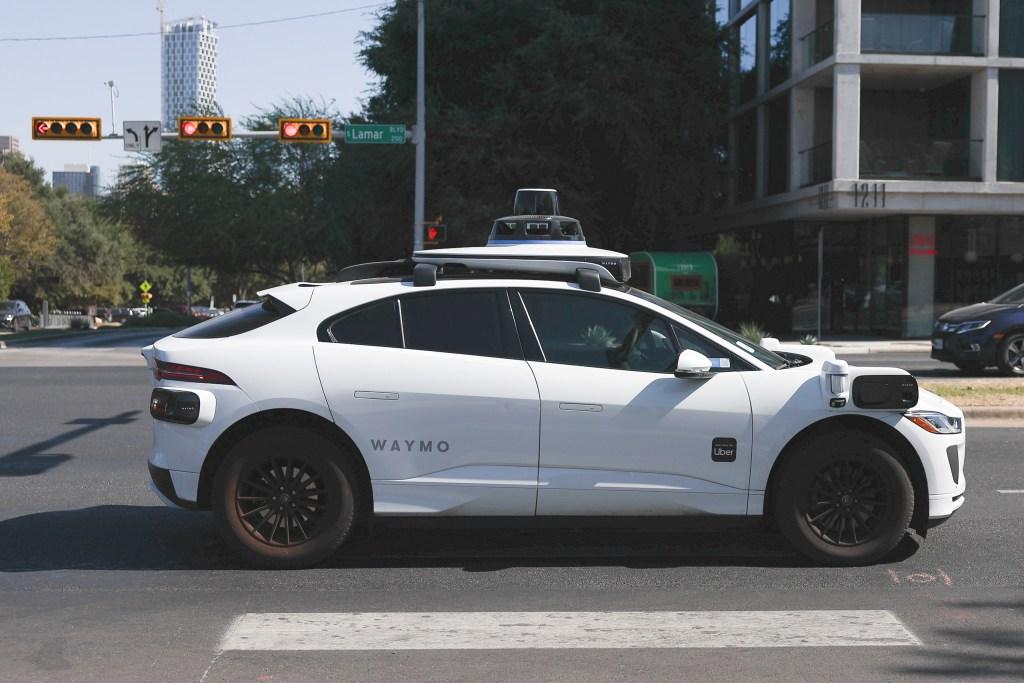
An incident involving an autonomous vehicle during a shooting in downtown Austin on March 1 has raised significant concerns about the effectiveness and safety of self-driving cars. A widely shared image captured a Waymo vehicle obstructing an ambulance as emergency responders attempted to reach the scene where a gunman had killed three individuals and injured 15 others.
The viral video depicts the Waymo vehicle blocking the street, which forced paramedics to find an alternative route to the shooting location at Buford’s in the city’s bustling nightlife area on West 6th Street. An onlooker in the video expressed frustration, stating, “This is why we should not have self-driving cars.”
Local emergency officials have since clarified that the vehicle’s presence did not significantly disrupt the response to the shooting. An Austin police officer arrived on the scene and moved the Waymo vehicle within two minutes, as shown in the footage.
Despite this reassurance, the incident has amplified public apprehension regarding the increasing number of autonomous vehicles on Texas roads. This anxiety persists even though studies indicate that autonomous vehicles generally have a lower fatality rate compared to human drivers. Adie Tomer, a senior fellow at the Brookings Institute, noted that the fatality rates for these vehicles are already significantly reduced and that future advancements in technology are expected to enhance their safety even further.
However, Tray Gober, an Austin personal injury lawyer with expertise in vehicle crash cases, expressed skepticism. “Self-driving vehicles are the future,” he acknowledged, but cautioned that the technology is not yet ready for widespread use. “The future isn’t today because these vehicles are not ready.”
This incident represents another in a series of troubles faced by autonomous vehicles in Austin, which have been known to disrupt traffic, disregard law enforcement, and engage in illegal maneuvers, such as passing school buses while they are stopped for students.
Travis Pickford, assistant chief of the Austin Independent School District Police Department, emphasized the dangers of autonomous vehicles blocking emergency responders during critical incidents, particularly in school zones.
In response to the situation, a Waymo spokesperson reiterated the company’s commitment to safety and its appreciation for first responders, stating their dedication to continuous learning and improvement to enhance service to riders and the broader community.
Following the incident, Texas has prohibited cities from regulating autonomous vehicles since 2017, a decision viewed by many policymakers and transportation experts as essential for industry growth. Last year, Texas legislators instructed the Department of Motor Vehicles to develop additional regulations for autonomous vehicle operations in the state, set to take effect in May.
In the meantime, the deployment of self-driving cars has expanded to more regions within Texas. Just a week prior to the Austin shooting, Waymo began operating in San Antonio, Dallas, and Houston. Other companies, including Tesla, Volkswagen, and Zoox, are also testing autonomous vehicles in Austin, according to the Texas Department of Transportation.
Austin has been a hub for autonomous vehicle testing since the mid-2010s. Despite city officials being unable to regulate these vehicles, they have monitored their activities and collaborated with operators to address operational issues. As stated on the city’s website, Austin officials aim to work with the Texas DMV and companies to leverage their understanding of the local transportation network for safer autonomous vehicle operation.
Following the arrival of the police, an officer quickly took command of the Waymo vehicle and moved it to a nearby parking garage, clearing the road for emergency responders. Jay Blazek Crossley, executive director of the nonprofit Farm & City, remarked on the progress made in managing such incidents, noting that a system now exists allowing police officers to relocate these vehicles, a capability not available four years ago.
Austin officials confirmed that emergency responders adhered to established protocols for interacting with autonomous vehicles. Waymo also provides guidelines for law enforcement regarding its cars and claims to offer training to first responders in the areas where it operates.
Captain Christa Stedman from Austin-Travis County Emergency Medical Services commented that their personnel are trained to manage unresponsive driverless vehicles and that such scenarios are part of their emergency preparedness, which allows for quick resolutions without significantly affecting patient care.
Other Texas cities are also developing strategies to interact with autonomous vehicles. In Dallas, emergency officials are still refining their protocols, while San Antonio’s police and fire departments have received training and quick-reference materials for safely managing these vehicles, including steps to take if a vehicle becomes unresponsive.
While incidents involving autonomous vehicles have been documented, accidents remain uncommon. Austin has noted 230 issues with self-driving cars in 2023, including accidents and near misses, as well as cases where vehicles have ignored police directions or created safety hazards. In contrast, Travis County recorded over 15,000 vehicle crashes in 2024, with only two involving autonomous vehicles.
The situation remains concerning, particularly for school safety. Last year, Austin ISD officials reported that Waymo vehicles had illegally passed school buses with activated stop signs multiple times. While no injuries have occurred, Pickford stressed the potential danger, referencing a recent incident in California where a Waymo vehicle struck a child.
In total, the Austin school district has issued 25 citations to Waymo since August, indicating the company’s awareness of its vehicles’ operations, as evidenced by timely payments of the tickets. At a meeting with Waymo representatives, district officials voiced concerns about the safety risks posed by the vehicles, but the company initially dismissed these worries and declined to suspend operations during school pick-up and drop-off times.
Despite ongoing violations, Waymo implemented a software update following discussions with district officials. The company also collected data on the district’s school buses in December, aiming to enhance its vehicles’ capabilities to recognize and respond appropriately to school bus signals.
In January, a preliminary report from the National Transportation Safety Board revealed that a Waymo vehicle had illegally passed a school bus in Austin due to incorrect guidance from a remote assistance agent. Meanwhile, Texas is establishing its regulatory framework for autonomous vehicles, which will require operators to obtain authorization from the Department of Motor Vehicles before carrying passengers on public roads. Companies must demonstrate compliance with traffic laws and provide plans for emergency interactions with their vehicles.