








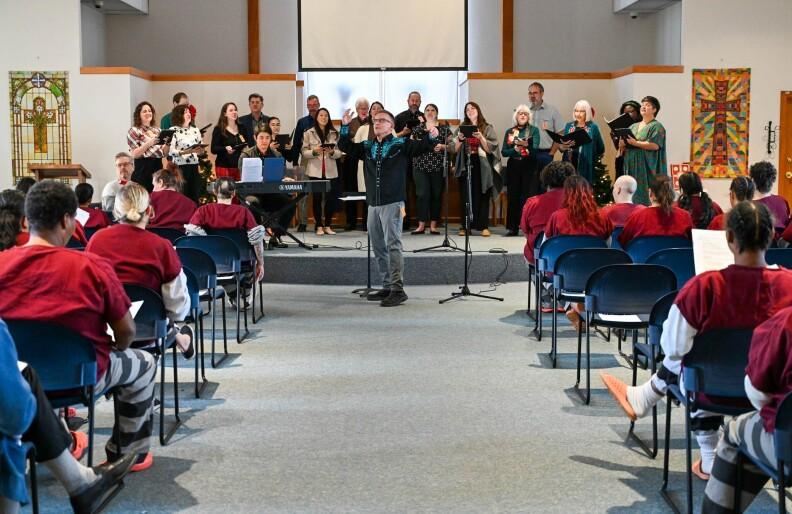
Conspirare, an Austin-based choir, is breaking barriers and fostering connections through music at the Travis County Correctional Complex. Since 2014, the group has made it a tradition to perform annually for female inmates, providing a rare opportunity for artistic engagement within the walls of the correctional facility.
Craig Hella Johnson, the founding artistic director of Conspirare, emphasizes the importance of these performances, stating, “We are meant to be a human family. What right would I ever have to say we should deny someone an opportunity to feel hope and feel comforted?” This sentiment underlines the choir’s mission to bring solace and inspiration to those confined within the complex.
In a recent conversation, Johnson shared insights about the unique logistics involved in staging a concert within a correctional environment. Each choir member must undergo background checks in advance, ensuring compliance with security protocols. Upon arrival, they navigate through multiple layers of security before reaching the chapel where the performance takes place, a setting that becomes a sanctuary for both the artists and the audience.
Johnson reflects on the profound impact these performances have on the choir members. “In the outside world, music can often be viewed as a luxury. But in this setting, it becomes essential—a form of nourishment for those who feel hopeless and isolated,” he explained. The experience serves as a stark reminder of the inmates’ lack of freedom and the inequities within the justice system, where racial disparities are painfully evident.
As the choir sings during the holiday season, the emotional weight deepens, particularly for the mothers separated from their children. Johnson notes, “Every time I’m there, I feel a sense of — there but for the grace of God go I.” He believes that everyone deserves access to the arts, especially in times of despair, and he is committed to offering hope through music.
Drawing from his personal experiences as a gay man from a small town, Johnson understands the importance of connection and recognition. “Music speaks a universal language,” he asserts, reinforcing the idea that the arts have the power to bridge gaps and foster empathy among marginalized groups. His hope is that these concerts will inspire a greater sense of community and understanding, urging people to come together in a divided world.
In a time marked by increasing divisiveness, Johnson envisions these performances as a step towards healing, reminding us of our shared humanity and the need for compassion. “We are meant to be a human family that sees, respects, and cares for one another,” he concludes, expressing a desire for these moments to pave the way for deeper connections.