







The beloved holiday special A Charlie Brown Christmas celebrates its 60th anniversary this year, having first aired on CBS in December 1965. This 25-minute television classic has become an enduring part of holiday tradition, frequently referenced, parodied, and lauded as a national treasure. With such a long-standing legacy, what new insights can be offered to enhance our appreciation of this cherished show?
One surprising aspect of A Charlie Brown Christmas is the initial skepticism surrounding its production. Charles M. Schulz, the creator of Peanuts, had no prior experience in television before collaborating with executive producer Lee Mendelson. Their partnership began after Mendelson produced a documentary about Schulz’s favorite baseball player, Willie Mays. Mendelson, unfamiliar with animation, had assured the ad agency McCann Erickson and their clients at Coca-Cola that he could deliver an animated special in just six months, despite not knowing if it was feasible. To bring the characters to life, he enlisted Bill Melendez, an animator with experience at Warner Bros. and Disney, who also voiced Snoopy.
The animation was completed just ten days before its scheduled airing. When the special was screened for industry insiders in New York, both Mendelson and Melendez feared they had created a disaster. The advertising executives who commissioned the show shared their concerns. The absence of a laugh track, a staple of TV comedies at the time, combined with a jazz score by the Vince Guaraldi Trio, was considered an odd choice. Additionally, Linus’s speech about the true meaning of Christmas was seen as potentially controversial, leading CBS to consider pulling the episode. However, it was too late to find a replacement.
Fortunately, not everyone shared this pessimism. Richard Burgheim, a TV critic for Time magazine, published a favorable review the week of the show’s debut. His positive reception was echoed by other critics nationwide and by viewers, making A Charlie Brown Christmas the second-highest-rated show that week, just behind a new episode of the Western series Bonanza. Though Guaraldi’s soundtrack did not debut on the charts due to the lack of tracking for such albums at the time, it later became the second-bestselling jazz album of all time, trailing only Miles Davis’s Kind of Blue. In response to the special’s success, United Feature Syndicate quickly published a book adaptation, prompting CBS to commission more Peanuts television specials.
The impact of A Charlie Brown Christmas extended beyond its own success, influencing other Christmas specials in the years that followed. CBS invested heavily in Chuck Jones’s How the Grinch Stole Christmas the following year and Rankin-Bass’s stop-motion Frosty the Snowman shortly thereafter. Guaraldi’s “Christmas Time Is Here” has inspired numerous cover versions and was memorably featured in Wes Anderson’s film The Royal Tenenbaums, released during the holiday season. While Schulz may not have anticipated this influence, A Charlie Brown Christmas also left its mark on contemporary shows like South Park, where the characters navigate a world shaped by adult complexities against a backdrop of perpetual winter.
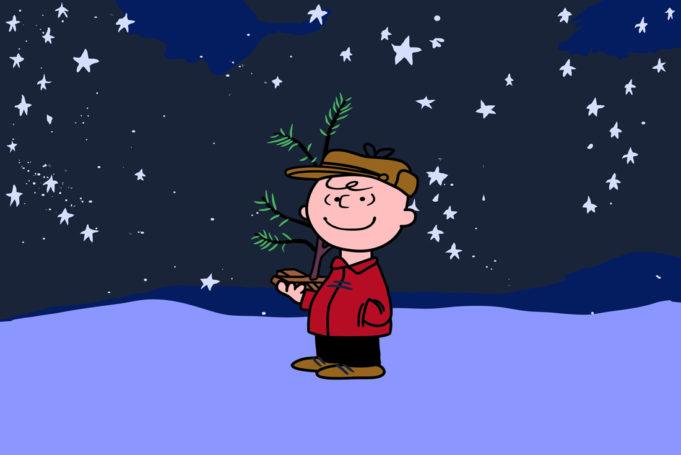
Ultimately, perhaps the best way to honor A Charlie Brown Christmas is to appreciate it for what it is: a poignant tale of Charlie Brown, the Everykid, seeking genuine joy amid the manufactured holiday cheer surrounding him. His discovery of the true Christmas spirit is encapsulated in his affection for the scraggly little tree that he transforms into his own festive icon. In today’s world, he might find it disheartening that his special is no longer available on traditional network television and can now only be accessed through subscriptions to Apple TV+, albeit with a free trial option. Nevertheless, for those who own DVD copies or hold fond memories, the simple joys of this timeless classic remain a cherished part of the holiday season, worthy of a dance to “Linus and Lucy.”