








The animated feature “Forgotten Island” arrives as a celebration of Filipino culture, inviting audiences to immerse themselves in its vibrant narrative.
For those of Filipino descent who have long sought representation in mainstream animation, this film marks a significant milestone. “Forgotten Island” premieres this week, promising to deliver the cultural richness that has often been overlooked in Hollywood.
Even if you do not identify as Filipino, this movie challenges viewers to dive deep into a unique cultural experience that blends Filipino traditions with Spanish and American influences. DreamWorks Animation recognizes the potential of this narrative, aiming to avoid the pitfalls faced by competitors in the past. By launching the film in thousands of theaters across the country, they are making a bold statement about its appeal.
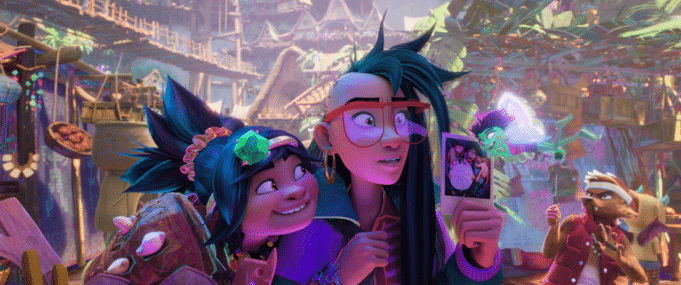
Set against the backdrop of the 1990s, the story follows two teenage friends: Raissa, a socially awkward science enthusiast voiced by Liza Soberano, and Jo, a rebellious spirit voiced by H.E.R. Just before Raissa departs for a new chapter in her life studying rocket science at Caltech, the duo stumbles upon a magical sand dollar that transports them to Nakali, a mythical island filled with fantastical creatures from Filipino folklore, as recounted by Raissa’s late grandmother (voiced by Dolly de Leon).
The enchanting creatures play a pivotal role in the film’s success, with animators bringing to life beings that will be unfamiliar to many Western viewers. Audiences will be captivated by the minokawa, a giant bird that aids the protagonists, and terrified by the manananggal (voiced by Lea Salonga), a winged vampire demon. While a child-eating aswang might present an even greater fright, perhaps that is reserved for a potential sequel.
Similar to “KPop Demon Hunters,” “Forgotten Island” draws inspiration from the hand-drawn aesthetic of 1990s Japanese anime, despite being digitally animated. This stylistic choice allows for the portrayal of endearing yet dangerous creatures, such as the batibat (voiced by Jenny Slate), which consumes people’s memories. The tiyanak (voiced by Manny Jacinto), resembling a giant baby still tethered to his mother by an umbilical cord after 200 years, serves as a helpful character while showcasing the consequences of insulting his mother.
Humor abounds as the girls encounter a community of duendes. Despite warnings about their lethal retribution for disrespect, Jo cannot resist the urge to embrace their king, Trufflewuffle (voiced by Ronny Chieng), after discovering his delightful name.
The film’s cultural authenticity is further enhanced by a soundtrack that features 1990s hip-hop and classic 1980s karaoke tunes performed by older characters. Filipino culinary delights are also prominently featured, from the lechon served at Raissa’s farewell party to banana lumpias offered by the batibat, culminating in a scene where Jo’s fiery mishap at a fried chicken restaurant will leave viewers craving a visit to the nearest Jollibee.
While the film’s climax may feel overly extended with numerous plot threads, “Forgotten Island” maintains a brisk pace and includes humor that transcends cultural boundaries. Notably, the film opens with the DreamWorks logo introduced by beloved characters from the studio’s past hits, yet “Forgotten Island” stands out as a superior offering. This film invites you to ponder its merits over a bowl of pancit bihon.
Forgotten Island
Voices by H.E.R. and Liza Soberano. Written and directed by Joel Crawford and Januel Mercado. Rated PG.