








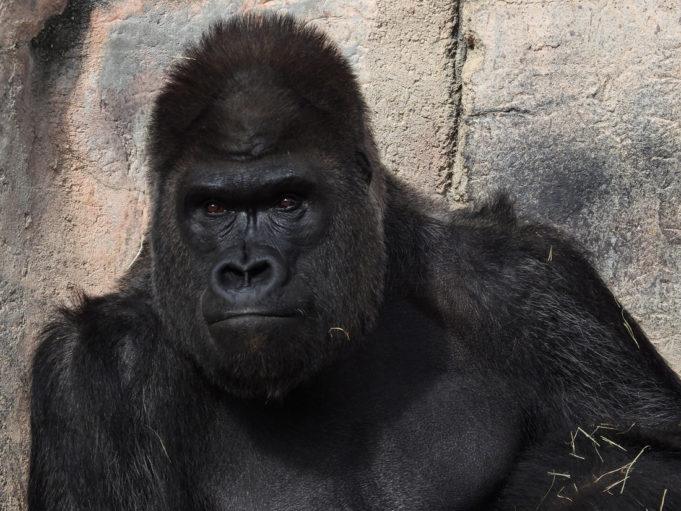
As Gus, a young gorilla at the Fort Worth Zoo, matures into silverback status, a potential power struggle looms between him and his father, Elmo. This transition may ultimately lead to one of them needing to leave the troop.
On a bright morning at the zoo, the vibrant greens and scattered carrots across the gorilla habitat signal the start of the day. Elmo, the seasoned silverback who leads the western lowland troop, sits atop his favored rock slab, surveying his surroundings with a calm yet watchful demeanor. The sunlight glistens in his rich brown eyes as he takes in the activity around him.
Meanwhile, Gus, the energetic 10-year-old gorilla, is already causing playful chaos. He playfully taps his younger brother, Bruno, sparking an eruption of joyful somersaults from the smaller gorilla. Gus is not just a source of entertainment; he is also growing into a significant figure within the troop.
Linda Roberts, the supervisor of the zoo’s World of Primates and a veteran of 35 years, notes that Gus is exhibiting the defining behaviors of an emerging adult male. He has mastered the powerful stance indicative of his mood and emits deep, rumbling sounds when he is displeased. His vocalizations also suggest he is beginning to assert his presence within the troop.
Physically, Gus is transforming as well, developing muscle and a hint of silver-gray fur along his back, marking his approach to becoming a silverback. This evolution is critical, as in both the wild and captivity, only one silverback is permitted to lead a troop, typically overseeing several females and their offspring.
As Gus’s growth continues, the prospect of him challenging Elmo, who has been a protective father figure throughout his life, becomes increasingly likely. Their playful interactions now carry a deeper significance, functioning as tests of strength and dominance.
At 36 years old, Elmo remains a formidable presence in the habitat. While their current relationship is filled with playfulness and bonding moments, zoo staff are mindful of the inevitable changes that maturity brings.
Zoo personnel are closely monitoring the situation and may consider relocating Gus to another facility with a bachelor group of male gorillas his age. This arrangement would provide a valuable environment for Gus to hone essential skills for interacting with other adult gorillas.
Dr. Kristen Lukas, director of conservation and science at Cleveland Metroparks Zoo, emphasizes the importance of social management for young male gorillas. With over two decades of experience, she asserts that these bachelor groups foster lasting bonds and essential social competencies among the gorillas.
Roberts recalls a past encounter with silverback dynamics when Elmo was a juvenile. Facing off against another male gorilla, Kambula, created a tense atmosphere that ultimately led to their separation for safety reasons. Such difficult decisions highlight the emotional toll on both staff and zoo visitors when animals must be moved or separated.
Heartbreak is a common thread in zoo life, as witnessed by the recent challenges faced by Jameela, a baby gorilla born in January 2024. After her mother rejected her, staff worked tirelessly to ensure her care, but she eventually had to be relocated to Cleveland Metroparks Zoo for her well-being.
Gus’s own birth in December 2015 was a time of uncertainty, but Elmo’s protective instincts quickly shone through as he bonded with Gus and his mother, Gracie. Over the years, visitors have formed deep connections with Gus, celebrating his milestones and playful antics.
Local photographer Sharon Martin has been captivated by Gus since his infancy, chronicling his growth and interactions within the troop. The emotional impact of watching Gus evolve into a big brother and companion has resonated with many who visit the zoo regularly.
Beyond the joy they provide, gorillas play a crucial role in conservation efforts. The zoo aims to inspire future generations of scientists and conservationists while maintaining a genetically diverse population of animals.
Western lowland gorillas are classified as critically endangered due to various threats, including habitat loss and disease. Organizations like the World Wildlife Fund are actively working to protect these magnificent creatures and their habitats.
As the day progresses, Gus assumes a dignified pose on Elmo’s favorite rock slab, observing the troop with an air of maturity. This moment serves as a reminder of the bittersweet reality of animal care — cherishing their time while recognizing that changes are inevitable.
“It’s sad, but you do the best you can while you have them,” Roberts reflects. “We know we’re not going to keep them forever.”