








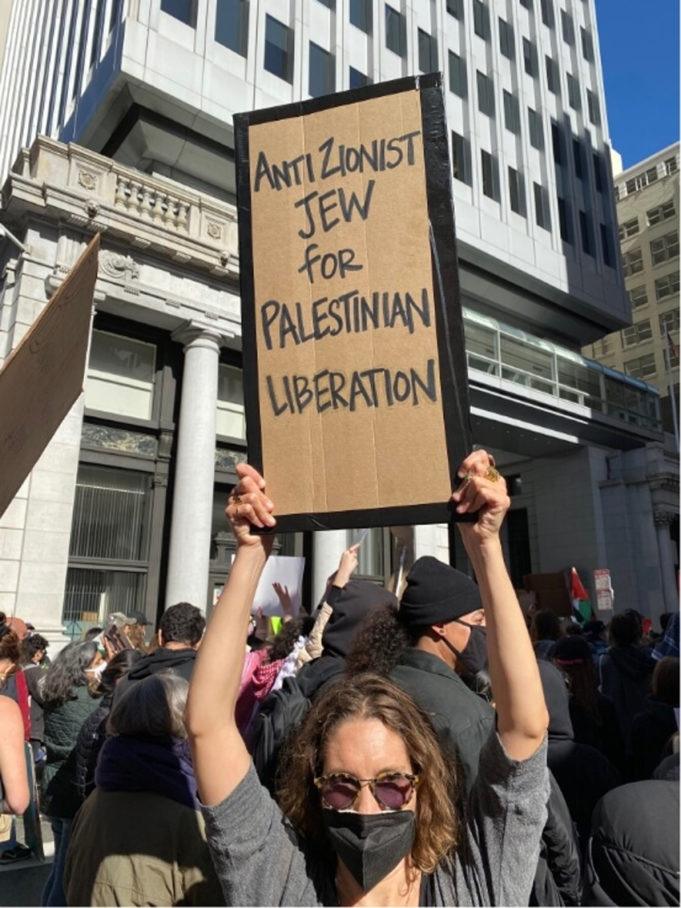
The Dallas-Fort Worth chapter of Jewish Voice for Peace (JVP) stands as one of the largest grassroots organizations in the U.S. advocating for Palestinian liberation while identifying as anti-Zionist within the Jewish community. This organization embodies a complex interpretation of the phrase “Never again,” which resonates deeply within Jewish culture as a solemn remembrance of the Holocaust and a pledge to prevent future atrocities.
This phrase holds varied meanings; for some, it emphasizes Jewish suffering, while for others, it becomes a rallying cry against all forms of systemic oppression. Every May, Jewish American Heritage Month recognizes the myriad contributions of Jewish individuals in the United States, highlighting the diversity of their experiences. The Jewish community is not monolithic; perspectives on Israel and Palestine differ significantly, creating a landscape of both unity and division. In North Texas, the debate on what it means to be Jewish, especially among those who oppose military actions in Gaza, raises critical questions about identity and activism.
With roots in Fort Worth dating back to the mid-19th century, the local Jewish population is small yet vibrant, centered around community synagogues. However, for those who wish to express solidarity with Palestinians, the task is fraught with challenges. The political environment in Fort Worth is complex, characterized by conservative leanings and a significant presence of Christian Zionist groups. For Jewish individuals advocating for Palestinian rights, their activism is often met with misunderstanding and resistance from within their own community. Given the heightened political tensions, many choose to remain silent for fear of alienation from family and friends. To navigate this isolation, activists often seek support through organized groups like JVP-DFW, which aims to embody Jewish values in support of Palestinian advocacy.
Local faith leaders emphasize that this viewpoint aligns with long-standing Jewish traditions. Rabbi Nancy Kasten, a notable Reform rabbi in North Texas and Chief Relationship Officer at Faith Commons, asserts, “My Jewish identity is very much connected to the land of Israel. But I think of Jews as belonging to the land, not vice versa. The Earth is God’s, and Palestinians belong to the land just as we do.” For Kasten, advocating for Palestinian rights fulfills a religious obligation, reflecting a commitment to care for the vulnerable, including the orphan, widow, and stranger. She insists that while Jews have a responsibility to support one another, it must not come at the expense of compassion for those who are innocent.
Engagement in advocacy within a conservative region can elicit backlash, a reality Kasten has faced throughout her interfaith work. However, she finds that the support she receives far outweighs any negative responses. Her involvement in interfaith initiatives is driven not by a desire for political conflict but by a profound sense of grief over the erosion of human decency. “I grieve for our decreasing capacity for human decency,” Kasten shared, viewing her activism as a means of restoring moral and human dignity to a landscape increasingly marked by dehumanizing actions.
As a lifelong proponent of human rights, Kasten was among the many Jewish leaders across the nation advocating for a ceasefire in 2024. She believes that solidarity across different faiths involves a willingness to advocate for each other’s rights, even amid disagreements. The current discourse surrounding global issues underscores the fact that Jewish identity is far from uniform. In light of emotionally charged discussions, Kasten urges the importance of dialogue and the necessity of seeking opportunities for open conversation.
As Fort Worth honors Jewish American Heritage Month, the ongoing conversations illustrate that, even amid uncertainty, there is potential for unity. “We can’t leave these conversations for others to have,” Kasten emphasizes. “Don’t retreat to the news or social media. Work on your active listening skills and put yourself in situations where you can ask and answer questions. Otherwise, our sense of security will diminish rather than grow.”