







In a significant shift for families in Travis County, the wait for affordable childcare has decreased from two years to just a few months. This change comes as a result of the Raising Travis County initiative, which has started to alleviate the burden of high daycare costs for many parents.
Grace Todd, a single mother and graduate student at the University of Texas at Austin, recently received a call that she had been anticipating for three years. After paying over $900 monthly for her daughter Clementine’s daycare, Todd learned she would now only need to pay $150 a month through a scholarship from Raising Travis County. “Which is insane,” she remarked, expressing her relief and optimism about finally being able to save money.
This scholarship program was established following a tax increase approved by voters in 2024, which generates $75 million each year and adds an average of $126 to county homeowners’ tax bills. It represents a groundbreaking step in Texas, being the first program of its kind in the state and among a select few across the country.
Leah Meunier, strategic adviser for Raising Travis County, highlighted the initiative’s focus on supporting children aged three and under, helping them exit the state’s long waiting list for affordable childcare. Since its inception, nearly 300 children have benefitted from these scholarships, with expectations to reach 1,000 by October. Families now signing up are experiencing a wait time of months rather than years.
“That was one of our first priorities,” Meunier stated, emphasizing the importance of getting children into quality childcare so their parents can pursue work and training opportunities, ultimately fostering economic success for their families.
Addressing a Persistent Barrier
Collaborating with Workforce Solutions Capital Area, the nonprofit managing the state’s affordable childcare list, Travis County is facilitating the connection between families and Raising Travis County scholarships. Marjorie Vese Villafranco, a family services manager for Workforce Solutions, noted that the funding is particularly crucial for new parents navigating the challenging landscape of childcare costs.
In Texas, childcare rates are among the highest in the nation, with annual costs averaging around $13,000 per child. Care for children aged three and under tends to be the most expensive, often forcing parents to forgo education or job opportunities, particularly affecting women in the workforce. “This is one of the persistent barriers that keeps parents… from being able to stay in the workforce,” Vese Villafranco explained, adding that support for families leads to increased employment opportunities.
If parents on the waiting list encounter difficulties in finding jobs, Workforce Solutions is prepared to assist them in connecting with employment or training options.
Supporting Childcare Centers
Once awarded a scholarship, children can retain it until they turn 13, provided their families continue to meet eligibility requirements. The program ensures that families will not spend more than 7% of their annual income on childcare expenses.
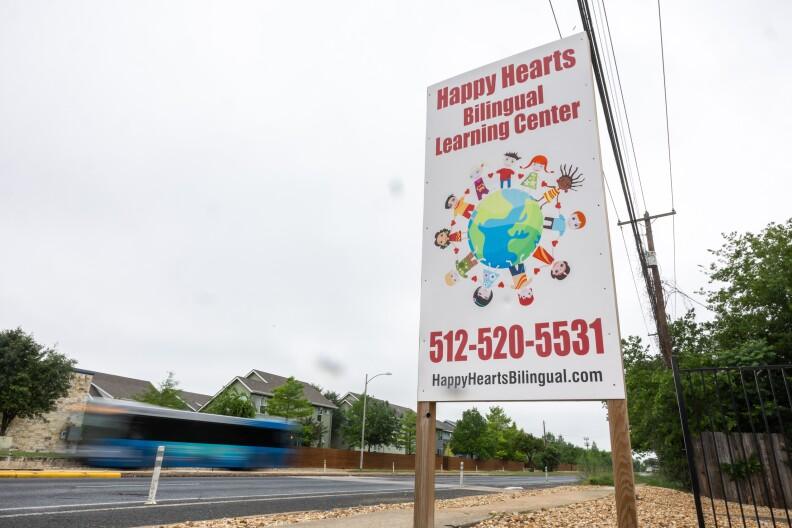
Another key focus of Raising Travis County is providing financial support to childcare centers, enabling them to enhance staff salaries and improve facilities. So far, the initiative has distributed $2.6 million to 150 daycare centers. Mari Sillero, director of Happy Hearts Bilingual Learning Center in South Austin, noted that many centers accepting state subsidies have historically not received full compensation for their services, leading to financial strain.
“It’s the nature of the industry that we are in… we face financial struggles,” Sillero remarked. However, she acknowledged that the funding from Raising Travis County has helped ease operational challenges. Recently, she increased starting wages for new hires, improved paid vacation time for teachers, and hired a curriculum specialist, resulting in a 30% boost in staff retention.
“A teacher that was wearing three hats now doesn’t have to wear three hats,” Sillero said, reflecting on the positive changes. “Now they can wear two. Now they can wear one. The goal is, everybody wears one.”