






The election may have concluded, but the journey toward holding Texas officials accountable has only just begun. Governor-elect Gina Hinojosa engaged in a conversation with former President Donald Trump regarding border security, conveying that residents near Big Bend National Park prefer electronic monitoring over a physical border wall. This revelation came during a comprehensive interview she conducted on Wednesday.
“He acknowledges my commitment to maintaining a secure border,” Hinojosa stated. “I reached out to him to ensure he has a direct line to me, and our discussion was very constructive. He expressed a willingness to assist Texas, and anyone who seeks to support Texas is a friend of mine.”
Although Hinojosa did not disclose whether Trump made any specific commitments concerning Big Bend, she characterized their dialogue as “the first of what I hope will be many discussions.”
In her interview, she expressed intentions to annul several executive orders and agency directives established by Governor Greg Abbott, including one that instructed state agencies to identify public lands for the detention of migrants. She also intends to lift Abbott’s hiring freeze on H-1B visa holders within state agencies and public universities, as well as his prohibition on selling hemp-derived THC products to individuals under 21.
“I’m not engaging in culture wars. That’s not the mandate I was given,” Hinojosa remarked concerning the H-1B visa freeze. She acknowledged the program’s misuse but emphasized that numerous school districts depend on H-1B teachers.
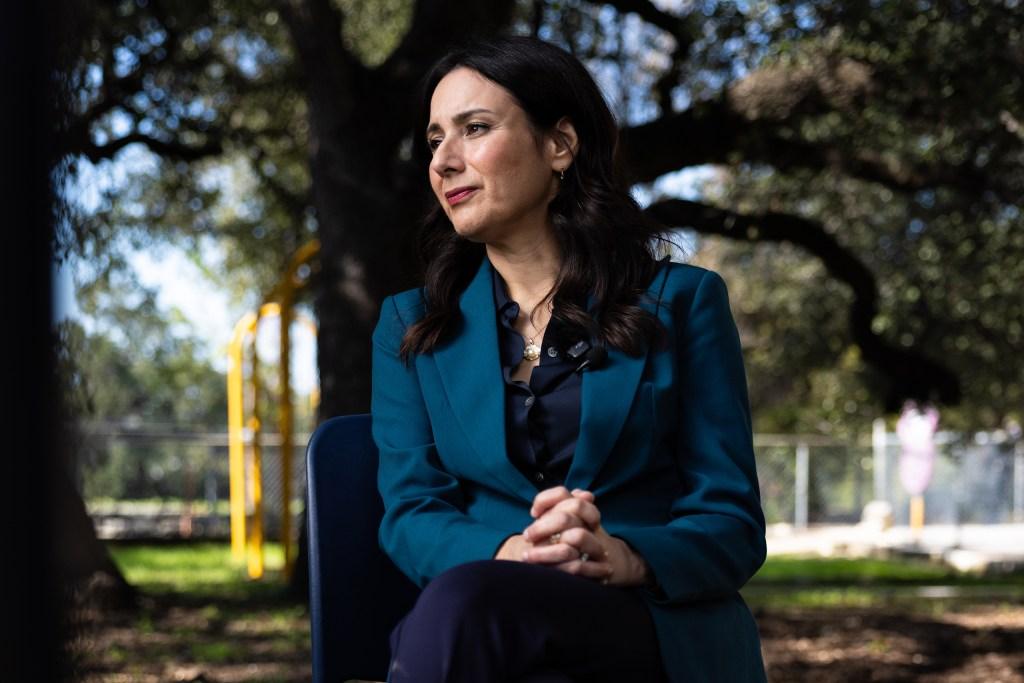
Hinojosa shared insights regarding her conversation with Trump and her plans for reversing Abbott’s executive actions during an interview with The Texas Tribune. The discussion encompassed a wide range of topics, including public education and immigration, as well as her collaboration with fellow Democrats elected on November 3 to steer state governance.
Throughout her campaign, Hinojosa criticized Abbott for prioritizing the interests of major donors and corporations over the needs of everyday Texans. In the interview, she affirmed her commitment to introducing new anticorruption and ethics regulations in the upcoming legislative session.
She also indicated her desire for the Legislature to repeal a law, referred to by opponents as the “Death Star” bill, which prohibits cities and counties from enacting measures that deviate from state law. Furthermore, she aims to shift away from the Teacher Incentive Allotment—a performance-based teacher compensation scheme—toward a salary model that increases pay for all teachers.
Hinojosa, who will assume office on January 19, spoke from Pease Elementary, her son’s former school. The school faced closure threats, which prompted her to run for the Austin ISD school board in 2012. The district is currently collaborating with United Way for Greater Austin to transform the previously closed campus into an affordable early childhood education center.
In response to questions about public education, Hinojosa expressed her commitment to overhauling the private school voucher program, particularly advocating for increased access to pre-K education. “Our schools are in crisis, and we need to address the urgent needs of families seeking pre-K assistance,” she stated, emphasizing the necessity for legislative responsiveness.
When asked about her expectations for the voucher program’s future, she remained skeptical about any substantial funding increases. Hinojosa also reiterated her commitment to ending state takeovers of school districts, aiming to restore local control and engage with each district on an individual basis.
Hinojosa highlighted the importance of accountability at the state level, condemning the underfunding of public schools and asserting that the state bears significant responsibility for the current crisis in education. She reaffirmed her intent to prioritize teacher pay increases, aiming to ensure that Texas teachers are among the highest paid in the nation.
On the topic of performance-based pay, Hinojosa expressed her disfavor for the Teacher Incentive Allotment, advocating instead for a more equitable compensation model for all educators. “Teachers should not have to navigate additional hurdles to receive fair compensation,” she explained.
Transitioning the discussion to ethics and accountability, Hinojosa reiterated her campaign stance that corruption is detrimental regardless of political affiliation. She plans to prioritize ethics reforms in collaboration with the Legislature, aiming to restore public trust in government.
She expressed optimism that even within a Republican-controlled Senate, there would be bipartisan support for ethics reforms, emphasizing that good governance should not be a partisan issue. Hinojosa also plans to declare a cost of living emergency on her first day in office to freeze electricity rates, indicating her intent to address the burdens faced by Texans due to high utility costs.
When discussing the relationship between state and local governments, Hinojosa emphasized the importance of collaboration and respect for local community needs. She expressed a desire to ensure local governments are empowered to address the unique challenges faced by their constituents.
Hinojosa affirmed her commitment to repealing the “Death Star” bill and addressing property taxes by auditing contracts and programs to identify savings for property tax relief. She confirmed she is actively reviewing Abbott’s executive orders, expressing her intention to revoke those that do not align with her vision.
As she prepares to take office, Hinojosa is also focused on appointing individuals to key positions who share her priorities, including the secretary of state. She aims to rectify issues related to voter application processing and accessibility to ballots.
In conclusion, Hinojosa remains committed to pursuing a collaborative agenda that prioritizes the needs of Texans, addressing issues such as border security, education, and ethics reform as she transitions into her new role.