








WACO — The atmosphere at Third Future Schools is distinctly different from traditional educational settings, as school bells and announcements are notably absent from the daily routine.
This nonprofit charter organization provides its teachers with competitive salaries, but those educators are required to adhere strictly to a prescribed curriculum while also working longer hours and extended school years compared to their counterparts. The schools operate from 6:30 a.m. to 6 p.m., offering complimentary before- and after-school care to students.
Third Future Schools, along with the districts that have enlisted its services for school improvement, claims a solid record of success, albeit at a financial cost.
The Waco Independent School District (Waco ISD) is poised to become the latest Texas district to collaborate with Third Future in a bid to avert state intervention.
District officials indicated that negotiations for the contract were ongoing, and precise cost estimates for the partnership would not be available until Monday, coinciding with a school board meeting scheduled to approve the contract for South Waco and Dean Highland elementary schools. This special meeting will take place at 5 p.m. in the Waco High School cafeteria.
Officials from Third Future Schools have not responded to interview requests this month regarding the specifics of the partnership, and Waco ISD Superintendent Tiffany Spicer was also unavailable for comment. However, Waco ISD has shared a video on its website that outlines the initiative broadly.
Earlier this month, Waco ISD provided the Waco Bridge with information related to Third Future, which had been requested on March 2 under the Texas Public Information Act. This information is currently under review.
A look at other Texas school districts that have partnered with Third Future reveals the firm employs a unique and highly structured pedagogical approach.
Third Future has been operational in various districts, including Ector County, Midland, Beaumont, Austin, and Jasper ISDs. Recently, Killeen, San Antonio, and Edgewood ISDs have also approved partnerships with the organization.
Similar to Waco ISD, these districts are seeking to revitalize low-performing schools that risk triggering state intervention. For instance, South Waco Elementary has received “F” grades for four consecutive years within the state accountability framework, with a fifth failing grade potentially leading to a state takeover of the entire district. Dean Highland has also faced three successive failing grades.
Senate Bill 1882 permits school districts to partner with external entities to operate struggling schools under an in-district charter system, providing a two-year respite from intervention while also offering additional state funding. Third Future Schools, established by Mike Miles, a state-appointed superintendent for Houston ISD, is the only charter organization authorized by the Texas Education Agency to manage multiple schools.
Financial details regarding Texas schools managed by Third Future are not easily accessible.
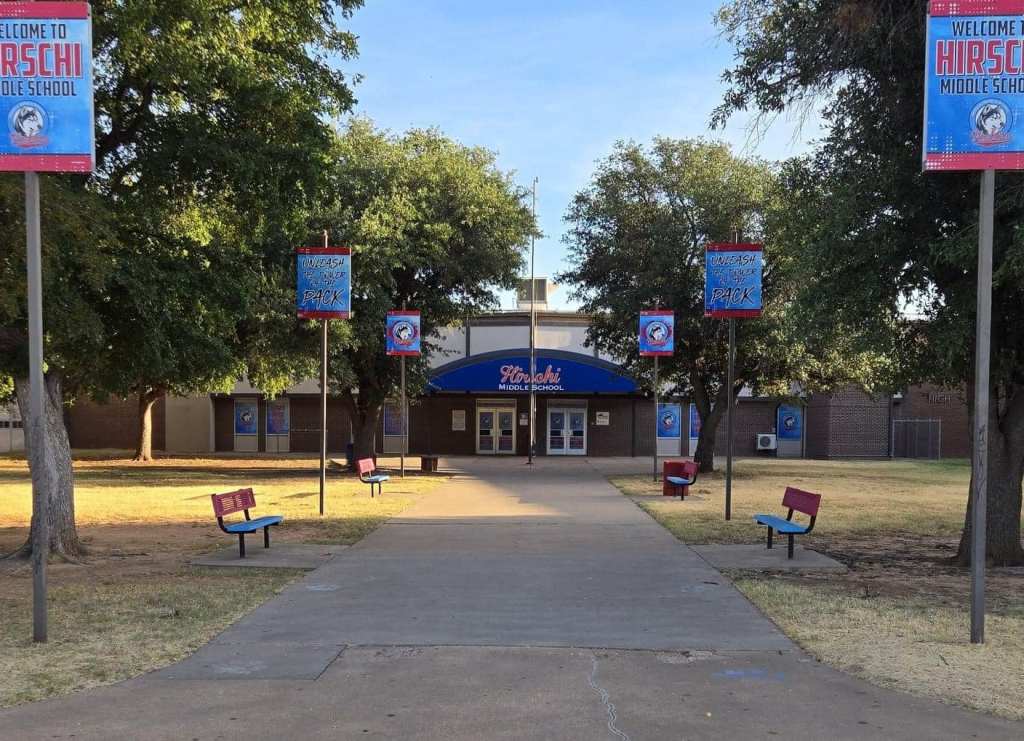
In Wichita Falls ISD, officials plan to pay Third Future $375,000 monthly to operate Hirschi Middle School starting in fall 2025. This amounts to approximately $3.3 million annually, based on a nine-month academic calendar.
With an enrollment of 650 students, this translates to around $5,076 per student per year. Wichita Falls ISD representatives clarified that this fee encompasses costs related to teachers, administrators, and other associated expenses.
South Waco Elementary has around 610 enrolled students, while Dean Highland has 573. If Third Future were to charge the same per-student fee as in Wichita Falls, the annual revenue from Waco ISD could reach about $6 million. However, district officials noted that the cost structure for a middle school in Wichita Falls may not directly apply to elementary schools in Waco.
Waco ISD has allocated $5.1 million for South Waco Elementary and $4.8 million for Dean Highland Elementary in the 2025-26 budget, with staffing costs making up the majority of these figures.
In Wichita Falls, Third Future Schools emerged as the solution the district needed to prevent a takeover of a struggling campus.
Officials report a significant shift in campus culture since Third Future began managing the school just four months ago.
“We realized that simply maintaining the status quo would not yield quick results,” said Wichita Falls ISD Superintendent Donny Lee. “We needed immediate and sustainable improvements, which is precisely what we sought to achieve.”
At Hirschi Middle School and other schools overseen by Third Future, the organization typically recruits teachers from outside the district, offering higher salaries starting at $75,000, compared to the standard starting salaries of $51,000 in Wichita Falls ISD and $54,000 in Waco ISD.
In Midland ISD, Third Future provided an additional hiring bonus of $10,000, as detailed in its 2022-2023 staffing plan.
Under SB 1882, districts are eligible to apply for additional state funding to help mitigate the costs associated with partnerships. Wichita Falls received $800,000 in state aid to offset the $3.3 million annual expenses for Third Future. Officials indicate it is premature to evaluate the total expenses for Hirschi Middle School before and after the agreement.
Meanwhile, Manor ISD, located east of Austin, secured $779,000 in grant funding from the Texas Education Agency in 2025 to facilitate its partnership with Third Future Schools for Manor Middle School.
According to the superintendent of Wichita Falls, the collaboration with Third Future has resulted in marked academic improvements at Hirschi Middle School. In just four months, students have demonstrated academic growth equivalent to 1.6 years, with projections suggesting a total of three years’ growth within a year.
When Lee joined Wichita Falls ISD in 2022, Hirschi had a history of failing ratings from 2016 to 2019. District leaders felt that a bold and innovative approach was necessary to revitalize the campus.
“We exhausted every traditional method imaginable, yet we were not seeing the desired outcomes,” Lee explained. “It became clear that it was time for a different strategy. We look forward to reviewing the results in August to assess the improvements in our students’ academic performance, particularly in math and reading. We are confident that we will witness something remarkable.”
Since Third Future Schools took over Hirschi, a noticeable shift in school culture has been evident, according to Lee.
Students are actively engaged in learning, with teachers utilizing timers to maximize instructional time. The absence of bells and announcements is a hallmark of Third Future’s approach, with every minute of instruction carefully planned.
Teachers typically instruct for three to four minutes, followed by assessing students’ comprehension of the material. Students display their answers on whiteboards and collaborate with peers to confirm understanding. After a 20-minute learning demonstration, students answer five questions to gauge their grasp of the content. Those who excel may advance to the learning center for more challenging material, while those who struggle will revisit the lesson.
“Gifted students are no longer penalized for their abilities; they receive enriched instruction,” Lee noted. “There is no such thing as free time.”
At the learning center, students engage with educational software on their computers.
The partnership with Third Future Schools is set to expand in Wichita Falls, incorporating two elementary schools that feed into Hirschi Middle School: Southern Hills and Booker T. Washington.
While there has not been a noticeable increase in enrollment since the partnership began, the majority of staff members have left, with only three to five teachers remaining.
“However, many of the new teachers at Hirschi have relocated from various parts of Texas,” Lee remarked.