







Sign up for The Brief, a daily newsletter designed to keep readers informed on the most critical news from Texas.
Audio recordings are automated for accessibility, while humans wrote and edited the article. Feedback on our AI policy is welcomed.
EL PASO — Immigrants held at Camp East Montana at Fort Bliss have reported being pressured by U.S. Immigration and Customs Enforcement (ICE) officers to cross into the Mexican desert, even if they have no ties to Mexico, or face incarceration in third countries, according to a letter from human rights organizations to the federal border protection agency.
The facility has been described as a “human and civil rights catastrophe” by the American Civil Liberties Union (ACLU) and other groups in a letter sent to ICE and Fort Bliss officials. They are calling for the camp’s closure, citing allegations of physical abuse, sexual violence by officers, medical neglect, food shortages, and restricted access to legal representation.
The report claims that several detainees have sustained serious injuries as a result of these abuses, including one teenager who reportedly lost consciousness and required hospitalization after being forcefully thrown to the ground.
“Officers have engaged in a pervasive and unreasonable pattern of excessive force, including abusive sexual contact while employing physical restraint,” the organizations stated in a press release.
Neither the U.S. Department of Homeland Security nor Fort Bliss responded immediately to requests for comment. DHS Assistant Secretary Tricia McLaughlin asserted that “no detainees are being beaten or abused” and that all individuals being deported to third countries receive due process protections.
The 19-page letter follows extensive interviews with over 45 detainees at Fort Bliss and includes 16 sworn statements from individuals held at the facility, as noted by the ACLU in their press release. The organizations are demanding a comprehensive investigation into all reported abuses.
Other signatories of the letter include the ACLU of New Mexico, the ACLU of Texas, Estrella del Paso, Human Rights Watch, Las Americas Immigrant Advocacy Center, the New Mexico Immigrant Law Center, and the Texas Civil Rights Project.
“We cannot ignore what is occurring at Camp East Montana. After interviewing numerous detained immigrants, the evidence is clear: abuse, neglect, and unsafe living conditions are pervasive,” stated Estrella del Paso, a nonprofit associated with the Catholic Diocese of El Paso, in an Instagram post urging for “immediate action and accountability.”
Third-Country Removals
The organizations are urging the administration to suspend all third-country removals from Fort Bliss, including the deportation of non-Mexican immigrants to Mexico, until adequate procedural safeguards are established.
The ACLU report alleges that ICE officers have handcuffed non-Mexican detainees at Camp East Montana, transporting them over an hour to the U.S.-Mexico border near Santa Teresa, New Mexico. Masked officers allegedly instructed detainees to “jump” into Mexico for deportation.
These reported actions to force individuals into Mexico are said to violate both U.S. and international laws regarding third-country deportations, which require consent from the receiving country and assurances against persecution or abuse for those being returned.
In one sworn statement, a Cuban immigrant at Fort Bliss recounted being handcuffed along with approximately 20 others, placed on a bus, and driven to the border, where they were ordered to exit the vehicle and enter Mexico.
“If we refuse to go to Mexico, we would either be sent to jail in El Salvador or Africa,” said Isaac, a pseudonym used to protect his identity, in his declaration. He reported being assaulted by guards, who allegedly slammed him against the wall multiple times and physically abused him.
Detainees who declined to cross into Mexico reportedly faced threats of criminal charges, long-term imprisonment, or violence, according to similar testimonies from other Cuban immigrants.
It remains unclear from the detainees’ accounts whether any migrants crossed into Mexico under the described conditions. Some affidavits indicate that those who signed what appeared to be voluntary deportation papers were separated from those who refused and were not seen again.
Third-country deportation refers to the practice whereby the U.S. sends individuals to a country that is neither their home nor their country of citizenship.
While historically uncommon and based on individual cases, this practice surged during the second Trump administration as a means to remove or intimidate immigrants who could not be returned to their home countries due to persecution risks, as reported by the American Immigration Council.
Such actions, including transfers to places where individuals may face imprisonment or danger, raise significant concerns regarding compliance with U.S. laws that prohibit deportation to countries where individuals may be persecuted or tortured.
In June, the U.S. Supreme Court temporarily upheld the Trump administration’s third-country deportation policies, blocking a lower court’s order requiring 15 days’ notice. The Supreme Court’s decision is pending as an appeal is expected to be heard in federal court in Massachusetts this month. In July, ICE informed its personnel that they could remove individuals to third countries with only six hours notice.
The ACLU contends that the practice of detaining immigrants and forcing them to cross into Mexico contradicts the established protocols governing third-country deportations, including ICE’s own guidelines following court rulings.
Allegations of Medical Neglect and More
Other allegations detailed in the ACLU report include:
- Medical neglect: Detainees have reported delays or denials in receiving medical, dental, and mental health care, including failures in administering prescription medications timely, despite chronic health issues.
- Food and hygiene: Conditions have been described as unsanitary, with detainees reporting inadequate food portions, spoiled meals, and insufficient hygiene supplies, coupled with unsanitary living environments.
- Restricted access to legal counsel: Access to attorneys and legal resources is severely limited, with reports of a non-functional law library, restricted phone access, and blocked or delayed legal visits.
- Limited access to recreation: Detainees have described minimal access to outdoor activities or fresh air, with some stating they have gone weeks or months without exposure to sunlight, violating standards for detainee welfare.
A detained teenager, referred to as Samuel for his safety, reported being beaten by officers, sustaining injuries across his body and breaking a front tooth after being thrown to the ground.
Samuel claimed that one officer “grabbed my testicles and firmly crushed them,” while another “forced his fingers deep into my ears.” He described feeling dizzy and struggling to remain conscious while an officer mocked him for his chipped tooth, stating that Samuel was “like a little girl.” Samuel eventually lost consciousness and was transported to a hospital by ambulance.
Continued Allegations of Abuse at Camp East Montana
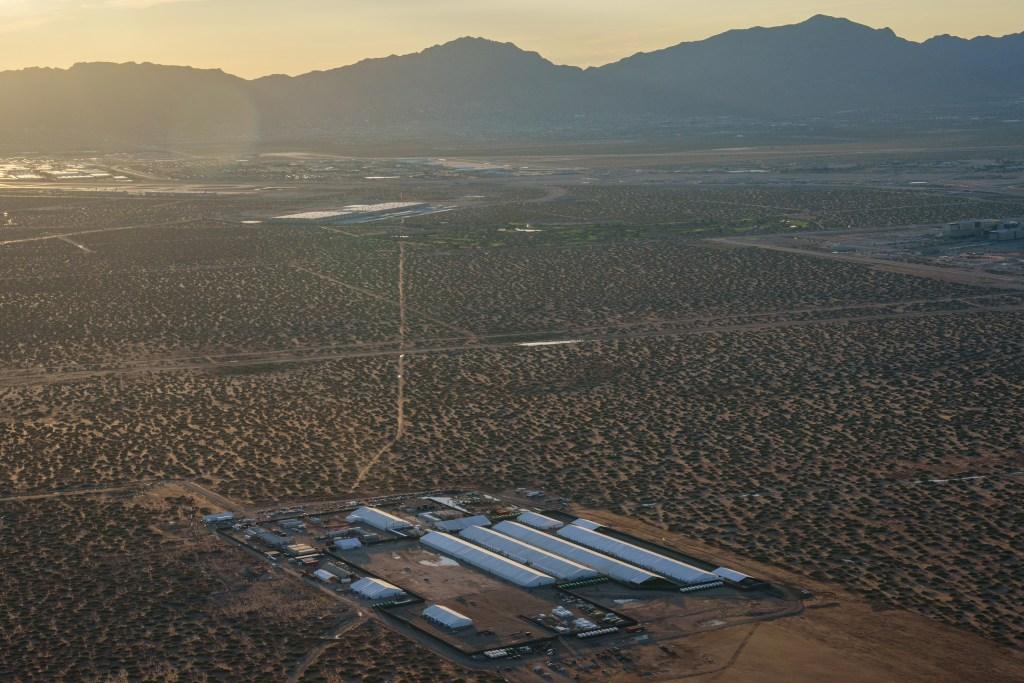
Camp East Montana, which began operations in August, initially functioned as a construction site and now houses over 2,700 men and women. This expansion of immigration detention reflects a militarization trend under the Trump administration. Reports indicated that the facility violated over 60 federal detention standards within its first 50 days, based on a leaked internal ICE inspection report.
DHS has labeled the report as “false and misleading,” with McLaughlin asserting that claims of inhumane conditions at ICE detention centers are “categorically false.” She stated that all detainees receive proper meals, medical care, and opportunities to communicate with their attorneys and families.
The $1.2 billion facility is projected to expand to accommodate about 5,000 detainees, making it the largest federal detention center for civil detainees in the country. It is financed by the Department of Defense under a reconciliation bill that allocated $45 billion in supplemental funding to double migrant detention capacity nationwide to 100,000 beds.
In a letter to DHS Secretary Kristi Noem and ICE Acting Director Tom Lyons, Democratic U.S. Representative Veronica Escobar described the conditions at Camp East Montana as “dangerous and inhumane.”
“These conditions have persisted since the facility opened in early August, and only seem to be worsening,” the El Paso congresswoman noted. “It is increasingly evident that this is neither a safe nor professionally managed facility.”
She criticized the staff’s inability to maintain accurate population counts and demanded clarification regarding staffing levels, vendor changes, and operational protocols.
Escobar emphasized that individuals held at Camp East Montana continue to endure unsafe and unhealthy conditions, including poor-quality drinking water, inadequate food, and inconsistent laundry services that compel some detainees to wash their clothes in showers. She also highlighted unsanitary dormitories and issues with flooding and sewage backups.
Disclosure: ACLU Texas has financially supported The Texas Tribune, a nonprofit, nonpartisan news organization funded in part by donations from members, foundations, and corporate sponsors. Financial backers do not influence the