
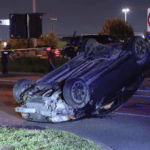



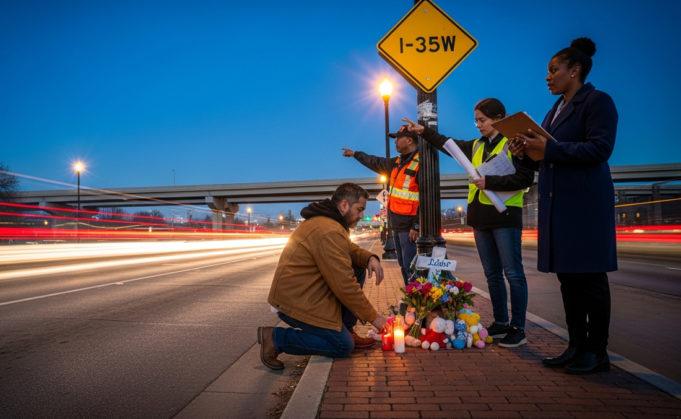
In Fort Worth, the familiar evening traffic along Camp Bowie Boulevard often transforms into a scene of devastation, as recent weeks have revealed a troubling surge in severe and fatal accidents. This alarming trend has cast a shadow over the commutes of countless families, as the increasing frequency of incidents on Camp Bowie Boulevard and Interstate 35W raises urgent questions about public safety in the area.
The Anatomy of a Cowtown Danger Zone
The location and nature of this crisis are becoming increasingly evident. Rather than being isolated incidents, these accidents are clustered along key routes that thousands of residents rely on daily. Each of these roads presents its own unique hazards, combining design flaws, high speeds, and human error to create a lethal environment for drivers and pedestrians alike. Recent events illustrate just how rapidly a routine drive can escalate into tragedy.
Camp Bowie’s Urban Chaos: The historical significance of Camp Bowie Boulevard is overshadowed by the violence it has recently witnessed. Designed to accommodate high-speed traffic and business access while also catering to pedestrians, the road has become a site of conflict. A police chase in early March tragically culminated in the death of 33-year-old Sam Chavarria, who crashed his vehicle into a tree after allegedly fleeing from a previous accident. Just days later, a pedestrian in a wheelchair was struck and killed while attempting to cross the boulevard, underscoring the precarious situation for those on foot in an area that prioritizes vehicular speed over safety.
The I-35W Gauntlet: In contrast, Interstate 35W exemplifies the harsh realities of high-speed travel. This major north-south corridor, vital for commuters and freight transport, has witnessed a string of catastrophic collisions. In late February, a two-vehicle crash on the I-35W service road near Risinger Road resulted in two fatalities and severe injuries, one vehicle igniting in flames. Another serious incident later that month near the Alliance Gateway Freeway necessitated the use of specialized extraction equipment by firefighters. Such events often lead to lengthy highway closures, highlighting how the combination of high traffic volumes and excessive speeds can rapidly escalate minor mishaps into multi-casualty disasters.
Is Anybody Listening? Official Responses and Lingering Questions
In light of the growing number of tragic events, official responses frequently focus on enforcement and driver accountability, citing issues like speeding and distracted driving. While holding individuals responsible is essential, this approach often overlooks broader systemic issues. Are the designs of these roads contributing to the rising death toll? Is it justified to engage in high-speed pursuits for non-violent offenses, such as hit-and-runs? These pressing questions linger long after the wreckage has been cleared, and many residents feel that city and state officials are unresponsive to their concerns.
The Sobering Numbers: The recent spike in crashes is not an isolated incident but a reflection of a deeper, ongoing issue. A 2023 report reveals that Fort Worth experienced an alarming 120 traffic fatalities and 449 serious injuries in 2022 alone, illustrating the grim reality that hundreds of families are affected each year. This is not merely a matter of unfortunate accidents; it signifies a persistent failure to ensure the safety of citizens, demanding a response that goes beyond just issuing tickets.
Community and Advocate Voices: Local safety advocates and neighborhood organizations are increasingly vocal, calling for significant engineering and policy reforms. A representative from a local safety group might emphasize, “We cannot simply rely on ticketing to resolve this issue. We need to fundamentally rethink how these corridors are designed to benefit all users, not just those in cars.” This perspective highlights a growing demand for solutions that prioritize human life over mere traffic efficiency, a shift that has yet to gain full traction in planning discussions.
Safety Measures: Among the key safety initiatives being proposed are: enhanced and more visible police patrols in high-risk areas; “road diet” studies for Camp Bowie aimed at reducing traffic speed and improving pedestrian crossings; installation of median barriers on high-speed segments of I-35W to prevent crossover accidents; reevaluation of police pursuit policies for non-violent offenses; and public awareness campaigns addressing the dangers of speeding and distracted driving.
The Unseen Aftermath: A Lifetime of Consequences
As the news cycle shifts focus, the reality for survivors and their families begins. A catastrophic injury resulting from a split-second event on I-35W or Camp Bowie can lead to a lifetime of physical, emotional, and financial hardships. The consequences stretch far beyond initial medical treatment, creating an overwhelming new reality for those affected. These incidents are not mere “accidents”; they represent life-altering events with staggering long-term costs that often go unrecognized in public conversations.
Beyond the Medical Bills: The financial burden associated with a catastrophic injury can be staggering. Research indicates that the lifetime cost of care for severe traumatic brain injuries can exceed $3 million. For spinal cord injuries, a frequent outcome of high-speed collisions, costs can soar beyond $4.7 million, depending on injury severity. These figures represent not just medical expenses but also the lifelong need for care, home adjustments, assistive technologies, and lost income potential that families must suddenly navigate.
The Ripple Effect: A single accident can send shockwaves through entire families and communities. Spouses may need to leave their jobs to provide full-time care, life savings can be depleted to cover uncovered expenses, and emotional trauma can linger for years. With motor vehicle accidents being a leading cause of life-altering spinal cord injuries, the devastation on Fort Worth’s roads has resulted in a hidden population of families bearing the weight of an immense burden. The true cost of unsafe roads is measured not just in fatalities but in the lives irreversibly altered.
Navigating the Aftermath: For families thrust into this new reality, the journey ahead is fraught with medical, financial, and legal challenges. The stress associated with dealing with insurance companies and corporate entities while caring for a loved one can be overwhelming. Finding a sense of control often necessitates the guidance of an experienced Fort Worth catastrophic injury attorney, crucial for families striving to secure the resources needed for comprehensive care.
Cowtown at a Crossroads: Whose Road Is It, Anyway?
As memorials increasingly populate the roadways, Fort Worth confronts a critical question: Are these tragedies an unavoidable consequence of urban growth, or a reflection of collective inaction? The answer will shape whether the city’s streets serve its community or continue to claim lives.