







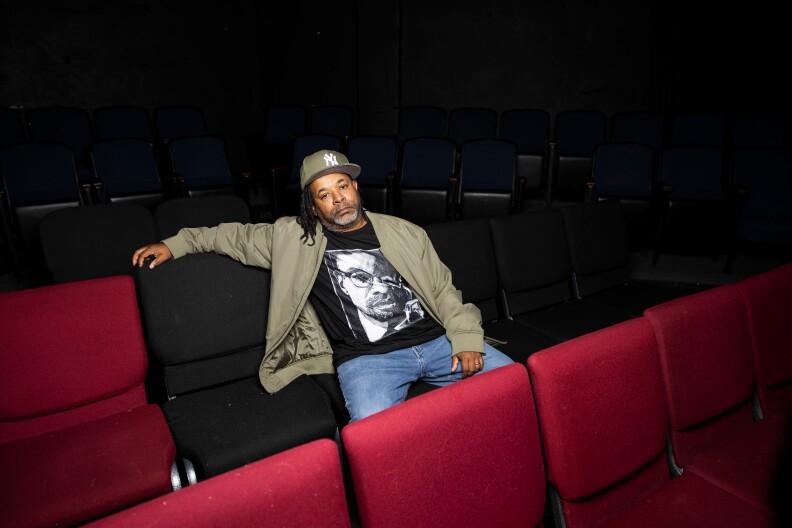
Zell Miller, Austin’s first poet laureate, is set to unveil a new theater company named Black Rose ATX, dedicated to youth programming. During his time at Dobie Middle School, Miller initially aimed to pursue journalism rather than theater. However, his mother recognized his potential in the performing arts, believing his “good memory and big mouth” made him a perfect fit for the stage.
Reflecting on his artistic journey, Miller credits a transformative education in Jerry Miller’s theater department for steering him toward success in school productions and community theater, ultimately merging his love for poetry with performing arts.
With the launch of Black Rose ATX, a nonprofit organization aimed at engaging students through partnerships with schools and summer programs, Miller hopes to ignite similar passions in the youth of Austin. “What’s beautiful for me is to walk into a school, perform a poem, and see the kids’ reactions,” he shared. “I hope they think, ‘I want to take that class.’ What if I had someone like me visit my school back then?”
The establishment of Black Rose ATX marks a significant transition for Miller, following the closure of his previous production company, ZM3 Live, which ended after two decades due to the inability to secure a city grant. Rather than retreating from the arts, Miller recognized the need for a new model that could rely on a more diverse funding base.
Since becoming a nonprofit in July, Black Rose ATX aims to secure both private and public funding to ensure greater stability. With a board that brings expertise in arts administration, fundraising, and youth services, the organization is poised to pursue a wider array of grants and partnerships. Its mission extends beyond theatrical productions to include educational initiatives for children and teens.
If funding is secured in the upcoming city arts grant cycle, Miller plans to debut a hip-hop-infused adaptation of Aesop’s fables, with additional productions slated throughout the year. The Hyde Park Theatre, where Miller presented his farewell performance for ZM3, will serve as the company’s main venue.
Prioritizing youth programming, Black Rose intends to introduce seasonal art camps during summer, spring break, and holidays, catering to students from elementary through high school. These camps will offer hands-on, artist-led experiences that combine theater, writing, and performance, serving as both a creative outlet and a pathway into the arts at a time when access to such programs has become increasingly uneven across Austin and Texas.
The organization aspires to create environments where students can explore storytelling, movement, and voice, all under the guidance of working artists who receive fair compensation for their teaching. Rather than culminating in large-scale productions, the focus of these sessions will be on expression and experimentation.
To ensure accessibility, Miller stated that participation would be offered at a reasonable cost, with scholarships available for families who may struggle with fees. If grant funding permits, the long-term vision includes providing programming directly within schools at no cost to students, beginning with pilot partnerships before expanding the initiative more broadly.
Melissa Villarreal, a board member with extensive experience in arts and community nonprofits in Austin, emphasized that the focus on youth programming aligns with the current challenges communities face. With schools closing and after-school programs being reduced, families, particularly in Black and brown communities, often find themselves needing to fill significant gaps.
<p“This isn’t just about creating art for the sake of creating art,” Villarreal remarked. “It’s about listening to what communities are experiencing right now and responding in a way that gives young people a space to process that and to be seen.”
In addition to youth initiatives, Black Rose aims to amplify diverse voices on stage. Miller envisions collaborations with local artists and a core group of company members that emphasizes the perspectives of Black women and other historically underrepresented groups.
As Black Rose ATX embarks on its journey, much of its first year will rely on securing funding and establishing partnerships. For Miller, the motivation is palpable; the class he never intended to take profoundly changed his life, and with the support of a diverse board, he aims for Black Rose to offer similar opportunities for the next generation.
<p“Previously, it was just my wife and me managing everything. Now, I have a board, and I need to be more disciplined,” he noted. “I’m not just saying, ‘Hey, I think I’m going to do this.’ I have people who can provide various perspectives.”
Villarreal believes that the sustainability of the organization will hinge on its ability to connect with the community and uncover the stories that need to be told. She highlighted the importance of cultivating a blend of public funding, private donations, and earned income to keep Black Rose adaptable and accountable to the communities it serves. “When you’re doing something right by the community, and you’re being transparent and have integrity, people want to be a part of that,” she stated.