







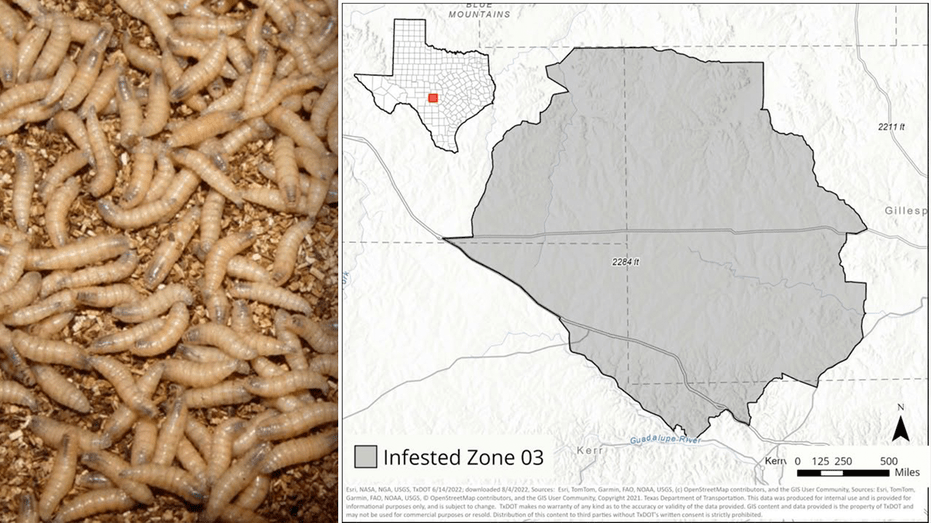
The Texas Animal Health Commission has designated “Infested Zone 03” following the confirmation of a screwworm case in a goat near Harper in Gillespie County. This action was announced by the Fredericksburg/Gillespie County Emergency Management team.
Within “Infested Zone 03,” which also includes areas of Kimble and Kerr Counties, the movement of warm-blooded animals is strictly regulated. Prior authorization from the Commission is required for any animal to be transported outside this designated area. Individuals responsible for such animals must comply with specific conditions set forth by the Commission before moving them beyond quarantine limits.
To facilitate the movement of animals out of “Infested Zone 03,” they must undergo inspection and treatment as mandated by the Commission. A permit or certificate must be issued by a Commission representative to authorize transport. Furthermore, any hides, carcasses, or parts of animals that could harbor New World screwworm larvae must also be inspected and treated before being removed from the infested zone.
An interactive map detailing the affected areas is available for public access. The map highlights “Infested Zone 03” in yellow, indicating where animal movement is restricted without prior inspection and approval. A larger blue area surrounding the yellow zone is under additional surveillance for potential cases.
The confirmation of the goat case occurred on June 8, marking the fourth instance of this infestation in Texas. Previous cases included cattle found infected in Zavala County and La Salle County, as well as a reported case in a dog in Andrews County, though that animal is actually from Lea County, New Mexico.
The New World screwworm is recognized as one of the most destructive pests affecting livestock and wildlife, endemic to the Americas. This insect lays its eggs in the open wounds of animals, where the larvae develop into parasites that exclusively feed on living tissue. This feeding behavior can lead to severe injuries, significant economic losses, and even fatalities if not treated promptly. Although rare, humans can also be affected.
While the screwworm was largely eradicated in the U.S. during the 1960s, it has been gradually moving northward from Panama and is now located approximately 300 miles south of the Texas-Mexico border. To combat this resurgence, federal authorities are intensifying efforts to release billions of sterile flies raised in laboratories. Ground release chambers are being utilized to supplement the four million sterile flies already dispersed aerially each week. The goal is to decrease the wild fly population through mating with sterile flies, which results in no offspring.
As officials work to control the screwworm threat, pet owners are advised to regularly check their animals for signs of infestation, including draining or enlarging wounds, the presence of maggots or egg masses, and signs of discomfort. Any suspected cases should be reported immediately to veterinarians or state animal health officials for further action.