









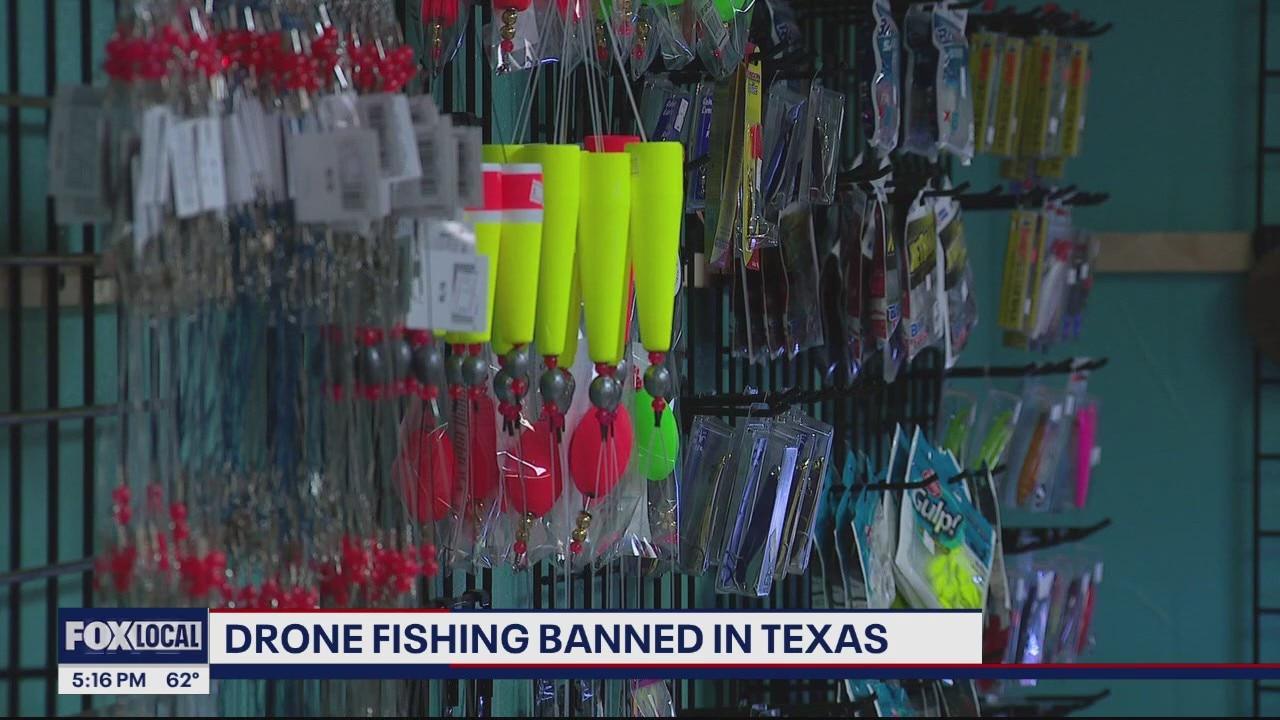
A recently enacted ban on drone fishing in Texas has raised concerns among small business owners and disabled veterans who rely on this method for recreational fishing. The new regulations, issued by the Texas Parks and Wildlife Department (TPWD), have sparked debate over their impact on the sport and local businesses.
The TPWD announced the prohibition on Monday, stating that the use of drones for fishing falls within the scope of banned practices under current regulations. Specifically, the department cited the use of drones to assist in bait deployment as a violation of the rules aimed at protecting wildlife.
Williams Yearsin, a business owner in Clute, Texas, and a disabled veteran, voiced his apprehensions regarding the ban. He explained that traditional fishing methods can be challenging for individuals with disabilities, and drones have provided him with a valuable alternative. Yearsin expressed concern that this new regulation could hinder both his ability to fish and the operations of his shop, Hooked on Tackle.
Yearsin emphasized the significance of drone fishing in the local community, particularly for the popular sport of “land bass shark fishing.” He noted that this method allows anglers to catch larger predatory species from the beach without the need for a boat, creating a substantial market not only for his store but also for local charter businesses.
In response to inquiries about the ban, the TPWD clarified its position in a statement to local media. They highlighted that the Federal Airborne Hunting Act, managed by the U.S. Fish and Wildlife Service, governs the use of drones for fishing. While the TPWD has updated their guidelines to reflect this federal statute, they clarified that any violations would fall under federal jurisdiction rather than state law.
Yearsin contested the relevance of the regulations, arguing that the language used in the original legislation is outdated and does not account for modern advancements in technology. He pointed out that the regulation, which dates back to 1956, fails to address the legitimate use of drones for bait deployment in conjunction with legal fishing methods. Yearsin hopes to raise awareness about the issue and advocate for a reassessment of the regulations.
The implications of the drone fishing ban extend beyond individual anglers, potentially affecting the livelihood of local businesses and the fishing community as a whole. As discussions continue, many are eager to see if changes will be made to accommodate the needs of disabled veterans and other fishermen who benefit from this innovative approach to fishing.