








Sign up for The Brief, a daily newsletter designed to keep readers informed about the most significant news in Texas.
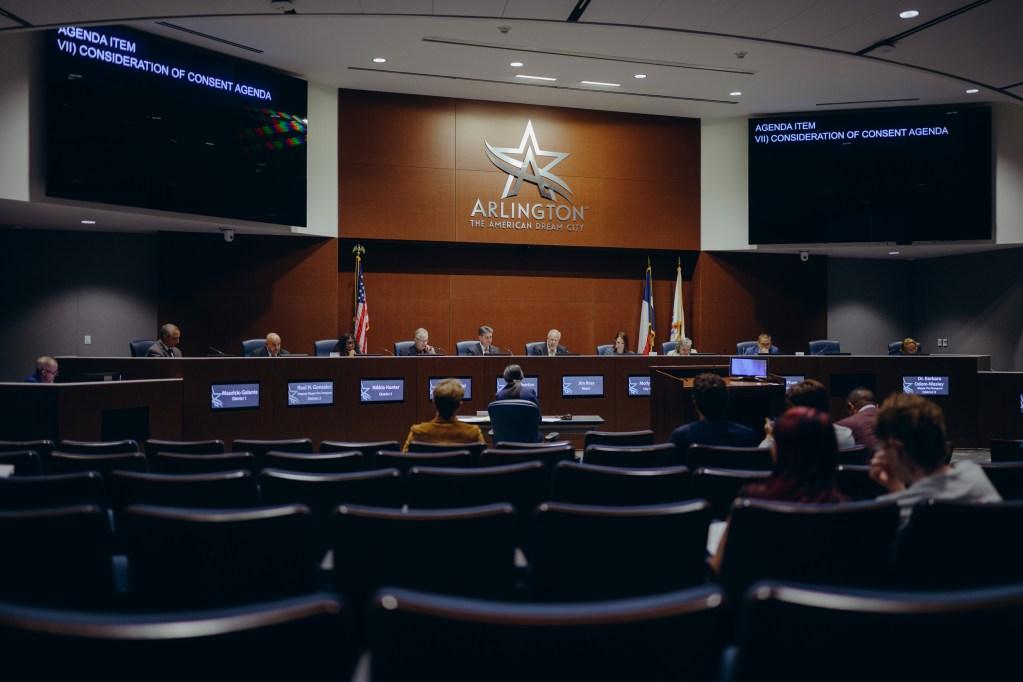
In a heated city council meeting marked by over an hour of emotional public testimonies, the Arlington City Council made the decision to uphold the suspension of discrimination protections for LGBTQ+ individuals. This controversial move stemmed from concerns that maintaining these protections could make Arlington a target for the Republican-controlled federal government.
The council’s narrow 5-4 vote effectively rescinded provisions of an ordinance passed in 2021 that prohibited discrimination against individuals based on sexual orientation or gender identity in employment and housing. The suspension, initiated in September, was motivated by fears of losing over $60 million in federal funding designated for essential city services, including public safety, parks, and infrastructure.
Following the vote, Arlington Mayor Jim Ross emphasized the city’s ongoing commitment to fostering an inclusive community. “I assure you all that despite tonight’s decision, Arlington remains dedicated to ensuring that no resident faces discrimination,” he stated. “We will continue working with community leaders, council members, and city staff to find a solution that is acceptable to everyone.”
Arlington, with a population nearing 400,000, has become the first known city to take such action in response to the scrutiny from President Donald Trump’s administration. The administration has utilized executive orders to pressure local governments nationwide to eliminate language that supports the inclusion of transgender individuals and the principles of diversity, equity, and inclusion.
Experts in federal policy have expressed skepticism regarding this approach, cautioning that acting on executive orders—which lack the formal legislative process—may be premature. Conservative leaders argue that Trump’s directives serve to recalibrate the policies established by previous administrations.
City officials in Arlington have indicated that maintaining the ordinance could have dire financial consequences. Earlier this year, the city lost a $50,000 grant due to the inclusion of the term “inclusive” in its language. Advocates for LGBTQ+ rights have warned that repealing such protections undermines decades of progress in expanding LGBTQ+ rights.
During the council meeting, some members expressed uncertainty about the legal enforceability of the discrimination protections. Rebecca Boxall, who represents downtown Arlington, labeled the ordinance as “bad policy.” She stated, “From the very beginning, it was unenforceable at the city level. We can’t enforce federal law at the city level. It’s misleading to suggest that these protections truly exist.”
Ash Hall, a policy and advocacy strategist at the American Civil Liberties Union of Texas, countered this perspective during public commentary. Hall argued that the ordinance provides the city with the authority to investigate and mediate discrimination claims, reinforcing the message that discriminatory practices would not be tolerated.
“Such ordinances not only reflect a city’s values but also clarify the expected behavior in areas like housing and public accommodations,” Hall added.
The council’s decision followed testimonies from residents, business leaders, and community advocates—34 of whom supported reinstating the ordinance, while 11 were against it. Many expressed concern that abolishing these protections could deter families from choosing Arlington as their home, while maintaining them could jeopardize the city’s financial resources.
“These kinds of policies extend beyond legal implications,” said Dallas Schwab, a concerned resident. “You are effectively determining who is deserving of protection. When people are told they are unworthy, they may very well start to believe it.”
Another resident, Cathy Rocha, warned that retaining the ordinance could threaten vital funding. “Establishing a city ordinance that cannot override state and federal laws goes beyond what federal guidelines allow and could unintentionally endanger federal funding,” Rocha stated. “This funding is crucial for programs that support approximately 400,000 residents, including LGBTQ+ individuals.”
For further insights into The Texas Tribune’s policies, including its collaboration with The Trust Project aimed at enhancing news transparency, visit our website.
Texans deserve accurate information. Join us in our mission to provide independent reporting that reflects the truth.
Support for independent journalism in Texas is essential. The Texas Tribune is dedicated to delivering fact-based news for Texans, by Texans. Our work is made possible by our community of members—readers who contribute to this vital mission. Will you consider supporting our nonprofit newsroom with a donation of any amount?
Support Independent Texas News | Become a member. Join today.