









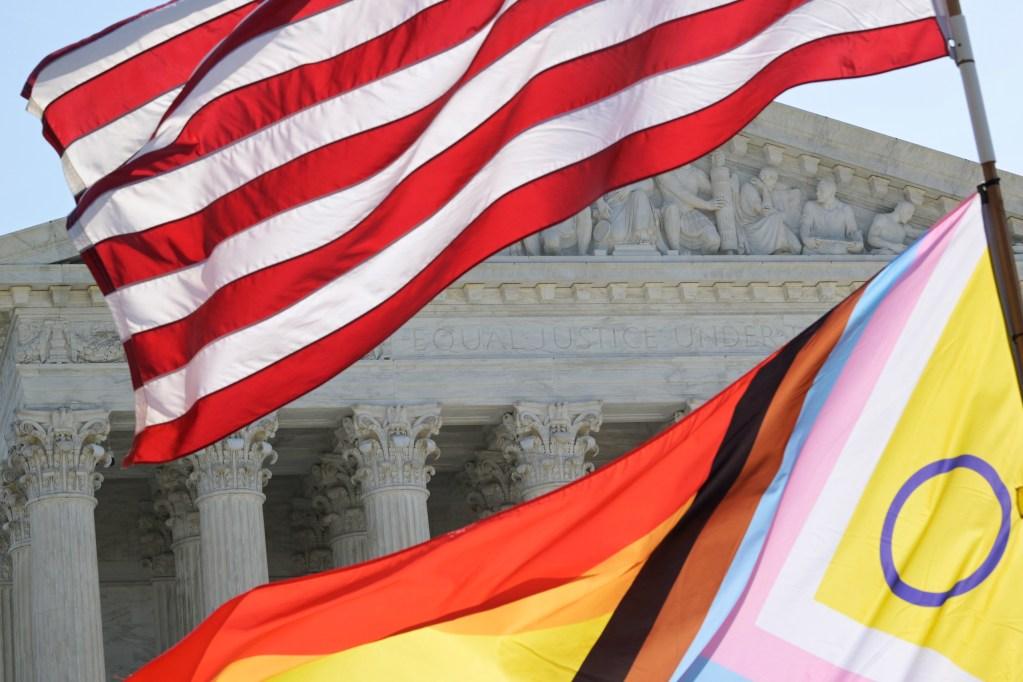
The U.S. Supreme Court has issued a ruling that limits states’ authority to prohibit licensed mental health providers from offering conversion therapy, citing violations of free speech rights.
This decision has sparked a debate among national LGBTQ+ advocates and legal experts, who argue that it suggests Texas cannot enforce a ban on gender-affirming care in therapeutic settings. However, local mental health professionals express skepticism about the implications of the ruling.
In a significant 8-1 decision, the Court sided with Kaley Chiles, a licensed Christian counselor from Colorado Springs, who contended that her state’s prohibition of conversion therapy infringed upon her First Amendment rights. The justices concluded that the Colorado law effectively silenced mental health providers, thereby restricting the topics they can discuss with clients.
Legal experts assert that this ruling extends constitutional protections to any treatment affirming clients’ gender identities provided by licensed mental health professionals in Texas. This stance appears to contradict recent statements from Texas Attorney General Ken Paxton, who argued that licensed therapists in Texas should not provide gender-affirming care to LGBTQ+ youth.
Shawn Meerkamper, a managing attorney at the Transgender Law Center, remarked that if the Supreme Court sets a precedent that therapy discussions are protected speech, then this protection should apply universally, irrespective of ideological perspectives.
Despite the potential protections the Supreme Court’s ruling could afford to gender-affirming therapy, mental health providers in Texas remain wary. They fear that Republican lawmakers, along with a conservative Supreme Court, may not apply free speech principles uniformly. There is concern that the state could target therapists offering gender-affirming care while allowing conversion therapy to flourish without oversight. Currently, Texas boasts 104 conversion therapy providers, ranking second in the nation according to the Trevor Project, a leading suicide prevention organization for LGBTQ+ youth.
While Texas has yet to implement a ban on conversion therapy—an approach criticized by major health organizations like the American Medical Association and the American Academy of Child and Adolescent Psychiatry as harmful—it has enacted restrictions on gender-affirming care, which these organizations have endorsed as evidence-based treatment.
Gender-affirming healthcare encompasses a variety of services designed to help individuals align their physical and mental attributes with their preferred gender identity.
Johnathan Gooch, deputy director for public affairs at Equality Texas, raised concerns about the implications of unregulated speech in therapy settings, questioning where the boundaries would lie. He asked whether therapists with extremist ideologies would be permitted to express harmful views about race or other sensitive topics.
Chiles, supported by the Trump administration, argued that banning conversion therapy imposes unfair restrictions on faith-based practices within mental health. She contended that allowing states to prohibit conversion therapy could lead to interference in all provider-client conversations, even extending to discussions about birth control or relationship advice.
Some religious organizations, including the Catholic Medical Association, commended the Supreme Court’s decision in favor of Chiles, viewing it as a victory for the free exchange of ideas in mental health practices.
Steven D. Schwinn, a law professor at the University of Illinois Chicago Law School, noted that this ruling reflects a trend in which the Supreme Court has used First Amendment arguments to advance conservative policies, particularly in the context of religious freedom.
Meerkamper expressed optimism that the ruling could remove barriers for states like Texas seeking to restrict LGBTQ+-affirming treatments, suggesting that if therapy is considered free speech, then prohibitions on conversion therapy should also be untenable. Conversely, he questioned how restrictions on gender-affirming services could withstand scrutiny if conversion therapy bans are deemed unconstitutional.
Providers of gender-affirming care argue that their work is legitimate healthcare essential for a demographic particularly vulnerable to serious mental health issues. They often assist individuals diagnosed with gender dysphoria, a widely recognized condition where an individual’s gender identity does not align with their sex assigned at birth. Treatment options can include managing anxiety and depression, evaluating readiness for hormone therapy or surgeries, and providing family support.
Michael Lesher, director of the Texas Society for Sexual, Affectional, Intersex, and Gender Expansive Identities, emphasized that their practice is rooted in ethical, evidence-based care aimed at minimizing harm and focusing on client-centered approaches.
Despite the Supreme Court’s ruling on conversion therapy, many gender-affirming care providers in Texas are skeptical that it will offer similar protections for LGBTQ+ treatments. Last year, the Supreme Court upheld states’ rights to prohibit gender-affirming medical treatments for minors, such as puberty blockers and hormones, citing state interests in child protection, even amidst evidence supporting their efficacy. In 2023, Texas enacted a ban on such care for minors.
Abi Smith, a Southlake-based licensed counselor, expressed concern that this ruling may lead to increased conversion therapy availability, undermining efforts to rectify the harm it has caused.
Guy Felder, a Houston-based licensed professional counselor, recounted his own experiences with conversion therapy in the 1990s, where he was subjected to harmful practices that strained his familial relationships. He noted that while many conversion therapy practices have gone underground, they persist in various forms.
In Texas, conversion therapy for minors remains unregulated, unlike in 27 other states that have imposed restrictions or outright bans. The Trevor Project has identified over 1,320 conversion therapy providers nationwide, with Pennsylvania having the highest number.
Rox Sayde, community support manager for Equality Texas, highlighted the alarming statistic that approximately 15% of LGBTQ+ youth have avoided seeking mental health support due to fears of conversion therapy. Many practitioners in Texas disguise their conversion therapy practices as LGBTQ+-friendly care.
The Supreme Court’s decision, by protecting conversion therapy, raises concerns among mental health professionals about the legitimacy of therapy as a medical treatment. Justice Ketanji Brown Jackson, the sole dissenting voice, warned that the ruling could hinder the state’s ability to regulate the mental health profession.
Advocates question the implications of the ruling, suggesting it reflects a fundamental misunderstanding of therapy, which is not merely casual conversation but a structured and professional relationship aimed at treatment.
For mental health support for LGBTQ youth, the Trevor Project offers a 24/7 toll-free support line at 866-488-7386. For trans peer support, individuals can contact the Trans Lifeline at 877-565-8860 or reach a trained crisis counselor through the Suicide and Crisis Lifeline by calling or texting 988.