





Texas families are set to begin applying for private school vouchers starting Wednesday, marking a significant advancement in a state program scheduled to commence in the next academic year.
Applications will be accepted until March 17 for a program that enables families to access taxpayer funding to enroll their children in private schools or facilitate home education.
In the event that applications surpass the $1 billion allocated by lawmakers for this initiative, the state will prioritize students based on their family income and disability status, although this does not guarantee acceptance into the program.
The initiative, managed by the state comptroller, who serves as Texas’ chief financial officer, is expected to launch at the beginning of the 2026-27 school year.
During the current two-year budget cycle, which concludes on August 31, 2027, the state is limited to spending a maximum of $1 billion on the program. While it remains uncertain how costs may escalate—determinations will be made in future legislative sessions—state budget analysts anticipate potential expenditures could reach approximately $4.8 billion by 2030.
Application Details
The program is accessible to most Texas families with school-age children, including those currently enrolled in private institutions or participating in home schooling. Families with children in public schools must plan to withdraw them to qualify. Additionally, parents are required to submit proof of their child’s U.S. citizenship or evidence of lawful residency.
In cases where demand exceeds available funding, the state will prioritize applicants as follows:
- Students with disabilities from families earning at or below 500% of the federal poverty level, which includes a four-person household earning less than approximately $165,000 annually.
- Families earning at or below 200% of the poverty level, defined as a four-person household making less than around $66,000.
- Families with incomes between 200% and 500% of the poverty level.
- Families earning at or above 500% of the poverty level; these households may access up to $200 million of the program’s total budget. However, the prioritization does not guarantee access, as students must secure enrollment in a participating private school. Notably, private institutions are not mandated by state or federal laws to provide accommodations for students with disabilities.
Historically, similar voucher programs in other states have seen participation skewed toward wealthier, predominantly white families whose children are already in private schools.
Families must prepare a range of documentation to apply. Required items include Social Security numbers for both the parent and child, an IRS Form 1040 for the years 2024 or 2025, and a Texas identification card or other proof of residency if the state cannot verify a Texas ID number.
To confirm a child’s citizenship or lawful resident status, families can submit documents such as birth certificates or certificates of naturalization.
For private pre-kindergarten eligibility, children must be at least three years old and meet at least one state criterion for public pre-K. This includes eligibility for free or reduced-price lunch, language barriers, or being in foster care. Families with children in foster care must provide documentation, such as court orders or adoption papers.
Some families may qualify for funding of up to $30,000 annually, with most families whose children are enrolled in private schools receiving around $10,500 each year. Those who homeschool can receive up to $2,000 annually, while children with disabilities may be eligible for up to $30,000, determined by the cost to educate them in public schools.
To apply for the higher funding tier, families must submit an Individualized Education Program (IEP), which outlines the need for special education services. If they lack this documentation, they can request it from their local public school, which is obligated to fulfill such requests within 45 days of a parent’s consent to the evaluation.
Funds will be disbursed through education savings accounts, managed by the finance and technology firm Odyssey. These digital accounts will enable families to cover tuition and other educational expenses, including tutoring, transportation, and school meals.
Families are also tasked with finding private schools willing to accept their children. During the application process, families must express their intention to enroll in a private institution, though formal enrollment is not required until June 1, nearly three months after the application window closes. Private schools will then verify enrollment over the summer.
To participate in the program, private schools must have been operational for at least two years and hold accreditation. They are required to administer a nationally recognized exam of their choice for grades 3-12, but they are not obligated to use the standardized tests that public school students take each year, such as the State of Texas Assessments of Academic Readiness (STAAR).
Currently, more than 1,600 private schools have opted into the program, with a majority located in the Houston and Dallas-Fort Worth regions.
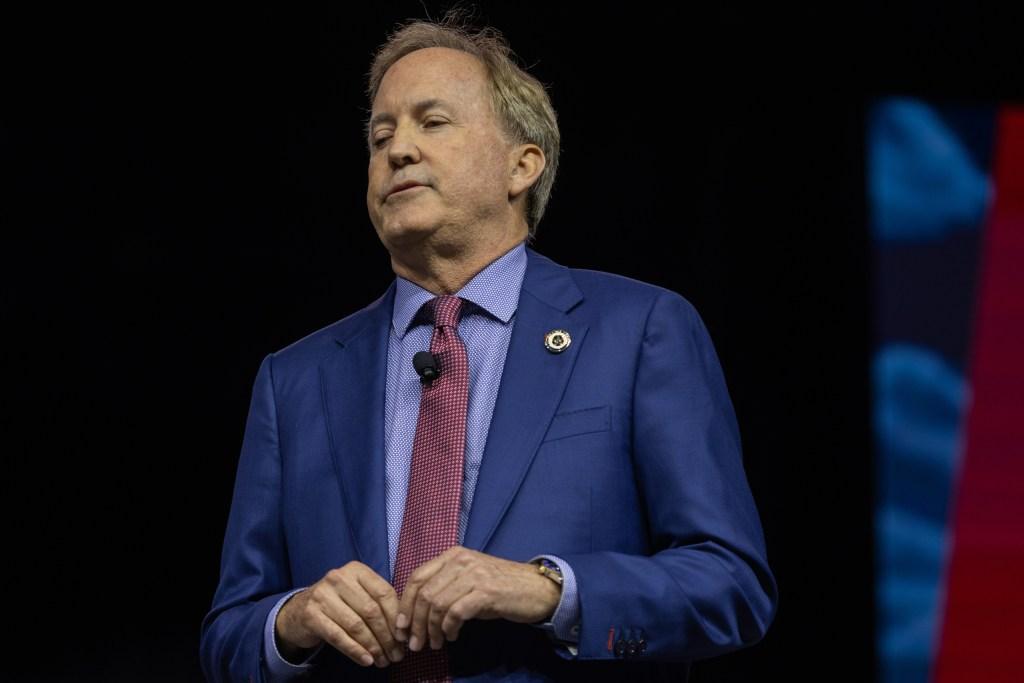
Texas Attorney General Ken Paxton recently issued an opinion suggesting that the comptroller may exclude certain schools from the program if they are deemed to have illegal ties to terrorists or foreign adversaries.
This opinion followed a request for guidance from Acting Comptroller Kelly Hancock, who raised concerns that schools connected to the accreditation body Cognia had hosted events organized by the Council on American-Islamic Relations (CAIR), a civil rights group that Governor Greg Abbott has classified as a terrorist organization.
CAIR has taken legal action against Abbott, challenging the label as defamatory and untrue, while the U.S. State Department does not recognize the organization as a terrorist group.
According to reports, numerous Cognia-affiliated schools have been excluded from the program, affecting institutions that primarily serve Muslim students, Christian students, and children with disabilities. The comptroller’s office has indicated that it is now inviting selected Cognia schools, deemed compliant with the law, to participate.
Notifications regarding funding will begin to reach families in April, informing them of their eligibility, contingent upon enrolling their children in a private school by June 1.
The initial disbursement of state funding will be accessible in families’ education savings accounts starting in July.