








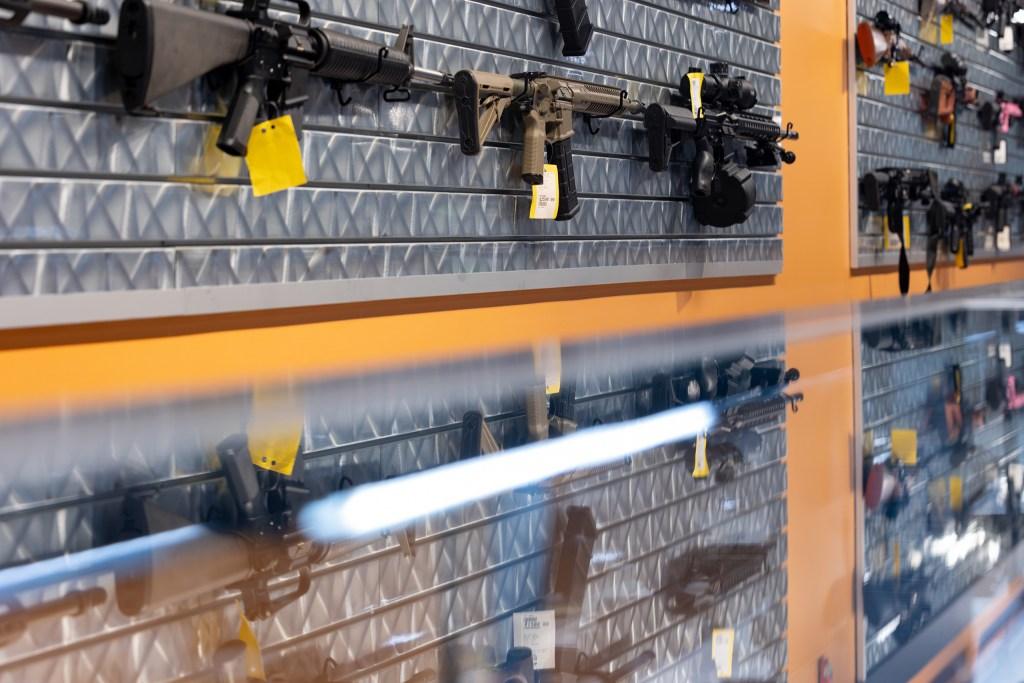
Significant changes to federal regulations surrounding short-barrel firearms and silencers took effect Thursday in several states, including Texas, following the Trump administration’s decision not to pursue an emergency appeal against a federal court ruling.
Gun rights advocates and Republican legislators hailed this development as a landmark victory for the Second Amendment, while gun control organizations expressed concerns that it would compromise public safety.
The roots of the National Firearms Act (NFA) can be traced back to 1934, a response to a series of high-profile shootings. Congress leveraged its taxing authority to implement the law, which mandated a $200 fee for the transfer or manufacture of certain firearms, alongside a registration requirement, aiming to limit these activities. However, the One Big Beautiful Bill enacted last year eliminated this tax for specific categories, including short-barrel shotguns, short-barrel rifles, and silencers.
On the same day President Donald Trump signed the bill into law in July 2025, several firearms trade organizations, gun businesses, and a gun owner from San Angelo initiated a lawsuit challenging parts of the NFA. Shortly thereafter, Texas and 14 other Republican-led states joined the legal action.
On August 5, U.S. District Judge James Wesley Hendrix in Lubbock ruled that the tax-based regulations could not persist following the tax’s repeal. “The challenged NFA provisions are unconstitutional,” the judge, appointed by Trump, stated. “Congress’s choice to eliminate the transfer and making taxes matters, and the defendants cannot save the NFA’s regulatory scheme by referring to a power that Congress never invoked. Efforts to render the NFA constitutional must come from Congress, not this Court.”
Hendrix’s ruling was confined to the states that participated in the lawsuit, and he granted the federal government a seven-day window to file an emergency appeal. When the Department of Justice opted not to do so, the ruling took effect on Thursday.
While the DOJ retains the option to appeal within 60 days of Hendrix’s ruling, its intentions remain uncertain. “The Department respects Americans’ Second Amendment rights and is currently assessing the impact of the court’s ruling,” the DOJ stated on Thursday.
The absence of an emergency appeal coincided with a group of Republican lawmakers, including nine from Texas, urging the newly appointed U.S. Attorney General Todd Blanche not to contest the court’s decision. On Thursday, they celebrated the outcome.
U.S. Representative Chip Roy, R-Austin, characterized it as a “decisive victory for the Second Amendment” in a post on X. Other supporters, such as state Representative Wes Virdell, R-Brady, and Brandon Herrera, a Republican candidate known as “The AK Guy,” marked the ruling’s implementation by making firearm purchases at midnight.
“Last night was an amazing experience to be a part of history in the making,” Virdell shared in a post on X.
Conversely, gun control advocates condemned the DOJ’s inaction, arguing that short-barrel rifles and shotguns are powerful firearms linked to mass shootings, and that silencers can impede bystanders and law enforcement from detecting gunfire. “Today, our government is failing us,” stated Brady President Kris Brown. “Today, the gun industry and silencer dealers are celebrating, while Americans are left less safe.”