







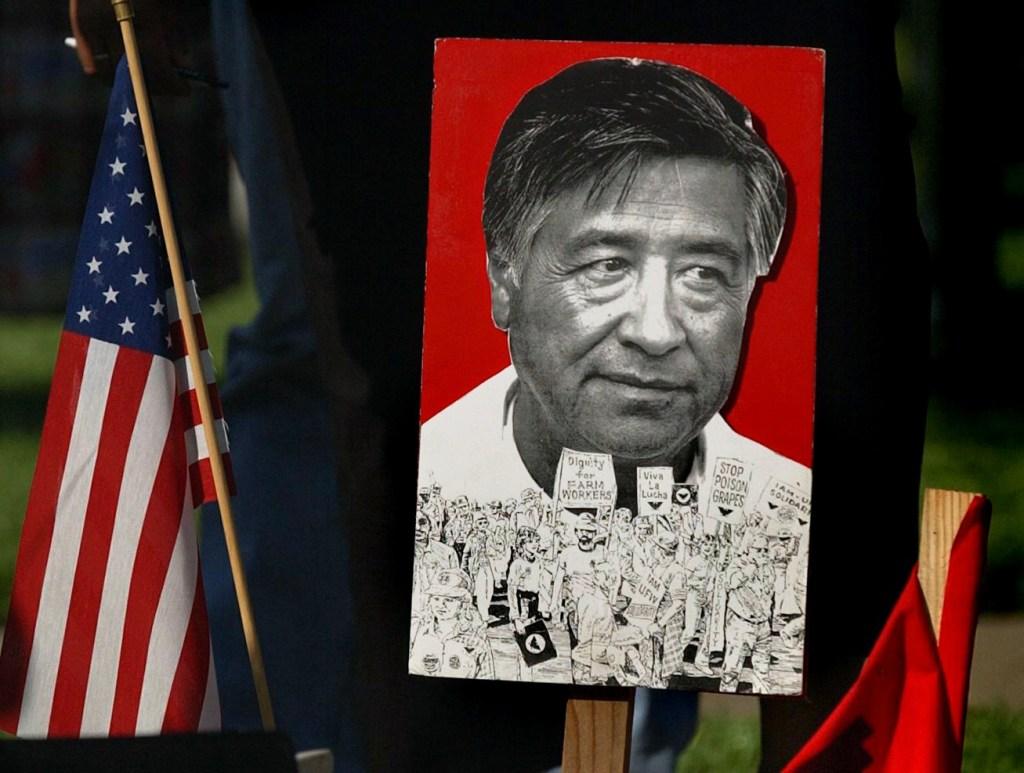
Texas Governor Greg Abbott has announced that the state will no longer recognize Cesar Chavez Day on March 31. He aims to make this change permanent by collaborating with the Legislature to remove the holiday from state law during the 2027 session.
This decision follows an investigation by The New York Times, which uncovered serious allegations of sexual assault and abuse against the late Mexican-American labor and civil rights leader. The revelations have ignited widespread outrage and prompted lawmakers and labor organizations nationwide, including in Texas, to reassess Chavez’s legacy. Chavez was known for his support of striking farm workers and for leading a rally at the Texas Capitol in 1966 after a march from Rio Grande City to Austin.
Abbott expressed in a statement on X that the disturbing allegations against Chavez dismantle the narrative that has celebrated him as a progressive hero. “Reports of the horrific and widely acknowledged sexual assault allegations against Cesar Chavez rightfully dismantle the myth of this progressive hero and undermine the narrative that elevated Chavez as a figure worthy of official state celebration,” he said.
The Mexican American Legislative Caucus (MALC), calling the allegations “deeply disturbing,” has indicated its readiness to spearhead efforts to abolish the holiday. The group stated, “When a leader puts himself ahead of the people and the movement he was meant to serve, that is a profound betrayal of the very values that movement was built on. We stand with survivors and support a full and transparent reckoning.”
Additionally, MALC proposed that the holiday be replaced with a day honoring labor leaders such as Dolores Huerta, who co-founded the United Farm Workers alongside Chavez. Huerta has also garnered support for this initiative.
In a public statement, Huerta revealed that Chavez, who passed away in 1993, had assaulted her on two occasions, which resulted in pregnancies. She had kept these incidents private for 60 years, fearing they would harm the farmworker movement she dedicated her life to. “The farmworker movement has always been bigger and far more important than any one individual,” Huerta stated. “Cesar’s actions do not diminish the permanent improvements achieved for farmworkers with the help of thousands of people. We must continue to engage and support our community, which needs advocacy and activism now more than ever.”
The fallout from the allegations has led various Texas cities and organizations to cancel or modify their events. For example, El Paso has decided to celebrate March 31 as Community & Labor Heritage Day, while city council members in San Antonio, Austin, and Dallas are advocating for the renaming of streets that honor Chavez or discontinuing the recognition of Cesar Chavez Day. Houston has also called off its annual march in his honor.
Just prior to the publication of the Times investigation, the United Farm Workers organization distanced itself from its co-founder. In a statement, they noted, “We have not received any direct reports, and we do not have any firsthand knowledge of these allegations. However, the allegations are serious enough that we feel compelled to take urgent steps to learn more and provide space for people who may have been victimized to find support and to share their stories if that is what they choose.” They further announced that the United Farm Workers would not participate in any Cesar Chavez Day activities.