






For many years, statewide Democratic primaries in Texas were relatively uneventful. However, the 2026 election cycle marks a significant shift. With the Democrats seizing what they perceive as a prime opportunity to potentially flip Texas—amid declining approval ratings for the second Trump administration, a fierce Senate primary on the Republican side, and the prospect of facing scandal-ridden Attorney General Ken Paxton in November—Texas Democrats are now embroiled in a fierce battle for the U.S. Senate nomination.
In a first for the century, two prominent Democratic figures with national recognition—U.S. Representative Jasmine Crockett from Dallas and State Representative James Talarico from Austin—are competing for the party’s nomination. This high-stakes race has garnered substantial attention and funding, positioning Tuesday’s election as a crucial indicator of the Democratic Party’s trajectory as it seeks to escape the political stagnation of 2024.
Beto O’Rourke, a significant figure in the party over the past decade, expressed his excitement: “I was not alive the last time we had this kind of talent in a statewide Democratic primary.”
As early voting commenced, Texans flocked to the polls, while Crockett and Talarico traversed the state, rallying support and bringing hundreds to their campaign events. Crockett, who was managing her congressional duties during the week, expressed confidence following a University of Texas poll that indicated she was leading Talarico by 12 percentage points. “I’m used to being outspent, but I will never be outworked,” she declared, urging voters to focus on winning the election rather than external noise.
The primary contest has already drawn approximately 1.2 million Democratic voters to the polls in the first nine days of the early voting period, nearly doubling the final early turnout from the last midterm election. Much of this heightened engagement can be attributed to the two candidates, each possessing a strong social media presence, significant fundraising capabilities, and unwavering support from the Democratic base. While they largely agree on policy, their contrasting styles and political philosophies present a stark division. Crockett’s approach is characterized by her combative and partisan demeanor, while Talarico adopts a populist and faith-based strategy, aiming to persuade a broader electorate, including crossover voters in a state recently won by Trump by 14 points.
This political dynamic brings into focus the competing identities of a Black woman and a white man in an increasingly diverse Texas, amidst ongoing debates within the party regarding race and identity politics. Political commentators have noted that the contentious nature of the primary has led to a divisive atmosphere, with many Democrats hoping such a scenario would not occur within their ranks.
Monique Alcala, former executive director of the Texas Democratic Party, summarized the race as “very online, really divisive, and pretty chaotic.”
The bitterness—exacerbated by influencers and substantial outside funding—has raised concerns among some Democrats about the potential for a split base and a weakened nominee heading into November’s election. State Representative Diego Bernal from San Antonio urged party unity: “Whoever wins the Dem primary, we all become 100% Team That Person.”
Should Talarico win, he faces the daunting task of winning over Crockett’s core supporters, particularly Black voters. This challenge is intensified by a primary riddled with negative portrayals of him, including allegations of insensitivity towards race, which he has denied. Conversely, Crockett has faced scrutiny for past comments regarding Latino voters and her ability to mount a vigorous general election campaign.
In a recent incident, Crockett’s campaign faced backlash after a reporter was reportedly removed from a campaign event, a claim Crockett later refuted. The situation attracted further attention when the reporter released audio of the incident.
Republicans have relished the intra-party conflict among Democrats. Zach Kraft, a spokesperson for the Republican National Committee, remarked, “It is a full-on civil war among Texas Democrats.”
Republicans have also actively engaged in the primary, attempting to bolster Crockett’s chances, believing she would be the easier opponent in November. Governor Greg Abbott has even run advertisements against her to motivate GOP turnout, which Crockett has leveraged to position herself as a candidate that Republicans fear.
Some Democrats view the contentious primary as a necessary test that will ultimately strengthen their eventual nominee and energize voter participation. Both candidates maintain solid approval ratings among Democratic voters, despite the heated atmosphere.
“As you get to where Texas is more and more in play for Democrats, you’re going to see more and more contentious primaries,” remarked Kendall Scudder, chair of the Texas Democratic Party.
The negativity of the primary has been amplified by online creators and super PACs for both candidates, whose financial backers remain largely anonymous. By the end of early voting, Talarico had vastly outspent Crockett on advertising, with his campaign alone accounting for $15.3 million compared to Crockett’s $4.3 million. A pro-Talarico super PAC contributed an additional $7.7 million, while Crockett’s support from super PACs remained under $500,000.
Despite Talarico’s commitment to maintaining a positive campaign, outside groups have not shied away from launching negative ads. A pro-Talarico PAC aired an ad suggesting that Crockett was “backed by Republicans,” alluding to GOP involvement in the primary.
As early voting commenced, Crockett ramped up her criticisms of Talarico, claiming some of the attacks were racially charged. Her campaign released an ad portraying Talarico alongside Trump and Abbott, asserting that he prioritizes the interests of the wealthy, while Crockett fights for the people.
At a rally, Talarico attempted to steer the campaign back toward a focus on positive values and ideas, hoping to lower tensions and unite the party after the primary. O’Rourke expressed confidence that the eventual loser would rally behind the winner to support Democratic efforts in November.
As the primary approaches its conclusion, Talarico’s campaign has gained momentum since its launch, having raised over $1 million within hours of its announcement. Although Crockett initially held a frontrunner status due to her widespread recognition and strong fundraising history, the race has become increasingly competitive.
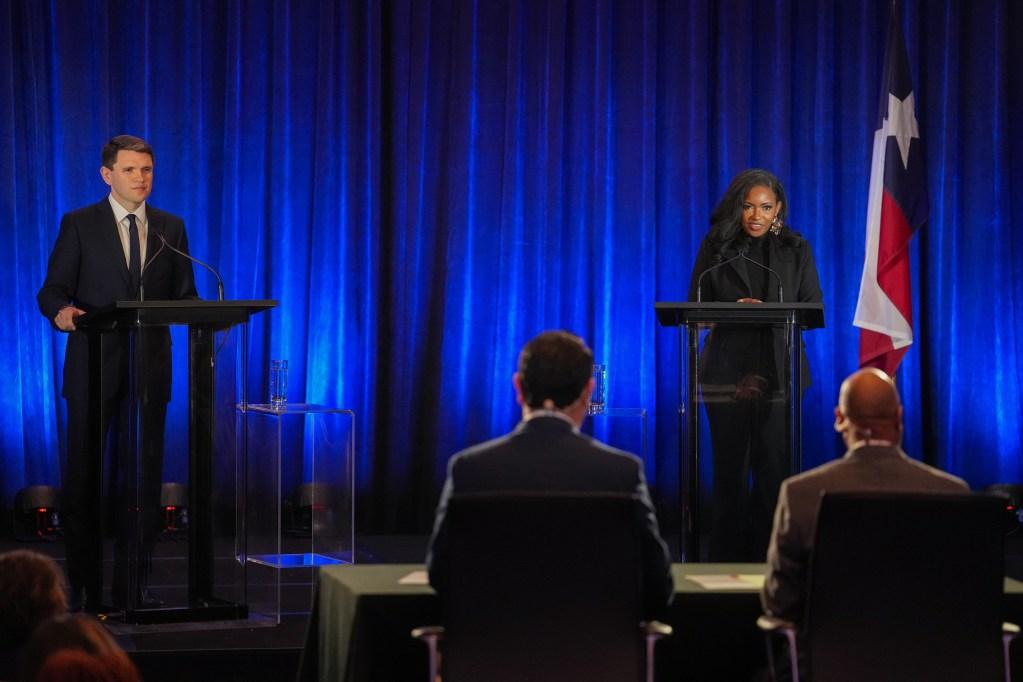
The candidates have demonstrated little divergence on policy during their singular debate, while Talarico has invested significantly to enhance his visibility. Crockett’s late start on advertising has made her campaign more challenging, as she balances her congressional responsibilities.
As the primary unfolds, the dynamics of the race reflect not only the candidates’ differing approaches but also the broader implications for the Democratic Party in Texas, especially with early voting showing unexpected levels of engagement and enthusiasm. “It is time for us to focus on us and the future that we deserve,” Crockett stated, emphasizing her motivation for running for the U.S. Senate.