







The election may be concluded, but the journey toward holding Texas officials accountable is just beginning. The recent political landscape has set the stage for a significant shift in educational policy in the state.
Texas Governor Greg Abbott’s educational initiatives seemed to be gaining momentum this year, with the launch of a voucher program enabling approximately 110,000 out of the state’s more than 5 million schoolchildren to access a private education funded by taxpayer money. Abbott’s ally, Commissioner Mike Morath of the Texas Education Agency, spearheaded the state’s largest public school takeover in recent history. Additionally, with Abbott’s backing, the Texas State Board of Education approved a contentious new social studies curriculum that mandates the inclusion of Bible stories while shifting the focus away from world history towards Texas and U.S. history.
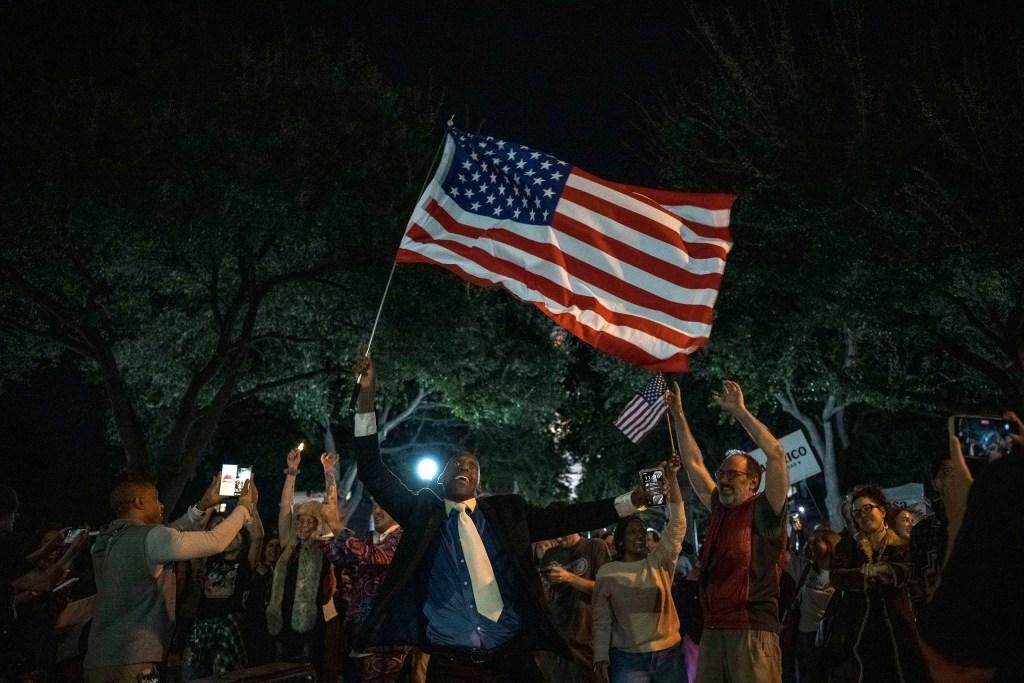
However, the political tide began to turn on Tuesday night as Democrats secured nearly every statewide office, leading to the unraveling of Abbott’s educational agenda.
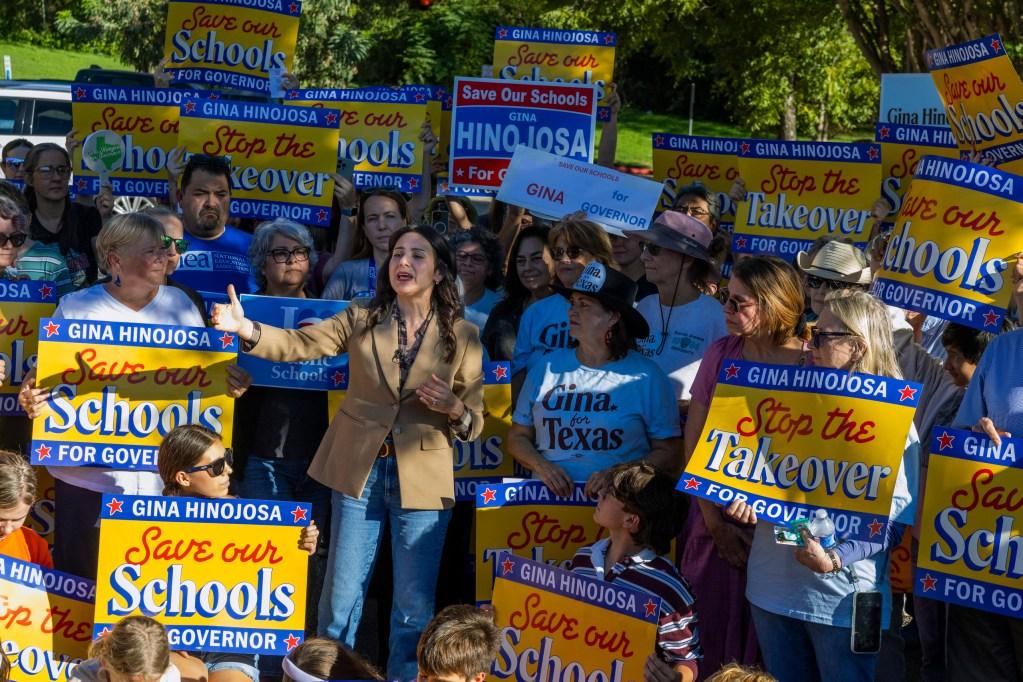
In her victory speech, Texas Governor-elect Gina Hinojosa vowed to reverse Abbott’s education policies, pledging to dismiss Morath and halt the public school takeovers. Most notably, she reiterated her commitment to dismantling one of Abbott’s flagship initiatives: the school voucher program.
“We will work tirelessly to repair the damage of the Texas voucher scam,” declared Hinojosa, who has not yet responded to interview requests.
It remains uncertain how Hinojosa plans to fulfill this promise. While Democrats possess the power to limit aspects of the voucher program, abolishing it outright will necessitate action from the legislature.
Fortunately for Hinojosa, she will have support in her efforts. Sarah Eckhardt, a Democrat and former state senator who opposed the voucher program, is now set to lead the state office responsible for overseeing it. Eckhardt has expressed intentions to advocate for reforms aimed at enhancing accountability and transparency within the program.
Nonetheless, Eckhardt has acknowledged the constraints of her office, indicating that any substantial changes must originate from legislators.
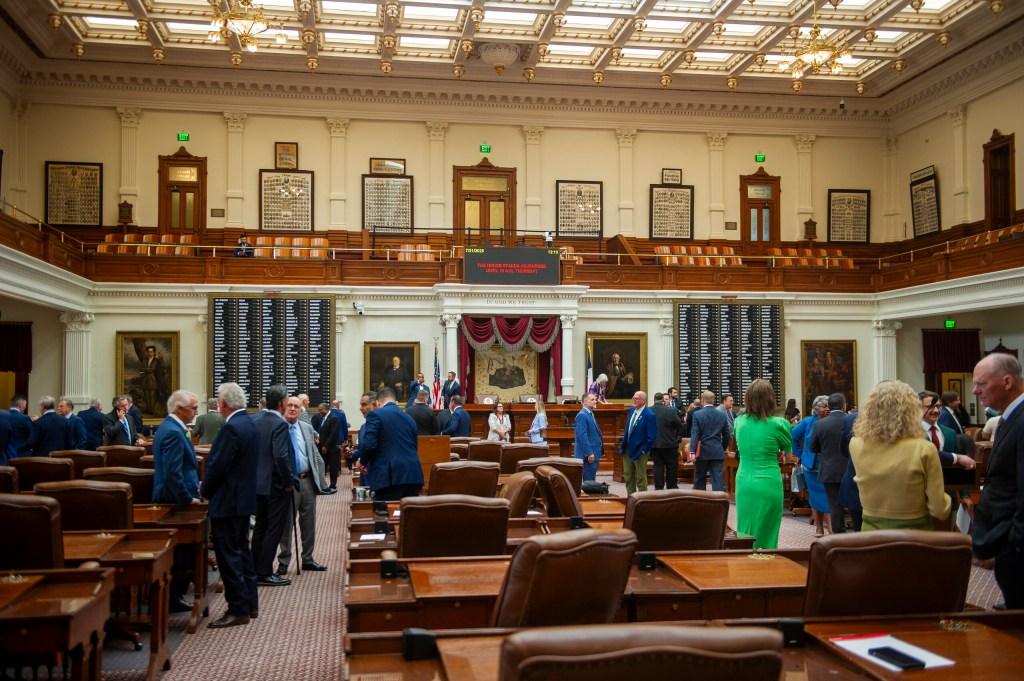
Democrats have regained control of the Texas House for the first time in 24 years, yet Republicans maintain a majority in the Senate.
Democratic Representative Diego Bernal, the vice chair of the House education committee, is optimistic about the possibility of dismantling the current iteration of the voucher program.
Bernal, who represents a district in San Antonio, noted that some Republican colleagues had privately voiced concerns about the voucher program but felt constrained by leadership pressure, which has now diminished with recent electoral changes.
“I guarantee that program is not going to be untouched, and it will be probably unrecognizable, if not extinct, by the time we’re done with it,” he stated.
Abbott had invested considerable effort over the years trying to institute a statewide voucher program. By 2024, he expressed frustration with rural Republicans who consistently opposed such legislation, arguing that public schools were integral to their communities. In response, Abbott allocated millions of dollars to unseat them and replace them with pro-voucher Republicans.
His strategy bore fruit, and the following year, these newly elected Republicans helped to pass a state voucher program worth $1 billion. However, this week saw at least 13 Republicans, whom Abbott had previously endorsed or financially supported, lose to Democratic opponents or fall behind in competitive races.
Abbott’s office declined to provide an interview, directing inquiries to his campaign office, which has not responded.
The governor’s staunch support for vouchers has alienated some Republican voters in rural areas historically loyal to him, according to education experts and political analysts.
An analysis revealed that Democrats made notable strides in rural and semi-rural regions of Texas, where concerns over the voucher program, along with other issues, were prevalent. In rural counties, Abbott’s lead over Hinojosa diminished by 16 percentage points compared to his margin over former U.S. Representative Beto O’Rourke in 2022. In exurban counties, the drop was even more pronounced at 20 percentage points.
Former state Representative Dewayne Burns, an anti-voucher Republican from a largely rural district near Fort Worth, remarked that many constituents felt betrayed by Abbott’s push for vouchers. “That’s the first time that I think rural Texans really kind of stepped back and said, ‘Are you guys really supporting us?’” he reflected. “I think they overestimated the loyalty that Texans, especially rural Texans, had to the governor.”
Steve Allison, a former state representative from a suburban San Antonio district, asserted that his constituents were never in favor of the voucher system. Pro-voucher groups targeted him with advertisements that criticized him on issues like border security and property taxes while largely avoiding the school choice topic. Polling data indicated that while two-thirds of Texans supported voucher legislation, an equal number believed it would divert funds from struggling public schools.
“I know what I saw when my staff took very careful notice of what phone calls were coming in and what emails and texts and visits were coming in,” Allison shared. “It was clear that the overall district was opposed to vouchers.”
Concerns regarding vouchers became pivotal in several rural and suburban districts this election cycle, where candidates backed by Abbott had triumphed two years prior. One notable race involved Allison’s former seat, which pro-voucher candidate Marc LaHood secured in 2024 after Abbott funneled at least $700,000 into his campaign.
In Central Texas’s Bell County, Abbott-endorsed incumbent Representative Hillary Hickland conceded a close race. While she did not respond to interview requests, her Democratic opponent, Amelia Rabroker, a former teacher, stated that the Republicans’ aggressive promotion of vouchers motivated her to challenge Hickland.
“A lot of money was pushed into her campaign to make that happen, and she delivered on those vouchers, and it was very upsetting to the people of Central Texas,” Rabroker said. “I think it was a huge concern. The biggest.”
Similarly, LaHood faced significant scrutiny regarding his support of vouchers during a candidate forum in October. His opponent, Democrat Zack Dunn, pointed out that issues surrounding vouchers and public education were second only to affordability in the minds of voters he encountered. On election night, Dunn triumphed over LaHood with 54% of the vote.
“Across the board, overwhelmingly the sentiment was, ‘We need to fully fund our public schools,’” Dunn asserted in an interview. “The voucher scam, the voucher scheme, the voucher vote that was taken is hurting us. It’s hurting us definitely across the state, but it’s hurting us in 121. Yes, we heard that over and over and over again.”
Looking ahead, Dunn expressed his support for measures that would ensure greater transparency regarding the use of taxpayer dollars for private educational institutions.
Ultimately, he aims for the complete repeal of the program.
Some adjustments can be made through administrative actions by Eckhardt, the newly elected state comptroller. In a press conference following her election, Eckhardt indicated her intent to thoroughly audit the expenditure of taxpayer money and provide more information about the program to the public.
Under her Republican predecessors, the comptroller’s office withheld information including data on state funding received by specific private schools and the number of students lost by public schools due to the program, citing student privacy concerns.
“As the comptroller, my job is to vigorously follow the money and report back to the Legislature if their investment is not panning out,” Eckhardt stated, adding, “That is part of the rigorous audit and performance evaluation of this program that any comptroller should be doing, and I certainly will be doing.”
One prominent supporter of vouchers in the Senate, the last Republican stronghold in the state, is adopting a more cautious stance regarding the program’s future.
Houston Republican Senator Paul Bettencourt, who previously led efforts to pass vouchers that had failed in earlier years, emphasized the necessity for the Legislature to review the outcomes from the 2026-27 school year while addressing families’ concerns. He noted instances where vouchers were returned by parents of children needing special education services.
“I think that it has helped students in many other states,” Bettencourt remarked. “We need to look at what’s happened here with this first cohort, and we need to make sure that we’re debating not the emotionality prior to passage of a bill, but the facts of what happened after the passage of a bill.”
Scott Schneider, an attorney representing private schools involved in the voucher program, expressed that the midterm results astonished private school administrators. Many had anticipated state funding as a critical support for their institutions. He suggested that private school leaders might initiate a lobbying effort to protect families already benefiting from the program while simultaneously preparing for the possibility of a total loss of state funding.
“It’s going to be a hot mess,” Schneider commented.