









In Orla, Texas, elected officials and industry leaders are sounding the alarm as the state approaches a critical juncture in managing the disposal of wastewater generated by oil and gas production in the Permian Basin. With nearly 1 billion gallons of this toxic wastewater, known as produced water, produced daily, the underground disposal space is rapidly depleting.
Traditionally, produced water is injected into underground disposal wells. However, this method has led to increased underground pressure, resulting in earthquakes and blowouts. In response, the oil industry is now exploring alternatives for treating and reusing this wastewater.
During a legislative hearing in Austin and a conference in Midland last week, industry experts underscored that the diminishing disposal capacity could soon hinder oil production in the Permian Basin.
The Texas Commission on Environmental Quality (TCEQ) is in the process of developing two permitting programs aimed at reusing treated produced water. Although the agency began accepting applications for discharging treated wastewater into rivers in 2024, no permits have yet been issued. Earlier this year, TCEQ proposed a rule allowing treated produced water to be used for irrigation and rangeland restoration.
At the Texas Senate hearing, Railroad Commission Commissioner Jim Wright highlighted the urgency of providing alternatives to disposal wells, warning that delays could impede oil and gas development in the region. “I respectfully urge TCEQ to finalize and issue workable permits as soon as possible,” he stated.
As political pressure mounts on TCEQ to expedite permit issuance, pilot projects utilizing treated produced water are underway. Researchers are diligently collecting data to produce peer-reviewed studies that will guide the permitting process. Some advocates express concern that regulators may be premature in drafting permits while research on the safety of treated produced water and its treatment technologies continues.
TCEQ did not grant an interview request but provided a statement. Spokesperson Victoria Cann noted, “TCEQ develops permits that are unique and reflect site-specific conditions…to ensure compliance with Texas Surface Water Quality Standards and protect drinking water, aquatic life, and other existing uses of the receiving waterway.”
Produced water presents a particularly complex challenge for TCEQ, as it often contains hazardous chemicals, including bromide, arsenic, and various volatile organic compounds. Fracking processes inject toxic chemicals underground, and the resulting produced water can also include highly saline water trapped in ancient geological formations.
In 2021, TCEQ gained the authority from the U.S. Environmental Protection Agency to permit discharges of treated produced water. Subsequently, during the 2025 legislative session, Texas lawmakers transferred the authority to permit land application of treated produced water from the Railroad Commission to TCEQ, which has more expertise in water quality.
A report released in April by the Texas Produced Water Consortium, a research group affiliated with Texas Tech University, presented water quality data from five pilot projects in the region.
At a recent Texas Senate Natural Resources committee meeting in Austin, industry representatives such as Michael Lozano from the Permian Basin Petroleum Association warned that companies might soon exhaust their disposal options. “We’re at this precipice,” he remarked, referring to the overwhelming volume of wastewater for which solutions are urgently needed.
Senator Kevin Sparks, a Republican from Midland and the committee chair, emphasized the importance of TCEQ’s prompt action regarding treated produced water discharges, ensuring that the outcomes from treatment plants meet acceptable standards.
Not all participants called for hastiness; Julie Range, policy manager for the nonprofit Commission Shift, voiced concerns over the lack of public access to water quality standards for hazardous compounds in produced water. “Let’s not trade one problem for another by hastily allowing unsafe waste fluids into our soils and into our rivers,” she cautioned.
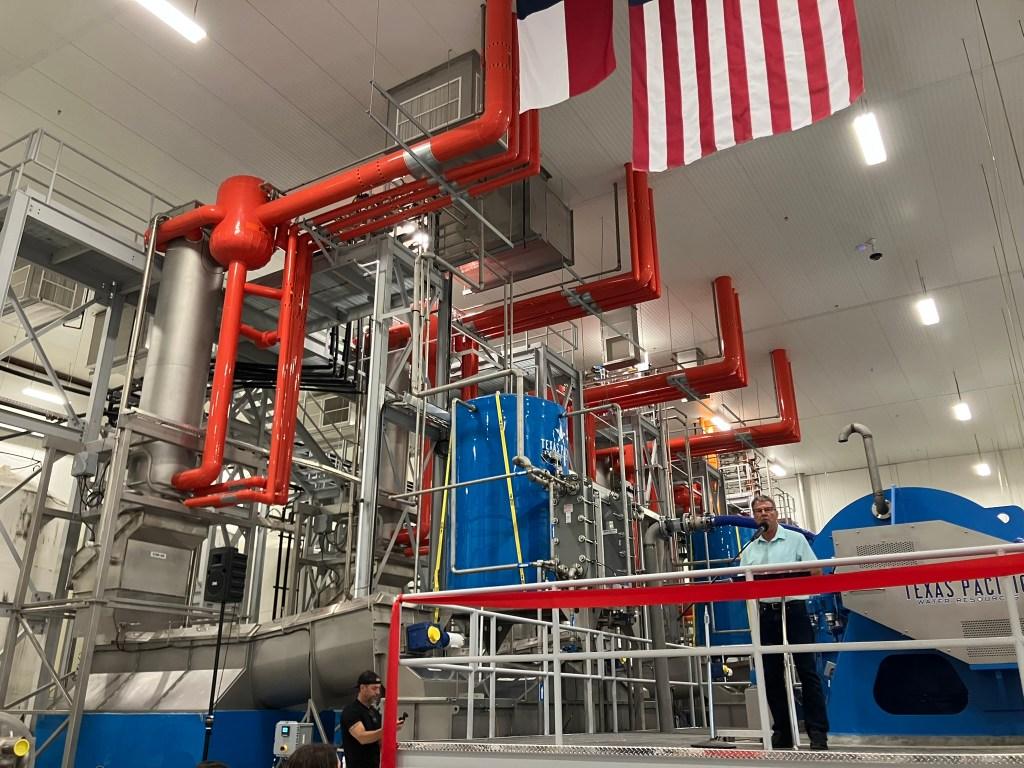
Meanwhile, energy companies in the Permian Basin are advancing treatment technologies despite the regulatory uncertainty. Just before the Senate hearing, Texas Pacific Water Resources inaugurated a new facility capable of treating 10,000 barrels, or about 420,000 gallons, of produced water daily.
Located in a “seismic response area” where underground injection has been reduced to mitigate earthquake risks, Texas Pacific anticipates a growing demand for produced water treatment in these regions. The company employs freeze desalination technology, a method likened to a “massive ice maker,” where freezing water pushes salts out, separating them into brine, with about half of the treated water recoverable for reuse.
Senator Charles Perry, a Republican from Lubbock, commended Texas Pacific for its investment in innovative treatment technology. “If they tell me it’s good enough to drink one day, I’ll drink it,” he remarked, expressing optimism about the potential for safe use of treated water.
Texas Pacific Water Resources, a subsidiary of Texas Pacific Land Corp., which is among the state’s largest landowners, has already received a permit for a pilot project to apply treated produced water to rangeland. The company has also submitted a permit application to TCEQ to discharge treated produced water into Salt Creek, a tributary of the Pecos River; however, they are still awaiting approval, even two years later.
The facility in Orla requires 5.5 megawatts of electricity for treatment operations, with on-site natural gas micro-turbines providing 4 megawatts. Lopez Billings has collaborated with Texas Tech scientists to explore using treated produced water for irrigating alfalfa at another facility, demonstrating the feasibility of using this water resource.
Despite the progress, challenges persist, particularly concerning the energy-intensive nature of desalination technology. The Orla facility’s electricity demands underscore the need for efficient energy solutions, as produced water treatment remains more costly than underground injection.
The annual conference of the Produced Water Society in Midland attracted hundreds, with TCEQ permit applications being a hot topic. Industry leaders, including Brady Murphy of TETRA Technologies, emphasized the need for regulators to define acceptable environmental standards for treated produced water.
However, TCEQ Commissioner Catarina Gonzales did not provide clarity on specific permit applications during the conference, leaving many attendees wanting. Robert Crain, executive vice president at Texas Pacific Water Resources, stressed the importance of a defensible permit framework that balances regulatory rigor with economic viability.
Ongoing research into produced water treatment continues to highlight significant gaps in understanding. Recent studies recommend multi-year evaluations of the effects of using treated produced water for irrigation, emphasizing the need for comprehensive water quality assessments and toxicity studies.
The Sierra Club’s Lone Star Chapter has also called for further research to determine necessary treatment levels and water quality standards, arguing that drafting regulations before robust data is available is imprudent. This call for caution reflects broader public concerns about the long-term safety of reusing treated produced water beyond the oilfields.
As TCEQ received nearly 450 comments on the proposed land application rule, analysis shows that over two-thirds of respondents opposed the draft, indicating significant public apprehension regarding the regulatory approach to managing produced water.