








FX’s latest offering, The Beauty, helmed by Ryan Murphy, features glamorous models and high-octane action but ultimately lacks depth. The series exemplifies Murphy’s knack for creating content that captures the fleeting attention of today’s viewers, a strategy that can prove more detrimental than beneficial.
While media creators must cater to audience preferences to thrive, Murphy has established himself as a pioneer in producing viral television. The Beauty serves as a prime example of this approach, reminiscent of trying to bake a loaf of bread from mere crumbs. The experience of consuming the series from start to finish reveals a disjointed narrative that crumbles under scrutiny.
This time, Murphy, along with co-creator Matthew Hodges, dives into the world of high fashion, a fitting backdrop after his explorations of notorious figures like Nurse Ratched and Jeffrey Dahmer. The fashion industry, notorious for its exploitative tendencies, provides fertile ground for storytelling.
The show intertwines themes of international espionage featuring FBI agents Evan Peters as Cooper Madsen and Rebecca Hall as Jordan Bennett, alongside a corporate antagonist, Byron Forst, played by Ashton Kutcher. Yet, the characters often feel secondary to the grandiose plot moments.
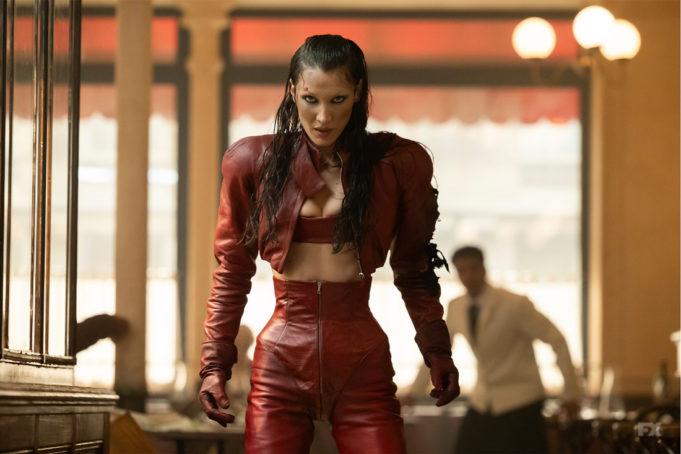
The titular “Beauty” refers to a serum masquerading as a sexually transmitted disease, transforming individuals into idealized versions of themselves—a quintessentially Murphy-esque concept. The series kicks off with a frenetic scene showcasing model Bella Hadid wreaking havoc at a Paris fashion show, highlighting the serum’s alarming effects, including explosive consequences for its users.
As the plot unfolds, Agents Madsen and Bennett are drawn into the investigation surrounding these violent incidents. Their relationship, characterized by a mix of professional and romantic entanglements, lacks clarity. The dialogue suggests a partnership charged with tension, yet it fails to establish whether they are compelling figures or simply morally ambiguous individuals.
The agents’ investigative methods leave much to be desired. In one scene, they view footage of a person exploding, yet fail to connect it to the model they are investigating. This raises questions about the competence of these characters in a world where such bizarre occurrences seem alarmingly commonplace.
The narrative also follows Jeremy, portrayed by Jaquel Spivey, an ordinary individual grappling with the ramifications of the beauty-enhancing toxin. Initially framed as a critique of societal obsession with beauty, his journey devolves into a spectacle of violence that undermines any meaningful commentary. By the time Jeremy undergoes his transformation, audience investment in his character has waned.
Kutcher’s role as the enigmatic corporate leader feels more like a marketing strategy than a substantive character. His portrayal lacks engagement, serving mainly to deliver ominous observations about the privileged elite.
The Beauty suffers from an identity crisis, borrowing elements from body-horror cinema and predecessors like The Substance without successfully integrating their lessons. While Murphy’s earlier work on Nip/Tuck conveyed poignant messages about the pursuit of perfection and its costs, this latest series feels like an unfinished draft, lacking the clarity and impact of its forebears.