






The Colony Ridge development, located in the northern suburbs of Houston, has come under scrutiny following a lawsuit alleging that it targeted Hispanic individuals with predatory high-interest loans. The U.S. Justice Department filed this lawsuit in December 2023, claiming that Colony Ridge duped tens of thousands of Hispanic residents into unfavorable mortgage agreements. This case marks a significant action for the Biden administration in its civil rights efforts.
Kristen Clarke, the assistant attorney general for civil rights, described Colony Ridge as a “one-stop shop for discriminatory lending” during the announcement of the lawsuit. The allegations suggest that the developer employed misleading advertising to attract Hispanic applicants, convincing them to take out loans that were beyond their financial means, ultimately profiting from subsequent foreclosures.
Clarke emphasized the Justice Department’s commitment to ensuring that victims receive compensation for their losses. However, three years later, a proposed settlement between the Trump administration and Colony Ridge appears poised to resolve the case without providing any financial restitution to the affected individuals. Instead, the agreement allocates $20 million for law enforcement and immigration enforcement, raising concerns that it could target the same communities that were victimized by the developer.
Elena Babinecz, a former investigator at the Consumer Financial Protection Bureau, expressed disbelief at the settlement’s terms, highlighting a disconnect between the resolution and the harm inflicted on victims. She described the lack of compensation as a profound injustice, calling it a “slap in the face” to those who suffered losses.
The proposed settlement has drawn criticism from a coalition of fair housing and civil rights organizations, who argue that it undermines the potential for consumers to secure compensation, especially for those who cannot afford private legal representation. Legal experts noted that the Colony Ridge case is the largest within the Justice Department’s recent history that lacks monetary compensation for victims.
Investigators had built a compelling case against Colony Ridge, presenting evidence that the developer misled buyers regarding the state of the properties, leading to additional unexpected expenses for drainage and utility connections. This deception contributed to a wave of defaults on high-interest loans, after which Colony Ridge was able to resell the foreclosed properties at inflated prices.
Over the course of eight years, the government’s case contends that Colony Ridge exploited a significant number of victims, repossessing over 15,000 lots, many of which belonged to immigrants. A recent investigation revealed that the developer’s practices had led to widespread financial ruin among its clients.
In the context of Colony Ridge, it is notable that of the 183 housing and civil enforcement settlements initiated by the Justice Department since 2018, a mere 6% did not include financial reparations for victims. This statistic starkly contrasts with the treatment of other cases, where compensation was more commonplace.
While Colony Ridge faced scrutiny, the narrative surrounding the development was often overshadowed by politically charged discussions about immigration. Conservative media and politicians associated the site with unfounded allegations of cartel activity and lawlessness, despite local law enforcement refuting these claims.
The federal lawsuit and subsequent settlement process did not emphasize public safety or the need for increased policing in the area, which further complicates the narrative surrounding the case.
The Justice Department has refrained from commenting on the criticisms of the settlement, and the Texas Attorney General’s office has similarly remained silent. However, officials have framed the settlement as a necessary step to address issues of illegal immigration, asserting that Colony Ridge’s practices contributed to the problem.
Critics argue that the focus on immigration enforcement complicates the lives of victims, who may face harassment from immigration officials even if they are citizens. This sentiment was echoed by former officials who highlighted the detrimental impact of the settlement on the victims.
John Harris, CEO of Colony Ridge, declined to comment on the allegations against his company, which has consistently defended its business practices. The developer has claimed that it provides accessible homeownership opportunities to individuals who might otherwise be turned away by traditional lenders.
Despite the rapid growth of Colony Ridge, the financing practices have drawn scrutiny. Critics emphasize that offering high-cost loans does not ultimately benefit consumers, and the settlement fails to offer adequate compensation to those affected.
Some provisions of the settlement could potentially protect future consumers, such as stricter lending standards and increased transparency. However, many believe these measures do not sufficiently address the harm suffered by victims.
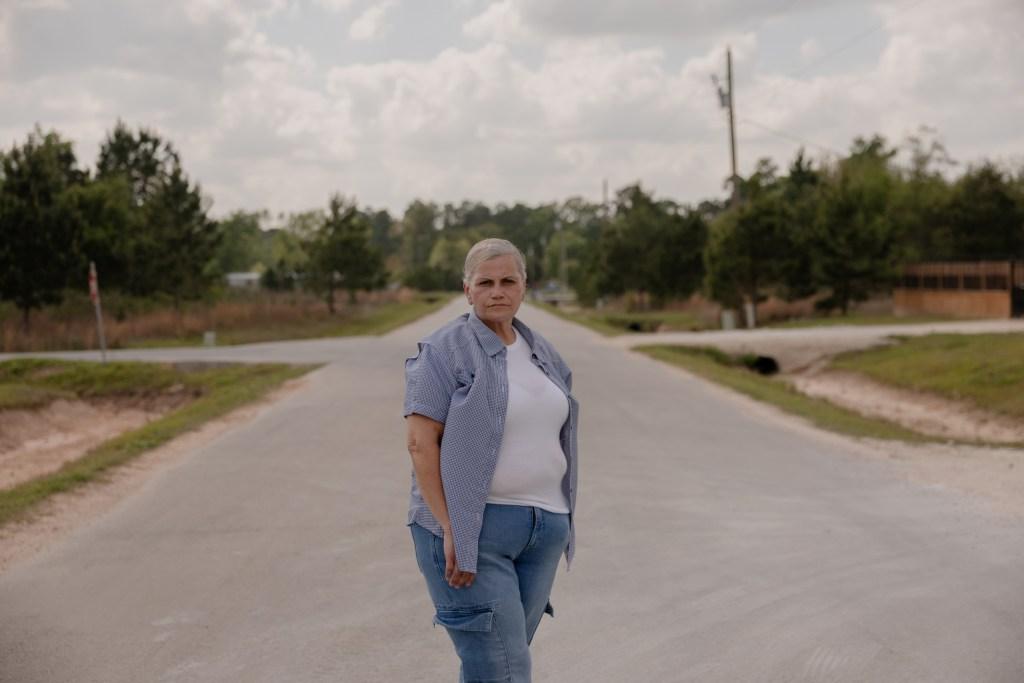
Maria Acevedo, one of the many individuals affected by Colony Ridge’s practices, expressed her disillusionment with the proposed settlement. Despite being a U.S. citizen and a former land developer, Acevedo found herself entangled in a high-interest loan that led to foreclosure on her property, disrupting her retirement plans.
Acevedo, who initially cooperated with federal investigators in hopes of recovering her losses, now feels betrayed by the settlement’s terms. She plans to attend the upcoming court hearing to voice her concerns directly to the judge.
Similarly, SuEllen Sanchez, another victim, expressed frustration over the settlement, which she believes fails to adequately address the injustices faced by consumers. She and her sister gathered testimonies from other individuals who felt scammed, only to be disheartened by the outcome of the legal proceedings.
As the court hearing approaches, many affected individuals like Acevedo and Sanchez hope to have their voices heard, urging the judge to reconsider the settlement’s implications for victims of Colony Ridge’s alleged predatory practices.