





In a significant escalation of military action, President Trump has ordered strikes on Venezuelan military facilities, intensifying the U.S. campaign against the regime of Nicolás Maduro. This operation marks a new phase in the ongoing U.S. efforts to address what officials describe as drug trafficking and terrorism linked to Maduro’s government.
The strikes come after months of increased U.S. military presence in the region, notably with the USS Gerald R. Ford aircraft carrier and several other warships strategically positioned in the Caribbean. Recent U.S. operations have included the seizure of two oil tankers off Venezuela’s coast and strikes on more than 30 vessels believed to be involved in drug smuggling activities.
The Trump administration has accused Maduro of collaborating with criminal gangs involved in drug trafficking, allegations that Maduro has vehemently denied. In a warning issued on Christmas Eve, Trump indicated that there would be serious consequences if Maduro continued to resist U.S. pressures.
FAA Bans Commercial Flights Over Venezuela
As military operations unfolded, the Federal Aviation Administration (FAA) imposed a ban on all commercial flights over Venezuela, citing safety concerns stemming from ongoing military activity. This prohibition took effect early Saturday and is expected to remain in place for at least 24 hours.
Maduro Expresses Openness to Dialogue
Before the strikes commenced, Maduro expressed a willingness to negotiate with the U.S. regarding issues of drug trafficking, oil, and migration. He stated his readiness for discussions “wherever they want to whenever they want,” hinting at a possible agreement to combat drug trafficking or enhance American investment in Venezuela’s oil sector.
Despite these overtures, Maduro has accused the U.S. of attempting to destabilize his government, insisting that the strikes are part of a broader strategy to impose U.S. dominance in the region.
Maduro’s Grip on Power Amidst Controversy
Since assuming the presidency in 2013, Maduro has faced numerous challenges to his authority, including a highly disputed election in 2024, which opposition leaders and international observers deemed fraudulent. Despite widespread condemnation, Maduro was sworn in for a third term in January 2025.
Trump’s Escalated Military Strategy
Trump has hinted at expanding military actions beyond maritime operations, signaling a potential shift to land strikes against suspected drug traffickers in Latin America. During a Cabinet meeting, he stated, “We’re going to start doing those strikes on land, too,” indicating that U.S. military operations could target drug trafficking routes and organizations across the region.
International Reactions to U.S. Strikes
Cuban President Miguel Díaz-Canel condemned the U.S. strikes as a “criminal attack,” urging the international community to denounce what he termed state terrorism against Venezuela. The Venezuelan government has similarly described the strikes as “serious military aggression,” vowing to defend against what it views as imperialist attempts to instigate regime change.
Reports of Explosions in Caracas
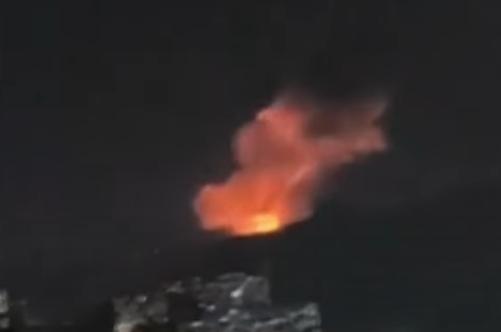
Reports of explosions and low-flying aircraft in Caracas emerged shortly after the U.S. strikes were confirmed. Colombian President Gustavo Petro commented on social media, alerting the world to the ongoing attacks in Venezuela and calling for a United Nations meeting.
U.S. Military Preparation and Strategy
In the days leading up to the strikes, Trump authorized military action, aligning with a strategy that has seen over 30 strikes against drug smuggling boats since September. The U.S. has justified these actions as necessary to combat narcoterrorism, with officials asserting that Maduro’s regime is complicit with armed gangs in drug trafficking operations.
The situation remains fluid, with heightened tensions and the potential for further military engagements as the U.S. continues to exert pressure on the Maduro government.