








A wave of technological disruptions swept across the United States on Monday, affecting major banking institutions and leaving thousands of customers struggling to access their online accounts. This incident follows a series of significant tech outages reported throughout the week.
The latest troubles primarily involved several prominent banks, including JPMorgan Chase, Bank of America, U.S. Bank, Wells Fargo, and Zelle. At the peak of the disruptions, Downdetector recorded over 4,700 complaints from Chase Bank customers, along with 2,000 from Bank of America, and about 1,000 from both U.S. Bank and Wells Fargo.
Chase Bank attributed the issues to a software bug within its on-premise hardware system, resulting in delays for some transactions. This technical malfunction inadvertently affected other banks, such as Bank of America and Citigroup, whose transactions with Chase experienced similar slowdowns.
By the evening, Chase Bank announced that the issues had been resolved, with a spokesperson confirming to local media that transactions were processing normally once again.
This incident is just one in a string of technological failures that have plagued American industries recently. The turmoil began last Thursday when Microsoft experienced a major outage that disrupted services including Outlook, Teams, and its AI assistant Copilot. Microsoft cited an “elevated system load” as several servers went offline, straining the remaining infrastructure.
The following day, the Federal Aviation Administration (FAA) faced a significant challenge, issuing a ground stop that halted air traffic across the nation due to a technical issue. Thousands of flights were delayed or canceled as a result. The FAA later reported that its legacy equipment had become unstable after an overwhelming influx of data, with a radar site in Amarillo, Texas, and a communications site in El Dorado, Arkansas, identified as potential sources of the data flood.
Officials from the FAA, Microsoft, and Chase Bank have all clarified that their respective incidents are not related to cyberattacks.
Insights from a Cybersecurity Expert
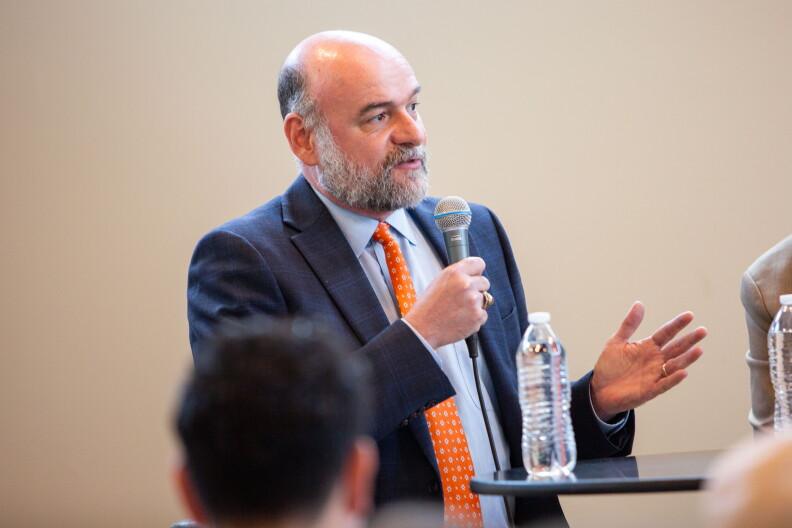
John Miri, president of the Electric Grid Cybersecurity Alliance, shared his perspective on these recent outages, expressing disbelief at the coincidental timing of such diverse technical failures. With 25 years of experience in cybersecurity, Miri has protected systems that handle billions of dollars in electronic transactions and critical infrastructure.
“In a word, no, I have never seen this before,” Miri remarked. He emphasized that the simultaneous failures across completely different systems raise suspicions about the possibility of a coordinated attack. “The infrastructure for Microsoft Outlook is entirely separate from that of the FAA and Chase Bank, yet they all experienced issues almost concurrently. That’s just suspicious,” he stated.
While he remains cautious not to jump to conclusions regarding a cyberattack, Miri acknowledges that the patterns observed in some past cyber incidents warrant consideration. He pointed out that attackers often erase their digital fingerprints, leaving behind signs of mere technical malfunctions. “This has happened multiple times in the past,” he noted, referencing events in Saudi Arabia, Ukraine, and Iran.
As speculation mounts, Miri advocates for transparency from officials to alleviate public concern. “I don’t want to freak people out, but people are smart and they understand that there’s a risk this could be a cyberattack,” he said. He urged authorities to reassure the public by openly acknowledging the potential threats and demonstrating their commitment to addressing the situation.