







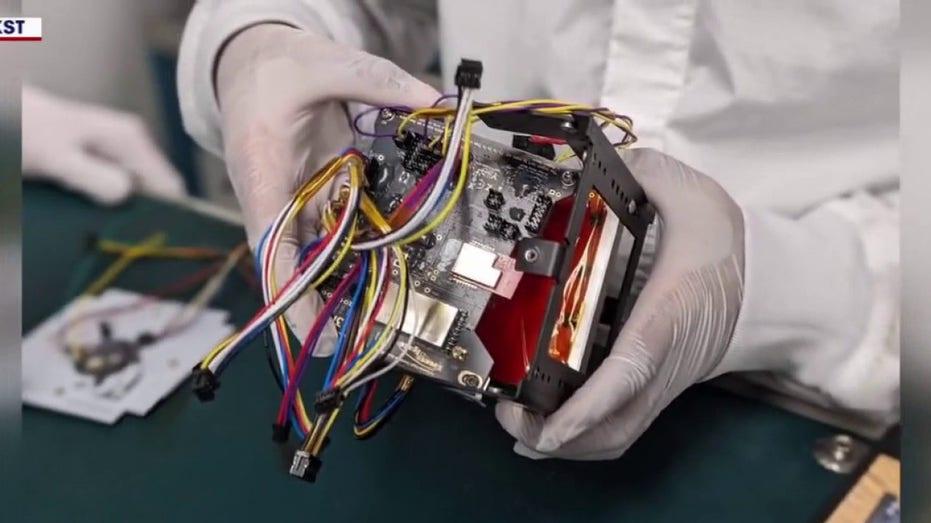
Texas State University has made history with the launch of its inaugural satellite into space. This significant achievement took place on Tuesday morning when a student-engineered satellite ascended aboard a SpaceX Falcon 9 rocket, part of a NASA resupply mission.
The satellite, named PROVES-MAIA, is a miniature CubeSat crafted entirely by Texas State students. This milestone is particularly impressive given the absence of a dedicated aerospace engineering program at the university.
Studying Earth’s Shield Against Gamma Rays
The primary objective of PROVES-MAIA revolves around atmospheric defense. Equipped with a specialized gamma radiation sensor, the satellite aims to gather data on how Earth’s atmosphere protects the planet from high-energy radiation. Blagoy Rangelov, an associate professor of physics at Texas State, described the launch as a monumental achievement for the institution.
For the past year and a half, a dedicated team of students has collaborated closely with NASA and SpaceX to transform their concept into a functioning satellite. Saidi Adams, one of the student engineers involved in the project, expressed excitement about being part of an endeavor that would eventually contribute to space exploration.
Launching Careers Alongside Satellites
Beyond its scientific significance, the satellite project has opened numerous doors for students, providing opportunities for high-profile internships and hands-on research. Adams shared his experience of traveling extensively over the summer due to internship opportunities generated through this initiative, emphasizing the amazing prospects that arose from their work.
Future Missions on the Horizon
The success of PROVES-MAIA is expected to facilitate further funding for Texas State’s space initiatives. The team is already turning its attention to an upcoming project dubbed ADAPT. With the first launch establishing a foundation for future endeavors, the team anticipates additional funding to expand their workforce and facilities.
As PROVES-MAIA successfully makes its way to the International Space Station, its mission is only beginning. In approximately three to four weeks, the CubeSat will be deployed into Earth’s orbit, where it will start transmitting real-time data back to Texas State’s ground control station in San Marcos. There, the student team will oversee its operations from the command center.