








Income growth in Texas experienced a slowdown last year, with notable declines in at least one major urban area, as residents grapple with the ongoing burden of high housing costs, according to new data from the U.S. Census Bureau.
The median household income in Texas reached $82,625 in 2025, reflecting a modest increase from the previous year, with Hispanic households achieving the most significant financial gains. However, these improvements were not uniformly distributed across the state.
While income levels increased in the Houston and San Antonio areas, they fell in regions such as McAllen and Dallas-Fort Worth. Despite a general upward trend in household incomes since 2021, Texas continues to lag behind the national median household income of $84,780.
Last year saw a decrease in the number of Texans, including children, living in poverty, leading to a reduction in the state’s overall poverty rate. However, the number of older Texans and families facing poverty did rise. Though income inequality remains a significant issue in Texas, it is comparatively lower than the national average.
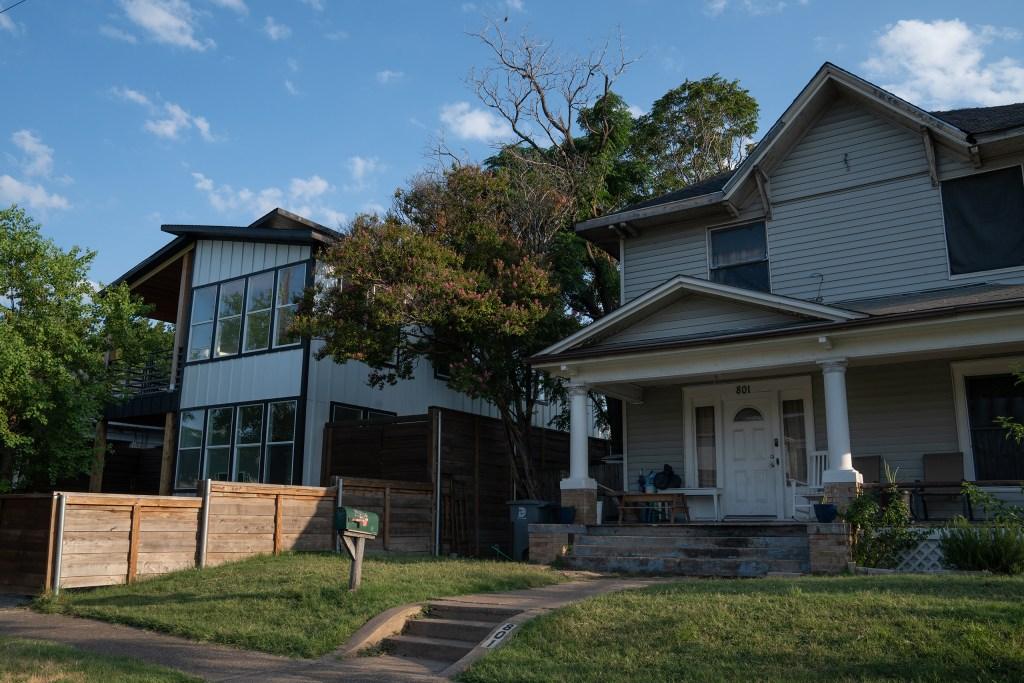
Housing costs continue to be a major concern for many residents, particularly as voters express anxiety regarding the cost of living in upcoming elections. More than half of the state’s 4.3 million renters are considered “cost-burdened,” spending 30% or more of their income on housing, which leaves them with limited resources for essentials like groceries, healthcare, transportation, childcare, or savings. Despite this, monthly rents for Texas tenants remained relatively stable.
On the other hand, expenditures on housing for Texas homeowners increased, especially among those with mortgages. The percentage of mortgage-holding homeowners who are cost-burdened rose slightly to approximately 32% in 2025.
Hispanic and Black households experienced the largest increases in income, now averaging $70,348 and $64,664 respectively. However, these figures still fall significantly short of the $92,479 median income for white households. The disparity between white and Hispanic households is notably more pronounced in Texas compared to the national context. Meanwhile, median household income among Texans of Asian descent stands at $122,370, which represents a decline of 2.3% from the previous year.
Although housing costs have generally risen, some relief was observed. The median property tax bill for homeowners who have paid off their mortgages decreased by about 4.2% from 2024 to 2025, while the bill for those with mortgages remained largely unchanged. Over the past few years, Texas legislators have allocated billions to address the state’s high property taxes.
In contrast to Texas, the national median property tax bill increased, yet it remains below the average bill in the Lone Star State.
The Census Bureau also updated its survey questions regarding health insurance, revealing that Texas maintains the highest uninsured rate in the nation, a status it has held for over a decade.
Additionally, new questions about solar panel and electric vehicle ownership were introduced. Residents in Travis County, home to Tesla’s Gigafactory, are approximately twice as likely to own electric vehicles compared to the overall state average.
Urban households reported higher rates of solar panel ownership compared to rural areas, although over 80,000 rural households out of 2.3 million indicated they had solar panels. Texas still falls short of the national average of 5.2% of homes equipped with solar energy systems.