









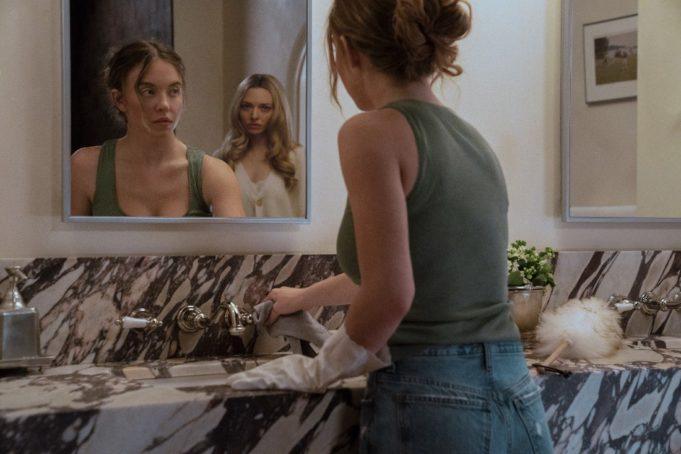
The Housemaid, a film adaptation of Freida McFadden’s best-selling 2022 novel, breathes new life into a genre often regarded as disreputable. Unlike the classic 1960 South Korean film of the same name, this movie carves its own path, embarking on a journey that has already spawned three sequels and numerous standalone books.
Directed by Paul Feig, known for his comedic flair, this adaptation leans into the realm of psychological thrillers reminiscent of iconic films like Fatal Attraction and Basic Instinct. While the latter part of the film may falter slightly, it benefits from narrating the story through a female perspective, enhancing the overall impact of The Housemaid.
The narrative introduces us to Wilhelmina “Millie” Calloway, portrayed by Sydney Sweeney, who seeks employment as a live-in maid for the affluent Nina Winchester, played by Amanda Seyfried. Both characters harbor secrets: Millie conceals her past as an ex-convict recently released from a decade-long prison sentence, living in her car. Conversely, Nina’s erratic behavior spirals out of control shortly after Millie’s arrival, culminating in outbursts of anger, tears, and wild accusations. This volatile dynamic extends to her husband Andrew (Brandon Sklenar), who repeatedly intervenes to shield Millie from Nina’s unpredictable rages. An unsettling presence in the form of an Italian groundskeeper (Michele Morrone) further amplifies the tension within Nina’s Long Island mansion, making it feel more threatening than Millie’s previous confinement.
For those familiar with the novel, a notable plot twist akin to Gone Girl occurs midway through the film, accompanied by a significant increase in violence. Millie’s confinement in her attic room, which is locked from the outside, leaves her physically marked, and the climax escalates to a bloodier confrontation, albeit with a somewhat convenient disappearance of Millie until the climax demands her return.
The performances, however, leave room for improvement. Though Sweeney has starred in numerous films this year, her portrayal in The Housemaid feels somewhat subdued. To truly grasp her talent, one might need to reference her acclaimed role in Euphoria. Meanwhile, Sklenar, reminiscent of Chris Evans, delivers a deliberately dull performance that serves the narrative but lacks charisma. His explosive moment of rage against Nina marks a highlight, yet a more dynamic actor could have elevated the role significantly.
Amanda Seyfried excels as the unstable housewife, navigating a web of social isolation and erratic behavior that alienates her from the other affluent mothers in the neighborhood. Her performance is layered with complexity, especially as the story unfolds and reveals deeper motivations behind her actions. Even during her initial encounter with Millie, Seyfried captures a sense of manic desperation that hints at her character’s instability. The film wisely avoids depicting Nina’s physical transformation post-marriage, which adds to the visual symmetry between the two lead actresses, suggesting Andrew’s preference for a specific type.
While some may yearn for the campy flair of Feig’s previous works, this film takes a different direction that feels appropriate for its darker themes. Although sharper dialogue from Rebecca Sonnenshine could have enhanced the script, The Housemaid ultimately surpasses its source material, presenting an adaptation that meets audience expectations. It serves as a compelling holiday offering for viewers seeking thrills at the multiplex.
The Housemaid
Starring Sydney Sweeney and Amanda Seyfried. Directed by Paul Feig. Written by Rebecca Sonnenshine, based on Freida McFadden’s novel. Rated R.