








McALLEN — The U.S. Department of Homeland Security is intensifying its border security measures along the Rio Grande by implementing a controversial strategy that involves the installation of large, floating buoys over more than 500 miles of the river.
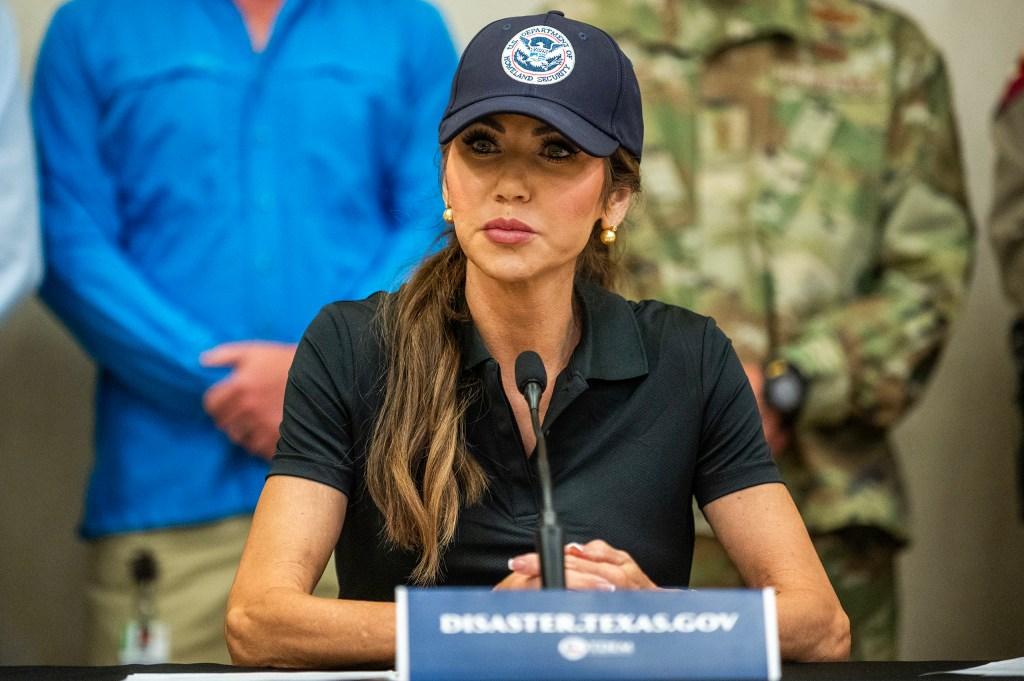
During a visit to the Rio Grande Valley, U.S. Homeland Security Secretary Kristi Noem announced the deployment of these barriers, which was followed by a roundtable discussion with personnel from U.S. Customs and Border Protection and local ranchers whose land is frequently crossed by migrants heading north.
Standing in front of one of the buoys—large, cylindrical devices measuring up to 15 feet in length and four to five feet in diameter—Noem revealed that contracts for 130 miles of these water barriers were already in place, with installation commencing that day.
This water barrier initiative is part of a broader effort by President Donald Trump to construct a “Smart Wall.” This concept includes steel barriers, waterborne barriers, patrol roads, lights, cameras, and detection technologies, all funded through a substantial tax and spending bill known as the One Big Beautiful Bill.
Noem emphasized the buoy’s role as a deterrent against illegal border crossings, as well as against drug trafficking and human smuggling.
Homeland Security and Border Patrol are collaborating with the U.S. International Boundary and Water Commission and the state of Texas to ensure the buoys are installed correctly, Noem stated.
Texas has prior experience with buoy installations for border control. In 2023, Governor Greg Abbott ordered the placement of a 1,000-foot water barrier along the Rio Grande near Eagle Pass, a move aimed at reinforcing border security, followed by an additional 1,000 feet after Trump took office in January 2025.
“Texas finally has a partner in the White House,” stated Andrew Mahaleris, press secretary for Abbott. “The floating marine barriers deployed by Texas have been a resounding success, and Governor Abbott is proud to work with the Trump Administration and Border Patrol to expand the program.”
The introduction of these buoys has sparked protests from activists concerned about the safety of migrants, alongside a complaint from the Mexican government that claims the buoys violate existing water treaties between the U.S. and Mexico. The U.S. Department of Justice, under President Joe Biden, has initiated legal action against Texas regarding the buoys, citing similar concerns. Meanwhile, the U.S. Fifth Circuit Court of Appeals has permitted the buoys to remain in place as the case is considered in a lower court. Texas argues it has the right to defend its borders against what it terms an “invasion” by drug cartels.
Weeks following the buoy wall’s installation in Eagle Pass, Mexican authorities reported the tragic discovery of a migrant who had drowned after becoming entangled in one of the floating devices. On Wednesday, Noem asserted that the water barrier would ultimately prevent such tragedies by dissuading individuals from attempting to cross the river.
“They’ll create a safer environment for agents on patrol, and securing our waterways not only protects Americans, it saves the lives of illegal aliens by deterring them from daring to attempt to cross through this treacherous water,” Noem stated.