




NASA’s recent attempt to conduct a “wet dress” rehearsal for its Artemis II moon rocket was hampered by hydrogen leaks, despite earlier efforts to manage the issue. The agency had been preparing to fuel the rocket with over 750,000 gallons of liquid oxygen and hydrogen when the countdown was interrupted early Tuesday morning.
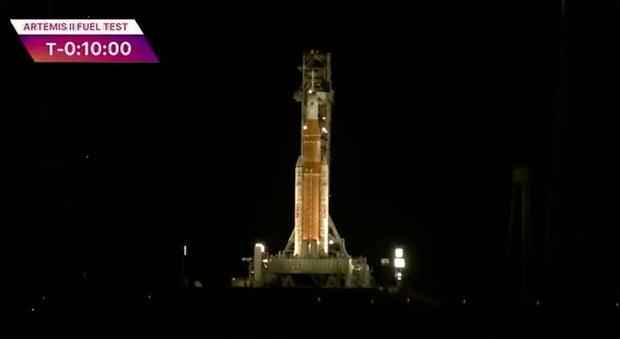
The countdown, which had already fallen several hours behind schedule, resumed at the T-minus 10-minute mark around 12:09 a.m. EST, heading towards a simulated engine start. However, just four and a half minutes later, it was halted again due to a liquid hydrogen leak found at the interface of the tail service mast umbilical, a problem that had already shown high concentrations of liquid hydrogen earlier in the countdown.
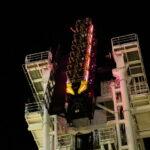
The mobile launch platform for the Space Launch System (SLS) rocket is equipped with two tail service masts that contain propellant lines leading to the umbilical assemblies on the rocket’s engine compartment. NASA stated that the launch control team is working to ensure the rocket is in a safe configuration and will begin draining its tanks.
In a blog post released early Tuesday, NASA indicated that the agency would now aim for a launch opportunity in March, allowing sufficient time for teams to analyze data and conduct another wet dress rehearsal. As a result of this delay, the Artemis II astronauts, who had been quarantined since January 21 in Houston, will not travel to NASA’s Kennedy Space Center in Florida as initially planned. They will re-enter quarantine approximately two weeks before the next targeted launch date.
The agency had limited windows for a February launch, with only three possible dates—February 8, 10, and 11—to send four astronauts on a mission to the moon. Given the complexity of hydrogen leaks, which have proven challenging to repair at the launch pad, a launch on Super Bowl Sunday seems increasingly unlikely unless the leak is deemed manageable. Final decisions regarding the next steps will depend on the data review, with a news briefing scheduled for 1 p.m. Tuesday.
The rehearsal countdown began on Saturday evening, delayed by cold weather in Florida and a subsequent morning meeting assessing conditions. After being cleared by Launch Director Charlie Blackwell-Thompson, engineers initiated the remotely-controlled fueling operation about 45 minutes later than intended. Initially, the test progressed smoothly as supercooled liquid oxygen and hydrogen were pumped into the rocket’s first stage tanks, followed by the upper stage.
However, a leak was detected at an umbilical plate connecting a fuel line to the rocket’s first stage about 55 percent into the first stage hydrogen tank filling. After a brief pause, fuel flow resumed, but was halted again when the tank reached 77 percent full. Engineers chose to continue, anticipating that the leak would decrease once the tank was full and the flow rates reduced, which ultimately proved correct.
By late afternoon, NASA updated that the core stage of the SLS rocket had been successfully filled with liquid hydrogen, although engineers continued to monitor the leak at the tail service mast umbilical, which remained within acceptable limits.
The countdown was initially set for a simulated launch at 9 p.m. EST, but the test exceeded its original timeline. By 9:55 p.m., the countdown was in an extended hold at the T-minus 10-minute mark. Shortly after midnight, the countdown resumed but was stopped for the final time at T-minus five minutes and 15 seconds.
The SLS rocket, standing at 332 feet tall atop pad 39B at Kennedy Space Center, is designed to carry Artemis astronauts to the moon aboard Orion crew capsules. With its powerful engines generating 8.8 million pounds of thrust at liftoff, the SLS is currently the most potent operational launcher worldwide.
Artemis II commander Reid Wiseman and his crew—Victor Glover, Christina Koch, and Jeremy Hansen—are aiming for a launch as early as Sunday night for a nine-day, two-hour mission around the moon. Their travel to Florida for final preparations is contingent upon the outcome of the countdown review.
The SLS had its inaugural mission in 2022, successfully launching an uncrewed test flight. However, that launch faced numerous setbacks related to fuel leaks and unexpected propellant flow behavior, leading to substantial delays. For the upcoming flight, several upgrades have been made, and Blackwell-Thompson expressed optimism based on the lessons learned from the previous mission.
“We learned a lot during the Artemis I campaign,” she stated last week, referencing the improvements made in fueling procedures for Artemis II. “The lessons we gained have been integrated into our approach for loading the vehicle this time around.” Nevertheless, the recurring issue of leakage at the tail service mast umbilical has resurfaced, echoing challenges faced during the first Artemis flight.