







A Travis County District Judge has ruled in favor of the city of Austin, allowing the expansion of the Austin Convention Center to proceed as originally planned. This decision comes amidst a legal challenge initiated by the Austin United Political Action Committee, which sought to halt the project.
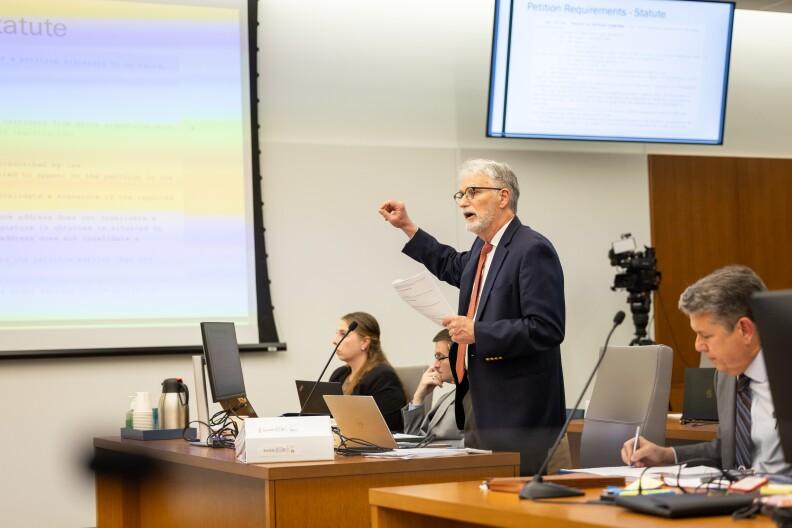
The lawsuit was initiated in December and heard in January by Judge Jessica Mangrum. Her ruling effectively denies voters the opportunity to express their opinions on the redevelopment of the convention center in the upcoming May election. With demolition already completed, construction on the new facility is currently well underway.
While the PAC advocates for alternative uses of the six-block downtown site, including museums or cultural venues, attorney Bill Bunch indicated the group is considering an appeal. “The election code allows for direct appeals to the Texas Supreme Court regarding urgent election matters, and we are exploring that path,” he stated. The PAC remains determined to provide residents with a chance to vote, whether in May or November.
Austin Mayor Kirk Watson welcomed the ruling, asserting that the convention center’s expansion is vital for the city’s future and its tourism industry. “I’m optimistic about what lies ahead for Austin,” he remarked on social media platform X.
This is not the first attempt to secure a public vote on the convention center expansion; a similar measure was presented to voters in 2019 but was unsuccessful.
Efforts to Secure a Ballot Measure
Beginning in February, the Austin United PAC gathered signatures for its “Save the Soul of Austin” petition, which aimed to pause the convention center expansion for seven years unless approved by voters. The group claimed to have gathered the required 20,000 signatures by October 2025.
However, in November, Austin City Clerk Erika Brady announced that the petition fell short of the necessary signatures following a verification process that included random sampling, a method permitted by state law. “The city has determined that the convention center petition does not meet the minimum requirement for valid voter signatures,” Brady explained.
Bobby Levinski, an attorney for the PAC, argued that Brady improperly disqualified numerous signatures to keep the petition below the threshold for a ballot measure. He highlighted that some of the disqualified signatures came from voters in the city’s limited purpose jurisdiction or extraterritorial jurisdiction, areas just outside the city limits.
Under state election laws, residents in limited purpose areas can vote only on city council elections, recalls, or city charter amendments, while those in extraterritorial jurisdictions can vote on propositions impacting their areas. Levinski contended that the convention center petition should be treated similarly to past propositions that included voters from these jurisdictions.
During the trial, witness Betsy Greenberg shared her experiences voting on city propositions that pertained to land development. Levinski argued that since hotel tax dollars allocated for the convention center are also spent in the ETJ, those residents deserve a say in how the funds are utilized.
Technical Challenges with Signatures
Levinski also noted that many signatures were rejected due to technical issues. Deputy City Clerk Stephanie Hall confirmed that missing information, such as addresses or birthdates—requirements under state law—led to these rejections. Some signatures were also discarded because they were illegible or incomplete.
In defense of the city’s actions, attorney Paul Trahan stated that the rules regarding valid signatures are explicit. He emphasized that the city clerk’s office thoroughly verified all possible signatures and highlighted that the petition ultimately did not meet the necessary threshold.
Trahan pointed out that of the last 13 petitions submitted to the city clerk’s office since 2018, 11 were verified, indicating that the office is not obstructing legitimate petitions. He maintained that voters in the ETJ do not qualify for this particular petition, as it does not pertain directly to their jurisdiction.
The convention center renovation is projected to cost approximately $1.6 billion, aiming to expand the facility to accommodate larger events and conferences. Funding for the project comes from Hotel Occupancy Taxes generated through hotel stays, which are designated solely for tourism-related purposes. With demolition complete, construction is set to continue through 2028, with an anticipated opening in 2029, coinciding with spring festivals.