







The Pentagon’s recent authorization for U.S. Customs and Border Protection to utilize an anti-drone laser has resulted in the Federal Aviation Administration (FAA) unexpectedly shutting down airspace over El Paso. This decision, made earlier this week, initially stranded travelers until the closure was lifted after just a few hours, according to sources familiar with the situation who requested anonymity due to the sensitive nature of the information.
The sequence of events began with the FAA’s announcement of a 10-day suspension of all flight operations over the U.S.-Mexico border city, which is home to nearly 700,000 residents. The Trump administration stated that the action was necessary to combat incursions by drones operated by Mexican cartels, a growing concern along the southern border.
Reports indicate that the laser was deployed near Fort Bliss without prior coordination with the FAA, prompting the agency to act swiftly to safeguard commercial air traffic. Others familiar with the incident noted that the technology was utilized despite an upcoming meeting between the FAA and Pentagon to address such matters.
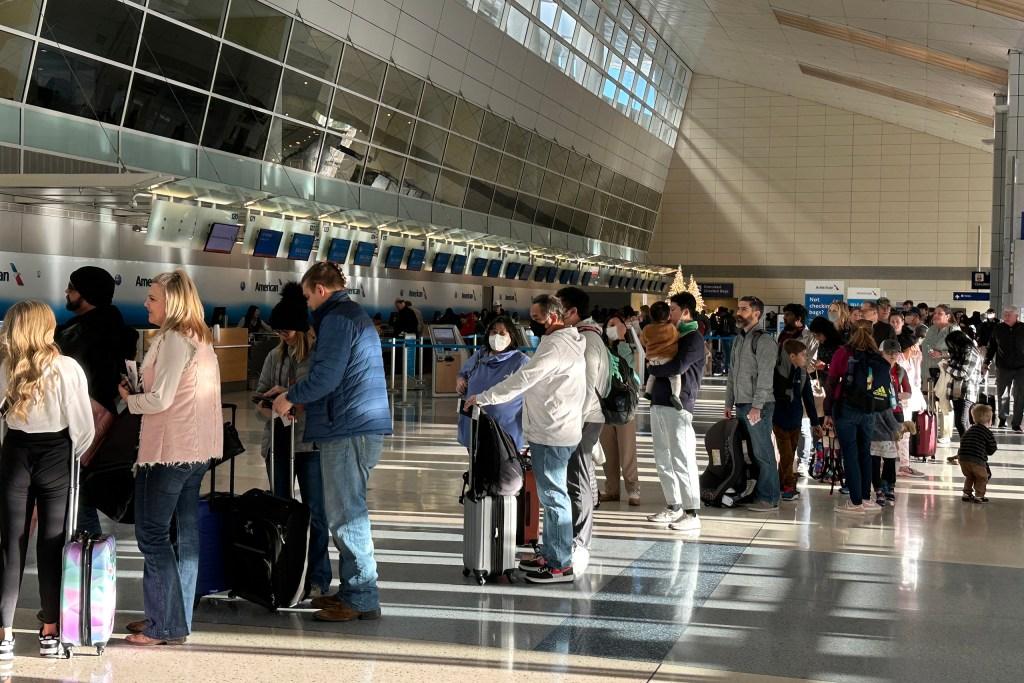
Although the airspace restrictions lasted only a short time, it is uncommon for an airport to experience a complete shutdown, even temporarily. Passengers were seen lining up at airline ticket counters and car rental services as normal operations resumed following the cancellation of seven arrivals and departures, including some medical evacuation flights.
Travelers like Jorge Rueda and Yamilexi Meza from Las Cruces, New Mexico, faced disruptions to their plans, as their flight to Portland, Oregon, was canceled, impacting their Valentine’s Day weekend trip. Rueda expressed relief that the anticipated 10-day closure was resolved in just two hours, as they were able to rebook for an evening flight out of El Paso.
The incident has drawn attention to a troubling pattern of coordination failures between the FAA and the Pentagon. A National Transportation Safety Board investigation into a fatal midair collision near Washington, D.C., last year revealed significant lapses in communication and data sharing between the two agencies regarding safety concerns around Reagan National Airport.
Democratic Senator Tammy Duckworth of Illinois, a former Army helicopter pilot, criticized the incident as indicative of a broader lack of coordination prevalent during the Trump administration. Senator Ted Cruz of Texas announced plans to seek a briefing from the FAA regarding the airspace closure.
Representative Veronica Escobar, a Democrat from El Paso, noted that neither her office nor local officials were informed in advance about the airspace shutdown. Following the reopening, she expressed confusion over the federal government’s explanations, stating that the community deserves clarity on the abrupt decision and its swift reversal.
Transportation Secretary Sean Duffy attributed the airspace closure to the Defense Department and FAA’s response to the drone threat, asserting that the situation had been resolved. However, officials from the Department of Homeland Security, FAA, and the Department of Transportation did not respond immediately to requests for clarification. A Trump administration official contended that the agencies were aligned in their efforts to protect national security, echoing Duffy’s statements.
Drone activity along the border is not a new phenomenon. Representative Tony Gonzales, whose district encompasses a significant stretch of the Texas-Mexico border, remarked that incursions by cartel-operated drones are a frequent occurrence. He noted that for those living and working in border regions, such incidents have become a routine aspect of daily life.
In a congressional hearing, Steven Willoughby, the deputy director of the counter-drone program at the Department of Homeland Security, revealed that cartel drones are employed almost daily for drug transport and surveillance of Border Patrol agents. In the last six months of 2024, over 27,000 drones were detected in close proximity to the southern border, primarily at night.
It is noteworthy that the closure of an entire airport for security reasons is considered “extremely rare.” Rich Davis, a former chief security officer at United Airlines, explained that typically, security measures focus on isolating risks related to specific threats rather than shutting down an entire airport.
Mexican President Claudia Sheinbaum expressed skepticism regarding the U.S. government’s drone-related justification, stating that she had not received information about drone activities on the border. She indicated that if U.S. authorities possess more details, they should share them with Mexico. Mexican defense and navy officials were scheduled to meet with U.S. Northern Command and other countries’ representatives to discuss border security issues.
El Paso serves as a significant hub for cross-border commerce, particularly with Ciudad Juárez, which boasts a population of around 1.5 million and is connected to the U.S. through various facilities, including airports. This proximity has made Juárez appealing to drug cartels seeking to secure routes for transporting drugs, migrants, and contraband.
Mayor Renard Johnson of El Paso characterized the airspace closure as a “major and unnecessary disruption” and criticized the lack of communication that led to confusion and risk for residents. He emphasized that decisions made without proper notification can jeopardize lives and safety.
The El Paso International Airport, which serves as a vital gateway for West Texas, southern New Mexico, and northern Mexico, operates flights from major airlines, including Southwest, United, American, and Delta.
In contrast, a similar 10-day flight restriction for special security reasons remained in effect around Santa Teresa, New Mexico, located approximately 15 miles northwest of El Paso, with FAA officials not providing an immediate rationale for its continuation.
Senator Ben Ray Luján of New Mexico expressed concern over the closure, demanding answers from the FAA and the Trump administration about the lack of notification to relevant officials, which resulted in chaos for travelers.
The abrupt airspace closure has caused significant disruptions for travelers on both sides of the border. María Aracelia, who was on her way from Ciudad Juárez to El Paso for a scheduled flight to Illinois, shared her frustration after receiving an early morning text about the 10-day closure. She scrambled to find alternative travel options, only to later learn that the El Paso airport had reopened, leaving her stressed and anxious about making last-minute adjustments.