








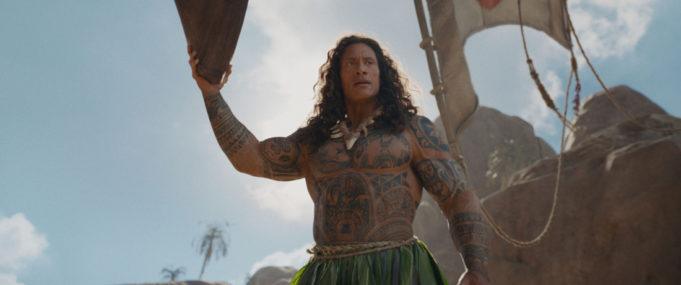
As May ushers in Asian American and Pacific Islander Heritage Month, the film industry reflects on the significant strides made in representation since the era of silent films. One notable example is Dwayne Johnson, a Pacific Islander, who has contributed to this positive trend with his role in Disney’s animated feature, Moana.
This month serves as an opportunity to explore the history of films that feature and are created by individuals from Asian and Pacific Islander communities, rather than focusing solely on Cinco de Mayo. Historically, Pacific Islander cultures have often been overlooked in these discussions. The U.S. annexation of Hawaii in 1893 predates the development of the film industry, but by the 1930s, the allure of Hawaii’s vibrant landscapes captured the interest of filmmakers and audiences alike. Unfortunately, this fascination frequently led to the oversimplified portrayal of native cultures, evident in films like Waikiki Wedding and Honolulu. This trend continued into later decades with productions such as Blue Hawaii and the film adaptation of South Pacific, which saw Black and Asian actors cast in stereotypical native roles. Thankfully, recent years have witnessed a transformation, with stars like Dwayne Johnson and Jason Momoa paving the way for more authentic representations, alongside Disney’s successful reimaginings of Lilo & Stitch and Moana.
Meanwhile, New Zealand has stepped in to bridge the gap for more isolated Pacific islands, producing films that authentically depict local cultures. The late filmmaker Lee Tamahori’s Once Were Warriors addressed pressing social issues such as substance abuse and domestic violence within the Māori community, offering a more nuanced narrative than his later Hollywood action films. Niki Caro’s Whale Rider, released in 2002, incorporated elements of Māori folklore, while Taika Waititi garnered international acclaim for his comedic works like What We Do in the Shadows and Hunt for the Wilderpeople, even integrating his cultural heritage into Thor: Ragnarok through the character Valkyrie, who is adorned with traditional facial tattoos.
Surprisingly, the presence of Asian-American actors can be traced back to the silent film era. Sessue Hayakawa made a name for himself as a captivating yet dangerous Japanese antagonist before World War II propelled his career further, as audiences sought actors to portray enemy officers. Concurrently, Anna May Wong became a fashion icon while navigating stereotypical roles during her time. The 1930s saw the rise of the Fu Manchu films, where various white actors depicted the villainous character, alongside the Charlie Chan series featuring actors like Warner Oland and Sidney Toler, who portrayed the detective that dispensed fortune-cookie wisdom.
As the decades progressed, more complex Asian characters emerged, particularly in the late 20th century, with filmmakers such as Ang Lee, Mira Nair, and Chloé Zhao, who honed their craft in America and subsequently created impactful films. Wayne Wang’s Chan Is Missing provided a modern twist on the Charlie Chan trope in 1982, while his adaptation of Amy Tan’s The Joy Luck Club a decade later introduced a broader audience to the experiences of Chinese-Americans in Northern California. These works opened the door for contemporary narratives surrounding immigrant experiences, exemplified by films like Crazy Rich Asians and the Oscar-winning Everything Everywhere All at Once.
However, the scope of Asian-American filmmaking extends beyond immigration narratives. Gregg Araki’s Teenage Apocalypse trilogy in the 1990s delved into themes of sexual fluidity among disenchanted youth; James Wan was instrumental in establishing the torture-porn horror genre with Saw; and M. Night Shyamalan navigated a fluctuating career in the horror genre. Conversely, Jon M. Chu has emerged as a leading figure in musical films, thanks to works like In the Heights and the anticipated Wicked adaptations, while part-Japanese director Destin Daniel Cretton smoothly transitioned from the indie drama Short Term 12 to the Marvel blockbuster Shang-Chi and the Legend of the Ten Rings.
Asian-American creators have also made significant contributions to animated films for younger audiences, with talents like Jennifer Yuh Nelson in the Kung Fu Panda series, Domee Shi in Turning Red, and Maggie Kang in KPop Demon Hunters. The increasing diversity in these films enriches the cinematic landscape, creating a more inclusive environment in theaters. Anna May Wong would undoubtedly have celebrated this progress.