








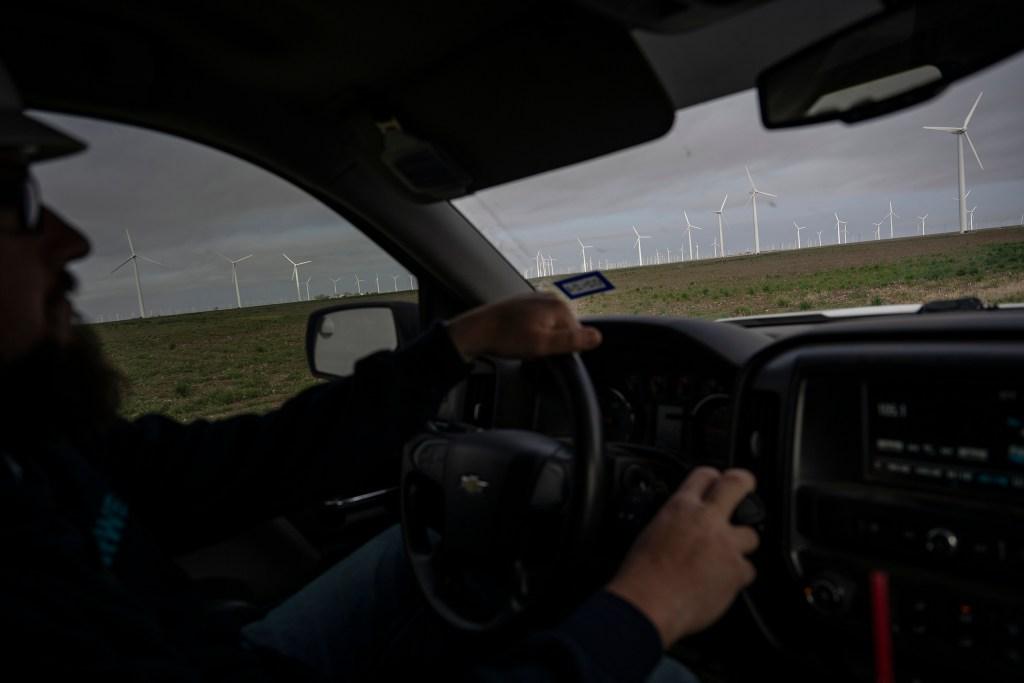
Numerous wind energy projects in Texas are facing significant delays following a decision by the U.S. Department of Defense to halt the issuance of federal permits, citing national security issues. This development is viewed by experts as a continuation of the previous administration’s efforts to challenge the expansion of wind energy.
Data from the American Clean Power Association indicates that 54 wind projects in Texas are currently awaiting review from the Department of Defense to ensure that the proposed wind turbines do not interfere with military operations. This situation is part of a larger national backlog affecting a total of 165 onshore wind projects, a statistic initially highlighted by the Financial Times.
Under federal regulations, any structure exceeding 200 feet in height—such as antennas, smokestacks, or wind turbines—must first receive approval from the Federal Aviation Administration (FAA) and then undergo scrutiny from the military to ascertain potential impacts on military airspace.
Although federal law mandates that the Department of Defense complete these reviews within 60 days of receiving an application from the FAA, the process has come to a standstill. Dave Belote, a consultant specializing in wind energy, noted that the entire system has effectively ground to a halt.
Traditionally, the Department of Defense assesses whether a turbine is within the radar line of sight or situated in low-altitude military airspace. If a project meets these criteria, the department and the project developers typically reach an agreement regarding mitigation measures, a process that usually takes only a few weeks.
However, the Department of Defense has not approved any wind projects since August 2025, and in April, it canceled all scheduled meetings with developers awaiting project clearances, according to industry sources.
These delays have significantly disrupted project timelines, affecting financing, local permits reliant on federal approvals, as well as construction schedules and turbine orders. Energy consultant Jonathon Blackburn remarked on the escalating costs associated with these permitting delays, suggesting that while the federal government may not outright halt projects, it can certainly prolong them.
A Department of Defense official stated that the department remains engaged in evaluating wind projects to ensure they do not compromise national security or military operations, a process that requires extensive interagency coordination.
The official acknowledged the inherent complexity and duration of the evaluation process, which involves balancing the development of energy resources with the necessity of maintaining military operations and readiness.
Concerns have been raised regarding the administration’s current policies, especially amidst an affordability crisis. University of Texas energy professor Michael Webber pointed out that these actions may reflect a broader disdain for renewable energy and wind power in particular.
Texas boasts the largest number of wind turbines in the nation and is home to various military installations. A report by the Texas A&M Natural Resources Institute identified 17 military bases with flight operations within the state, alongside extensive airspace allocated for military use. This includes several training routes for Air Force and Navy pilots from bases such as Laughlin Air Force Base, Naval Air Station Corpus Christi, Randolph Air Force Base, and Dyess Air Force Base.
This regulatory pause aligns with an ongoing effort by the current administration to curtail the growth of wind energy across the United States, particularly focusing on offshore projects. Last year, the administration suspended leases for five significant offshore projects on the East Coast due to national security concerns over radar interference. However, federal judges later ruled against these actions, determining that the government had overstepped its authority and failed to demonstrate any credible national security threats, allowing construction on all five projects to resume.
In March, the Interior Department reached an agreement with TotalEnergies, compensating the company $1 billion to withdraw from a planned offshore wind project in favor of increased fossil fuel investments. Similar arrangements were also negotiated with two other offshore developers who agreed to relinquish their federal leases in exchange for a combined $900 million payout from the federal government.