








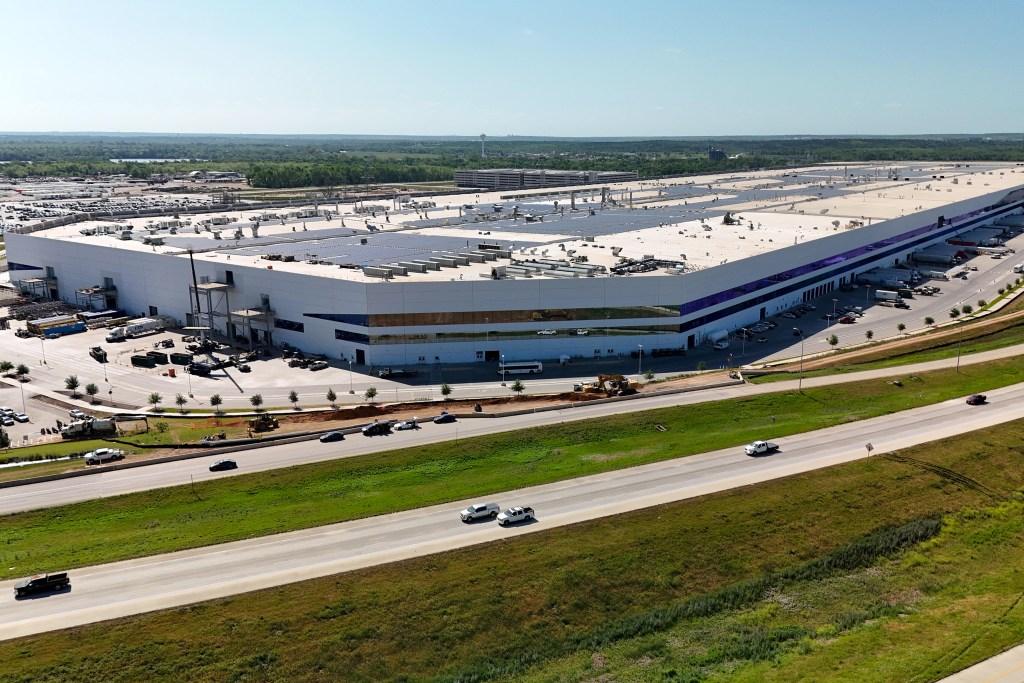
Tesla’s Giga Texas facility has significantly increased its annual treated water consumption, rising by over 200 million gallons in just two years. This surge in water use raises concerns about Austin’s capacity to maintain its long-term water conservation strategies, especially as Elon Musk unveils plans for a new semiconductor plant that is likely to further escalate demand.
From 2023 to 2025, Tesla’s treated water usage skyrocketed by approximately 68%, reaching 556 million gallons and now positioning the company as Austin Water’s third-largest customer, up from fifth in 2023. The rise in water consumption has intensified discussions about the application of water limits, as residents are encouraged to conserve while large industrial users expand their operations. In March, Musk announced Terafab, a proposed semiconductor fabrication facility estimated to cost between $20 and $25 billion, located near Giga Texas in eastern Travis County. Environmental advocates caution that this project could exacerbate the water scarcity issues in a region already grappling with drought, potentially conflicting with the city’s water management plans.
“It’s extremely alarming,” stated Paul DiFiore, an environmental attorney and member of Austin’s Water Forward task force. “All of a sudden, they’re using more water than the vast majority of people in the city.”
The Gigafactory’s construction commenced in the summer of 2020, facilitated by a tax rebate of $13.9 million from Travis County. Officially opened in April 2022, the facility quickly became one of the largest consumers of water in Austin.
Sarah Faust, another environmental attorney on the Water Forward Task Force, noted that Tesla received a service extension request from Austin Water, a process not requiring City Council endorsement. Austin Water clarified that it provides water only to a portion of the Gigafactory, as the property spans multiple utility service areas.
By fall of last year, the Gigafactory had produced 500,000 vehicles, a production process that inherently requires substantial water resources.
In 2018, the city began refining its long-term water resource strategy, known as “Water Forward.” The plan, updated in 2024, aims to strike a balance between water needs and challenges posed by climate change, severe droughts, and population growth.
Faust acknowledged that while the task force considers large commercial consumers, the rapid growth of new, major users raises valid concerns. She emphasized the importance of equitable conservation practices, questioning whether large industrial consumers face the same restrictions as ordinary residents.
“From a policy perspective, from a water planning perspective,” Faust remarked, “I hope [Austin Water] is utilizing [its tools] to the greatest degree to ensure that as much recycling and reuse is done and that appropriate limits are put on water used for commercial purposes.”
Austin Current sought clarification from Tesla regarding the reasons behind the increase in water usage, future demand expectations, and any conservation initiatives in place or planned. However, the company did not respond prior to publication, leaving critical inquiries unresolved.
Austin Water stated that it is mandated to supply water within its service area for any permitted development. Under the city’s Drought Contingency Plan, the utility may restrict or curtail water usage during emergency situations.
Keisuke Ikehata, a water treatment expert and associate professor of civil engineering at Texas State University, acknowledged the substantial increase in water usage from 2023 to 2025, which highlights the industrial demand in the region.
“We really need to be very careful in terms of planning how the industry grows and how our community grows,” Ikehata advised, “That is certainly a lot of water.”
However, Tesla’s current water consumption in Central Texas may merely be the beginning of a much larger demand trend. In March, Musk announced plans for Terafab at the old Seaholm Power Plant in Austin, as part of a collaboration between SpaceX, Tesla, and xAI. This facility is set to manufacture chips to support Musk’s extensive technology initiatives, which he declared as “the most epic chip-building exercise in history by far.”
Ikehata indicated that a typical North American semiconductor plant could consume between one to two million gallons of water daily, translating to approximately 350 to 700 million gallons annually, emphasizing the water-intensive nature of chip manufacturing.
Reports suggest that a portion of Terafab will be situated near the Gigafactory in eastern Travis County. However, Musk indicated in a post that Terafab would not fit entirely on that campus and would require “thousands of acres.” A Travis County commissioner noted that the court has only recently learned of the plans and has yet to receive any formal proposal, leaving essential details about water sourcing and infrastructure unresolved.
“It will be far bigger than everything else combined there,” Musk added.
If the facility meets expectations, Ikehata warned that it could necessitate several million additional gallons of water each day—potentially pushing annual demand into the billions. “They use a lot of water at their facilities,” he explained, noting that water is crucial for cleaning numerous components involved in manufacturing.
Ikehata recognized the ongoing challenge in Central Texas of balancing rapid industrial growth with limited water resources, an issue that becomes more pressing as large users expand.
“I’m very much supportive of economic growth,” he said. “I’m an engineer. I love development. But I want responsible development… Responsible water use is very important and has to be carefully evaluated. Stakeholders should be involved, and I’d like to see transparency.”
Austin City Council Member Ryan Alter echoed Ikehata’s concerns, acknowledging the potential economic benefits of bringing Terafab to Austin amid competition for significant industrial projects. “We want those jobs. We want the economic activity that comes along with that,” he stated. “But we also have to balance the environmental impacts.”
Alter emphasized that successful collaboration between the company and the city will be critical, particularly regarding water capacity and long-term supply issues. “I think water is the limiting factor of our city,” he noted, suggesting that large water users could mitigate their impact through reuse, infrastructure enhancements, or other strategies to alleviate pressure on the system.
“I think there are ways where we can work together so that everyone comes out ahead,” he concluded. “That’s hopefully the conversation we’re going to have.”