








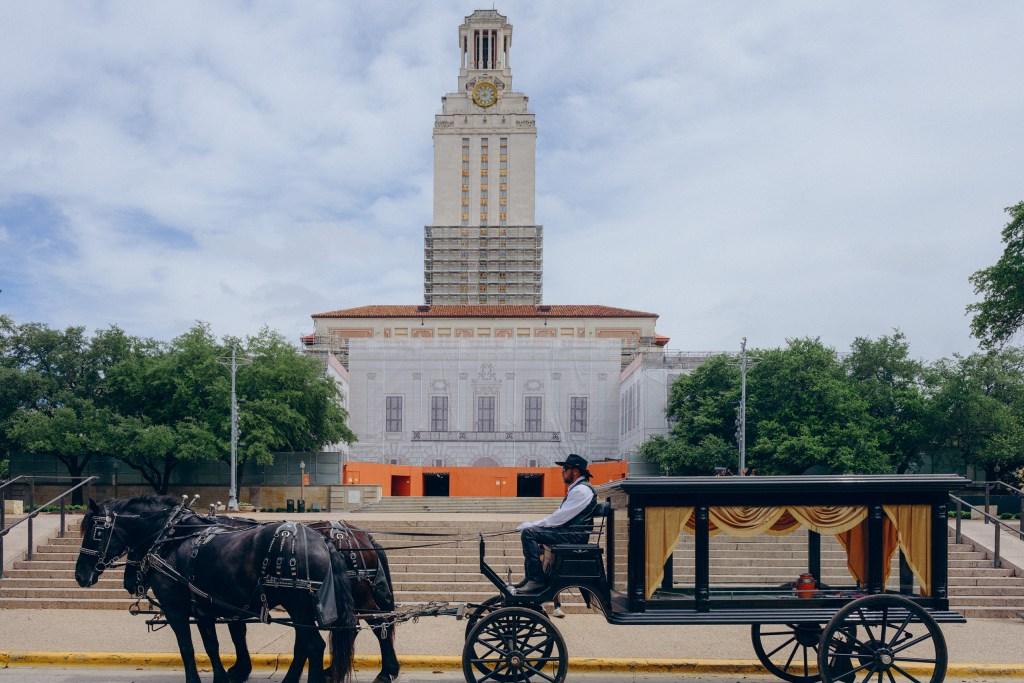
A horse-drawn hearse, accompanied by a Grim Reaper and mourners clad in black, paraded through downtown Austin on Wednesday, marking a mock funeral for academic freedom. This demonstration occurred just one day before the University of Texas System regents are poised to vote on a proposal that would grant campus presidents greater authority to eliminate college programs and faculty positions.
Critics argue that this proposal undermines existing protections at a time when Texas universities are already facing increasing political pressure regarding academic content. “I come bearing terrible news,” declared graduate student Cameron Samuels, addressing the crowd through a megaphone outside the system’s headquarters. “The University of Texas is dead. Yes, you heard that right.”
Samuels, who co-founded Students Engaged in Advancing Texas, lamented that the university and its commitment to academic freedom are suffering from “a death by a thousand cuts.” Currently, faculty members at UT System institutions participate in the review process for academic programs and job cuts. The new rule would place more power in the hands of administrators and would clarify that professors cannot appeal a president’s decisions regarding such matters.
The intention behind this change is to streamline procedures while still allowing for faculty input and due process, as outlined in UT System agenda documents. Following the commencement of meetings, several speakers urged the regents to reconsider or delay the consolidation of ethnic and gender studies programs. Board Chair Kevin Eltife defended the UT System’s trajectory, noting record enrollment numbers and substantial alumni support. “Whatever we’re doing, we’re not perfect, but we’re damn sure headed in the right direction,” Eltife stated. “We respectfully agree to disagree.”
Several UT institutions are currently merging programs related to race, ethnicity, and gender studies. In February, UT-Austin announced plans to consolidate multiple departments by September 2027, although faculty were later informed that the process would be completed by this fall. Similarly, the University of Texas at San Antonio plans to combine its bicultural-bilingual studies department with its race, ethnicity, gender, and sexuality studies department by September 1. Documentation obtained through public information requests cited declining enrollment and financial challenges as reasons for these moves.
Although teaching subjects related to race, gender, or sexuality is not prohibited by state or federal law, there has been increasing pressure from political leaders at both levels regarding these topics. Last year, for instance, former President Donald Trump and Texas Governor Greg Abbott issued executive orders recognizing only two sexes. UT-Austin was offered a compact under the Trump administration that would have prioritized federal grants for institutions that revised their campus policies, although UT-Austin chose not to participate.
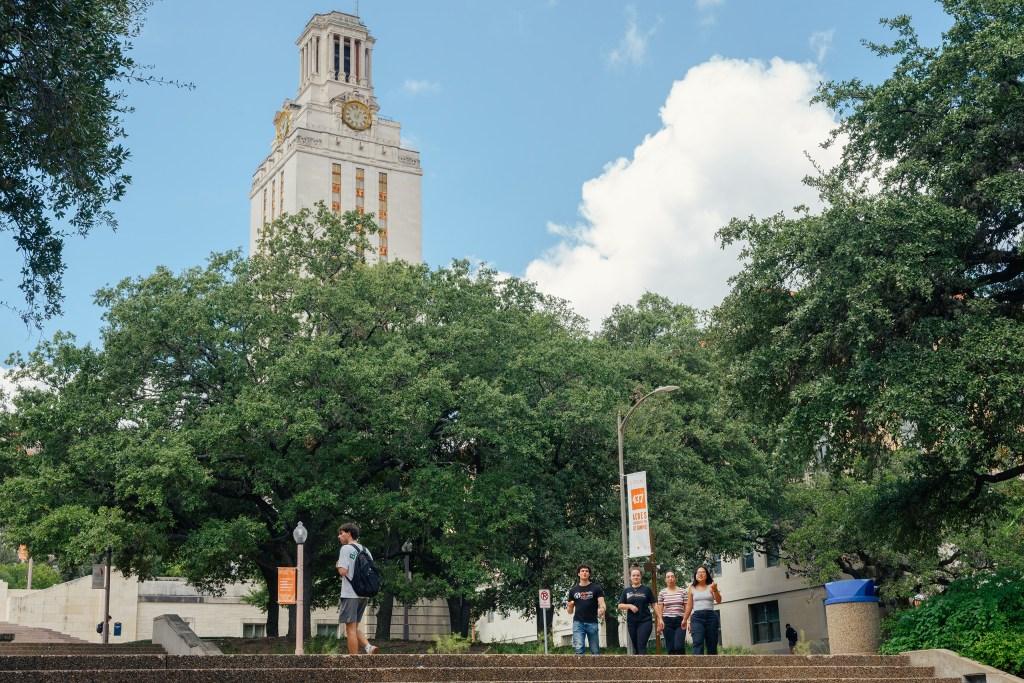
During the protest, students and faculty dressed in black marched nearly two miles from the UT Tower to the system headquarters, retracing a route tied to historical student protests following the dismissal of former UT-Austin President Homer Price Rainey in the 1940s over issues related to academic freedom. The funeral was organized by Students Engaged in Advancing Texas, a youth-led advocacy group that previously held a similar demonstration at a Texas Tech University System Board of Regents meeting on May 7. Another protest is planned for Thursday at the University of North Texas System regents meeting.
Samuels called on alumni and supporters to reconsider their donations until UT leaders take definitive actions to safeguard academic freedom and protect the rights of students and faculty. In a recent interview, Samuels mentioned that approximately 20 individuals had signed a pledge to withhold donations, totaling around $30,000, though not all specified an amount. This total does not include Pamela Ribon, a UT-Austin alumna with an endowed scholarship in the theatre and dance department, who confirmed she would not be adding to her endowment or contributing to the Annual Fund.
Ribon expressed her dismay in an email, stating, “This is heartbreaking to me.” Karma Chávez, chair of the Mexican American and Latina/o studies department at UT-Austin, is also affected by the proposed consolidations. She reflected on her initial optimism upon joining the university, contrasting it with the current climate, which she believes is increasingly hostile to faculty governance and academic freedom. “Though the UT we once knew is gone, we are its future, and we must fight for the future we want,” she asserted.
During public comments, Alicia Perez-Hodge, representing HABLA Hispanic Advocates and Business Leaders of Austin, emphasized that the regents’ decisions have ramifications for students across Texas. She lamented the lack of comprehensive historical education, recalling how she wished she had learned about figures like Simón Bolívar alongside George Washington, rather than being taught about Robert E. Lee, whom she labeled a traitor.
Under the current policy, tenured faculty in programs under review for closure are entitled to participate in a committee review process. The proposed changes would significantly shift this review power to administrators. The president would oversee the review process, determining the criteria, which could include financial factors and program alignment with the university’s mission. Although faculty can still submit input, the review panel would be predominantly composed of faculty members making recommendations to the provost.
The new proposal would limit the avenues for appeal, allowing faculty to contest decisions only when jobs are cut from an active program and only under specific circumstances. Additionally, the appeal window would be reduced from 30 days to 15 days. In urgent situations involving compliance with state or federal regulations, presidents could expedite program closures, although financial pressures alone would not suffice as justification for such actions.
Randa Safady, the UT System’s vice chancellor for external relations, addressed inquiries regarding the proposed changes, stating that they are part of an overall initiative to enhance efficiency within the system. She noted that the academic program elimination rule has not been updated in over two decades, which has led to the use of outdated language and definitions. Safady mentioned that drafts of rule changes are circulated to university presidents and faculty representatives for feedback, but she did not clarify whether the new rules would affect ongoing campus consolidations.