









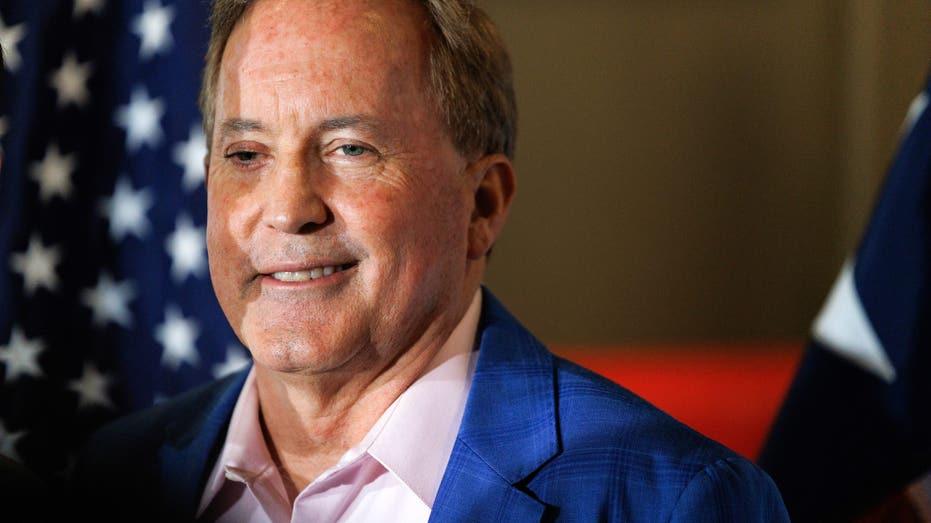
A federal judge has issued a ruling that halts a lawsuit brought forth by Texas Attorney General Ken Paxton against the Democratic fundraising platform ActBlue. Judge Richard Stearns determined that Paxton’s legal action was politically motivated and aimed at undermining the Senate campaign of James Talarico.
Paxton initiated an investigation into ActBlue, alleging that the platform permitted contributions from foreign individuals and from those who had already exceeded federal campaign donation limits. In response, ActBlue filed a lawsuit against Paxton in May, contending that his inquiry was driven by political bias. The attorney general’s office accused ActBlue of violating Texas’s deceptive trade practice laws by facilitating donations from individuals using false identities and untraceable payment methods.
Judge Stearns ruled in favor of ActBlue, highlighting that Paxton’s investigation remained inactive until February, coinciding with Talarico’s significant fundraising milestone—raising over $2.5 million in a single day after appearing on Stephen Colbert’s late-night program. A substantial portion of this money, approximately $2.2 million, was sourced from ActBlue.
During the time of the fundraising surge, both Paxton and Talarico were competing for their respective party nominations for the U.S. Senate seat currently occupied by Senator John Cornyn.
Judge Stearns noted the political implications of Paxton’s lawsuit, stating, “Paxton touted the lawsuit on several conservative podcasts and in his campaign emails during the following few days, linking it to ActBlue’s fundraising for liberal Democrats and to his Senate candidacy.”
In his ruling, Stearns expressed skepticism regarding the motivations behind Paxton’s lawsuit, which alleged that ActBlue was facilitating contributions from foreign donors and those who had already reached federal contribution limits. He remarked, “The truth is plain and captured in Paxton’s own declarations: The lawsuit was filed in retaliation for (and in an attempt to suppress) ActBlue’s efforts to fund Talarico’s campaign.”
Paxton’s scrutiny of ActBlue began in 2023, with his office later notifying the Federal Elections Commission of purported evidence indicating that “bad actors can illegally interfere in American elections by disguising political donations.” However, Stearns pointed out that the investigation did not gain momentum until Talarico’s fundraising report was submitted to the FEC on April 15, with Paxton subsequently filing his lawsuit just five days later.
Stearns further criticized Paxton’s track record of filing retaliatory lawsuits and noted his failure to act against similar issues related to the conservative fundraising platform WinRed. “The lawsuit in Texas is undoubtedly an adverse action,” Stearns stated. “The evidence in the record compels the conclusion that, far from protecting Texas consumers, the action was filed in retaliation for ActBlue’s fundraising on behalf of Talarico, Paxton’s current political rival for the Senate seat.”
In response to the ruling, ActBlue celebrated the decision as a victory for organizations that face similar targeting due to their missions. Lawrence Oliver, Chief Legal Officer at ActBlue, remarked, “This ruling affirms that political fundraising is core to free speech and protected by the First Amendment. The Texas Attorney General attempted to silence everyday Americans who want to donate to candidates and causes they believe in. The court clearly chose the Constitution over partisan politics.”
The ruling effectively prevents Paxton from pursuing his state lawsuit against ActBlue and bars any future litigation against the platform concerning similar allegations.