







Brandon Mulder is currently a journalism fellow at the University of Texas Energy Institute.
In 2022, Ty and Leslie Eggemeyer received a notice that would significantly impact the next four years of their lives. Their expansive 4,000-acre wildlife resort in Lampasas County, home to a range of animals from giraffes to wildebeests, lay in the path of a proposed pipeline project intended to connect the Permian Basin to the Gulf Coast.
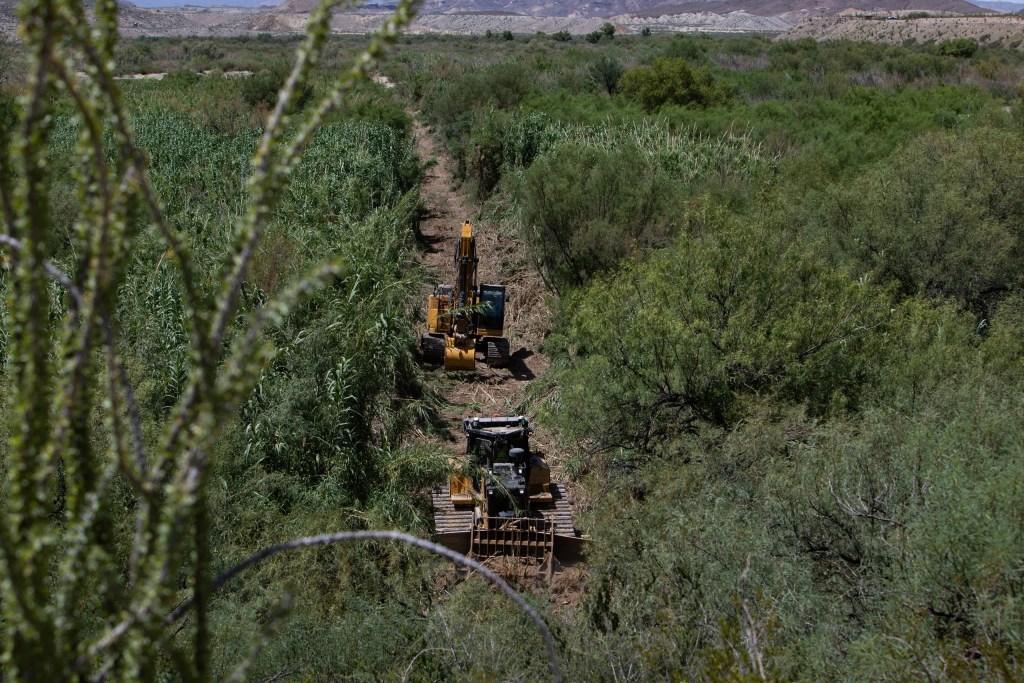
The Matterhorn Express, a pipeline entity predominantly owned by the Austin-based infrastructure company WhiteWater Midstream, aims to transport natural gas from the Permian Basin over a distance of 580 miles to the Houston area, employing eminent domain to traverse thousands of acres of private land.
On the Eggemeyer’s Artemis Ranch, the 42-inch pipeline would pass through a mere half-mile strip of their property. However, it would create an unsightly view near the ranch’s entrance, detracting from the aesthetic appeal for guests attending weddings, corporate retreats, and other events.
“We’ve been marketing our ranch as an eco-tourism destination. How does that align with a 42-inch gas pipeline running through the entrance?” Ty Eggemeyer expressed.
To compensate for the easement, Matterhorn proposed what it claimed was market value for the land, approximately $21,000. The Eggemeyers rejected this offer, leading to a prolonged legal battle that continued even as the pipeline was constructed.
In April, nearly two years after the pipeline became operational, the Eggemeyers listened in a crowded Lampasas County courtroom as a jury rendered its verdict. They were awarded around $7 million for the easement rights and property damages, a figure that was about 330 times greater than Matterhorn’s final offer.
“I had tears running down my face,” Eggemeyer recalled.
As Texas experiences a surge in pipeline projects aimed at transporting more natural gas from West Texas oil fields, tensions between landowners and pipeline companies over eminent domain are escalating. By 2029, several new gas pipeline projects are anticipated to be completed, with three set to finish construction this year. These initiatives are primarily driven by data centers requiring increased electric power generation and liquefied natural gas exporters aiming to meet the demands of a volatile global economy.
Texas landowners find themselves caught in the crossfire, facing the formidable power of the state’s eminent domain laws, which critics argue can infringe on property rights while offering minimal compensation.
In most instances, pipeline developers secure easements through voluntary negotiations with landowners, striving for “fair, mutually beneficial outcomes,” according to Thure Cannon, president of the Texas Pipeline Alliance.
However, when negotiations fail — as was the case with the Eggemeyers and Matterhorn — companies often resort to filing condemnation suits in state district courts, leading to protracted and costly legal battles.
“Over 80% or 90% of landowners negotiate an offer that’s only 10% or 20% more than the final written offer, thinking they’ve struck gold,” noted Chris Johns, an eminent domain attorney in Austin. “But in reality, they’ve been undercut and accepted a lowball offer.”
Neither Matterhorn nor its legal team has responded to requests for comment. On June 16, the company filed a motion seeking to overturn the jury’s verdict or request a new trial. The Texas Oil and Gas Association emphasized that developers respect private property rights while ensuring that pipeline infrastructure, crucial for both the Texas economy and global energy security, can be developed.
“As a global energy leader, Texas’s infrastructure supports not only our local economy but also provides stability for our allies abroad,” stated TXOGA President Todd Staples. “Enhancing our infrastructure network enables us to deliver reliable energy that assists our global partners in reducing dependency on energy from hostile regimes.”
Texas law grants eminent domain authority to private entities whose projects serve a public benefit, allowing developers to appropriate private property from landowners if they can demonstrate that their project offers a public good.
To meet this requirement, pipelines must qualify as common carriers, which are defined as those transporting products for third-party customers. The legislation also mandates that developers present a bona fide offer to landowners, based on property appraisals, and engage in good faith negotiations for a voluntary sale.
Should a landowner decline the offer, a developer has the option to file a condemnation suit, prompting the court to appoint a special commission of three impartial property owners from the same county to determine fair compensation. Although a landowner may still reject that amount and continue the legal struggle, the developer can take possession of the property once it deposits the commission’s suggested price into the court’s registry.
However, eminent domain attorneys argue that the requirement for a bona fide offer has been weakened by judicial rulings.
“The ‘bona fide offer’ is essentially a joke,” stated Jeff Mundy, an environmental law attorney based in Austin.
Experts cite a pivotal moment in 2004 when the Texas Supreme Court issued a ruling that altered the dynamics of good faith negotiations. Prior to this, landowners who resisted giving up their property had an incentive to prolong negotiations with developers, hoping for improved offers.
The 2004 case, Hubenak v. San Jacinto Gas Transmission Co., aimed to curtail that strategy. The court decided that any monetary amount proposed by a pipeline firm qualifies as a bona fide offer, leaving the courts with no authority to assess the reasonableness of the proposal.
“Before the Hubenak case, there was a perception that offers had to pass a subjective good faith test, considering what others received to determine the land’s true value,” explained Chris Kulander, an oil and gas attorney and senior lecturer at the University of Texas School of Law. “That requirement is no longer necessary.”
The ruling “aided pipeline companies in expediting these condemnation actions,” he added.
Just three months after the Eggemeyers first received the condemnation notice, Matterhorn secured a temporary restraining order permitting them to survey the land. Within two months of that, the company presented an initial offer of approximately $38,000 for the half-mile easement, followed by the final offer of $21,000, both of which the Eggemeyers rejected.
“I find it astonishing that the state of Texas considers a $21,000 offer to be bona fide,” Eggemeyer remarked.
Prior to the jury trial, Matterhorn made a final offer to the landowners of $3 million to settle the condemnation suit, along with permission for the company to install a second pipeline through their property.
With rising global demand for Texas natural gas, the company has plans for a second, even larger pipeline, known as the Eiger Express, which is expected to begin operations in 2028.
The Eggemeyers opted to reject that pre-trial offer, choosing to gamble on the jury’s decision. However, this marked their first indication that the company intended to build a second pipeline through their ranch.
In regions where the hills of Central Texas transition into the expansive plains to the west, Babette Taylor and her family have been involved in farming and ranching for six generations. However, the past 45 years have transformed Taylor into an authority on Texas’ eminent domain laws and the phenomenon known as the pipeline corridor effect.
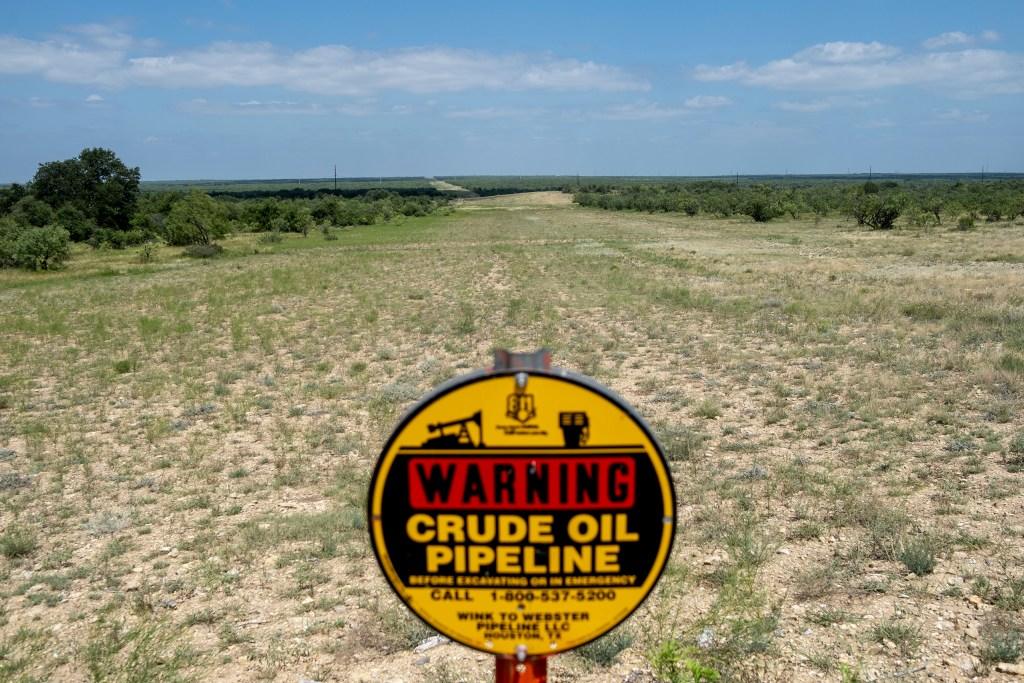
Located just east of the Permian Basin, Taylor’s ranch in McCulloch County is characterized by a long stretch of cleared land that extends as far as the eye can see. Beneath this surface lies a network of four pipelines transporting oil and gas to the Gulf Coast.
Taylor’s first encounter with the pipeline industry occurred in 1981 when she recalls her parents negotiating easement terms at their dining table with a landman from a Houston-based company. Within two years, a natural gas pipeline was operational through their ranch, connecting the Permian Basin to processing plants east of Houston.
That same company approached them again ten years later with another pipeline proposal, and then again in 2015 and 2019. Over four decades, the flourishing Permian Basin has turned Taylor’s ranch into a pipeline corridor.
“Once these easement agreements are signed, they remain in effect indefinitely. You cannot renegotiate,” Taylor noted. “The land is permanently burdened by those pipelines.”
With each new project, compensation for landowners diminishes, as the value of the property is perceived to be less impacted by subsequent pipelines.
“We always advise our landowner clients to secure substantial compensation on the first pipeline, because any subsequent projects may not yield equal compensation,” Johns explained.
For Taylor, any form of upfront lump-sum compensation leaves landowners at a