







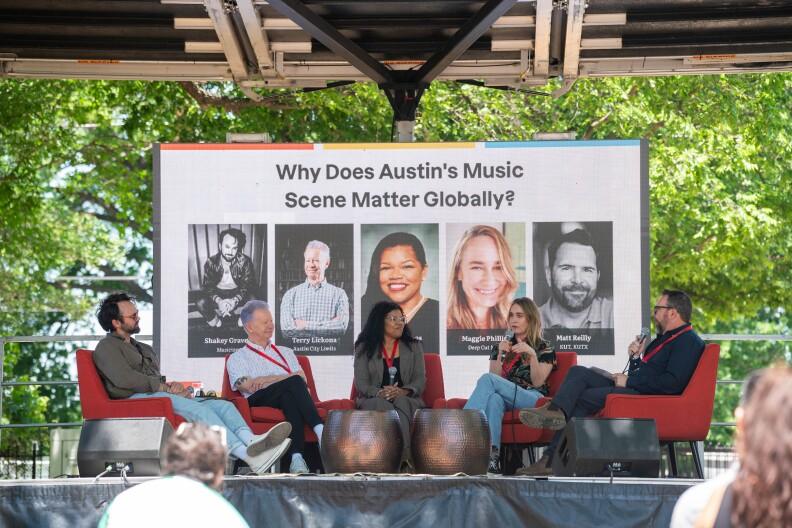
The KUT Festival recently took place, uniting the Austin community through music and engaging discussions about the city’s vibrant culture. The event highlighted the challenges and transformations within Austin’s music scene, particularly as local leaders reassess the concept of ‘selling out’ amid the necessity for business support in an evolving industry.
Over six decades after Willie Nelson famously united diverse groups at the Armadillo World Headquarters, Austin continues to wield significant influence over the global music landscape. During a panel discussion at the inaugural KUT Festival, Maggie Phillips, a music supervisor for Deep Cut Music, noted that Austin’s geographical and economic isolation from major music hubs in New York, Los Angeles, and Nashville contributes to its unique creative environment.
“We don’t have the business influencing bands as much as we do on the coasts,” Phillips explained. “As a result, the art and music produced here prioritize creativity over commercial pressures, embodying a DIY, punk ethos.”
As the city faces rising costs and demographic shifts, local leaders and industry figures are increasingly focused on ensuring Austin remains an inviting space for musicians. Alejandro Rose-Garcia, known as Shakey Graves, commented on the city’s ongoing identity crisis, reflecting on the broader struggles within the arts. “In my youth, ‘selling out’ was a principle worth defending. Today, however, musicians must adapt; they can’t just focus on music anymore but must also become self-promoters.”
Angela Means, director of the newly established Arts, Culture, Music, and Entertainment Department, emphasized the importance of preserving Austin’s rich artistic history while addressing the realities of sustaining a career in the arts. She envisions the city as a facilitator, helping artists connect with the influx of new businesses and industries relocating to Austin.
Creating an environment conducive to creativity requires robust support systems for artists, along with collaboration among various stakeholders eager to make Austin their home. Despite concerns about corporate influence in the arts, panelists acknowledged the necessity for financial backing to keep music alive in the city. Terry Lickona, longtime executive producer of Austin City Limits, proposed potential partnerships that could benefit the music scene without undermining its integrity.
“I wouldn’t object if a successful local tech startup wanted to contribute to the music community by sponsoring a stage, as long as it respects the creative legacy of the venue,” Lickona said.
Means reiterated the city’s awareness of the challenges posed by corporate partnerships in creative spaces, yet she believes such collaborations are essential for safeguarding the unique attributes of Austin’s music culture. “How do we navigate this balance? Is there a viable model for Austin? It will certainly require meaningful cooperation with the business community to ensure sustainability.”