








Austin’s punk scene is once again in the spotlight with the release of a new documentary titled You Can Color Outside the Lines: The Story of the Big Boys, which pays homage to the influential artist and musician Tim Kerr. A founding member of the iconic skate punk band the Big Boys, Kerr exemplifies a unique blend of artistic expression that spans music, surfing, skateboarding, and visual art.
The film, which debuted recently in Austin, chronicles the extraordinary journey of the Big Boys, who carved out a distinctive niche in a music scene that rapidly began to replicate itself. While initial screenings have sold out, the documentary is poised to gain wider attention in the near future.
Despite facing health challenges due to melanoma that has necessitated chemotherapy and ongoing care, Kerr remains undeterred. He expresses that playing music brings him joy, stating, “It doesn’t hurt when I play.” Currently, he performs with the group Up Around the Sun, an instrumental acoustic ensemble that features banjo player Jerry Hagins and various collaborators. Since their formation in 2013, they have released five albums and cultivated a dedicated following.
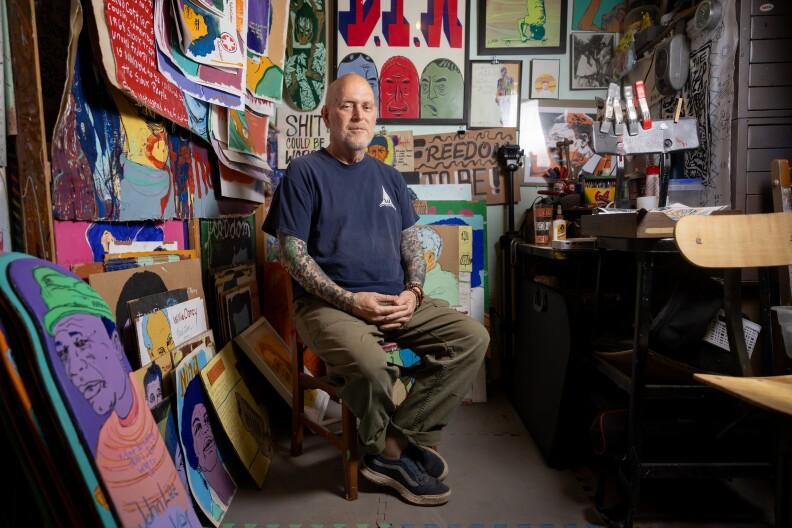
In a vibrant art studio located behind the home he shares with his wife, Beth, Kerr has created thousands of paintings over the past four decades. The couple has lived in their Hyde Park residence since 1983, a site that has become a sanctuary for creativity and a hub for musicians within the punk community. The house has hosted numerous artists, contributing significantly to the punk scene’s longevity in the area.
Reflecting on their home’s role in the community, Kerr reminisces, “We were everyone’s favorite aunt and uncle.” He recalls one particularly bustling South by Southwest festival where they accommodated 32 guests and set up tents in the backyard.
Kerr, born in 1956, was already immersed in the surfing and skating culture by the time the Ramones released their groundbreaking album. This background enabled him to infuse a variety of influences into his music, distinguishing him from many of his younger punk contemporaries. The Big Boys, formed in late 1979, fused their skate-inspired funk with raw punk rock, creating a compelling visual aesthetic that celebrated both skating and individuality. Their late frontman, Randy “Biscuit” Turner, was a trailblazer in the scene, proudly embracing his identity as a large, openly gay man during a time when such representation was scarce.
Kerr emphasizes the importance of the intersection of skating, visual art, and personal identity in the Big Boys’ ethos. “With us,” he explains, “you have to have skating, you have to have [visual] art in there, and Biscuit was gay. Those three aspects are just as important as the band itself.”
Despite the Big Boys disbanding in 1984, Kerr continued to evolve as an artist and musician, remaining active in various bands while persisting in his passion for skating and creating art. He believes that his journey exemplifies a broader message: that anyone can engage in self-expression, regardless of their medium or background. This philosophy is encapsulated in the messages found on many of his album covers: “Your Name Here” and “What Are You Doing to Participate?”
The documentary has been a decade in the making. Directed by Joe Salinas, a Texas City native and seasoned filmmaker, it reflects his deep-rooted appreciation for the Big Boys. Salinas, who has been involved in punk music himself, connected with Kerr in the 2000s, leading to the decision to document the band’s story in 2014.
<p“Tim and Beth are the nicest humans I’ve ever met,” Salinas remarks, praising Kerr’s approach to life and art as one of kindness and selflessness. He emphasizes that creating art throughout one’s life is not only possible but rewarding.
However, Kerr notes that the art world differs significantly from the punk underground, where collaboration and sharing of resources is the norm. “In punk,” he explains, “everybody shared all the contacts. In the art world, everybody holds those cards really close.” Nevertheless, Kerr’s dedication to his craft continues to bear fruit, as he champions the belief that all artistic endeavors contribute to a greater expression. This philosophy encourages experimentation and the freedom to create without fear of failure.
Ultimately, Kerr’s journey invites others to reflect on their own paths of expression. “What are you doing to participate?” he challenges, underscoring the enduring spirit of creativity that defines both his life and the punk legacy of the Big Boys.