







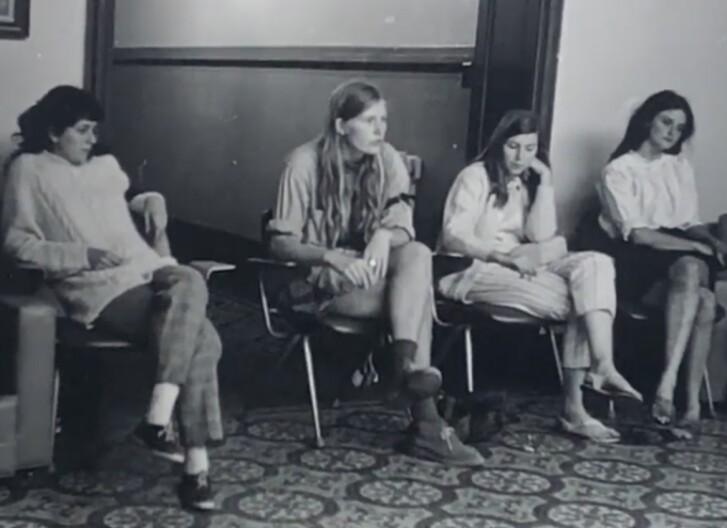
A group of students from the University of Texas at Austin laid the groundwork for a significant shift in reproductive rights in 1969, when they began directing women to reliable sources of contraception and safe abortion services. This initiative, led by student Judy Smith, started informally with gatherings at her home to discuss the challenges women faced, unknowingly sowing the seeds for the historic Roe v. Wade Supreme Court ruling that legalized abortion.
The narrative is captured in Karen Stirgwolt’s short documentary, Lone Star Three, which focuses on Smith alongside fellow UT undergraduates Victoria Foe and Barbara Hines. Together, they established an underground network that facilitated access to abortions for women in need.
The Women’s Fund at the Austin Community Foundation is set to screen this 2025 documentary at the Millenium in East Austin on Tuesday.
Reflecting on their early efforts, Hines recalls, “We didn’t have an agenda. It was just 10 to 15 women talking about things, topics that women had never talked about before.” As their discussions evolved, the group recognized that access to birth control was essential for empowering women. They opened a birth control information center on campus, operating from a cramped space they constructed within the offices of The Rag, an underground student newspaper.
At that time, obtaining a prescription for birth control was challenging for unmarried women. Smith, Foe, and Hines stepped in to connect women with trusted healthcare providers.
However, the trio soon encountered women who were pregnant and “desperate not to be,” according to Foe. They learned of dangerous self-managed abortions and took action by forging a partnership with a doctor in Mexico who agreed to discreetly treat their clients. On occasion, group members even provided transportation to the clinic.
Fully aware of the legal risks involved—abortion was illegal in Texas—they sought guidance from one of the few female attorneys in Austin at the time, Sarah Weddington. The experiences of Smith, Foe, and Hines motivated Weddington to take on the case of Norma McCorvey, known by the alias “Jane Roe.”
“It was their efforts that really got me involved with the issue and really did directly lead to Roe v. Wade,” Weddington notes in the documentary.
Writer and co-producer Wendy Richardson became interested in the story while exploring how Weddington—a young female lawyer from Texas—came to represent the case in Roe v. Wade. Upon discovering Weddington’s ties to the UT students, she felt compelled to tell their story.
“This is a truly Austin story,” Richardson stated. “Everyone I asked, no one knew about them. No one knew how Roe originated or the fact that it was in Austin. It just seemed like we uncovered kind of this treasure of women’s history.”
The project gained further relevance for Richardson after the Supreme Court’s decision to overturn Roe in 2022, a sentiment echoed by Hines.
“I hope [viewers] take away that young people are capable of many things and are very fearless, and that social change is a long-term struggle,” said Hines, who later became an immigration rights attorney. “I’m hoping that the younger generation will continue to keep this really important issue alive.”
Following the film screening on Tuesday, Hines and Richardson will participate in a panel discussion. The event is scheduled to take place from 6:30 to 8:30 p.m.