








Officials from Immigration and Customs Enforcement (ICE) have confirmed that the death of a 55-year-old Cuban man at a detention center in El Paso was attributed to the staff’s “spontaneous use of force” aimed at preventing the individual from causing harm to himself. This revelation comes after an initial report last month indicated that the man had succumbed to “medical distress.”
This update follows a ruling by the local medical examiner, who classified the death of Geraldo Lunas Campos as a homicide—the first such designation for an ICE detainee’s death involving staff in over 15 years. The autopsy revealed that Lunas Campos became unresponsive while being physically restrained, ultimately dying from asphyxia due to pressure on his neck and chest.
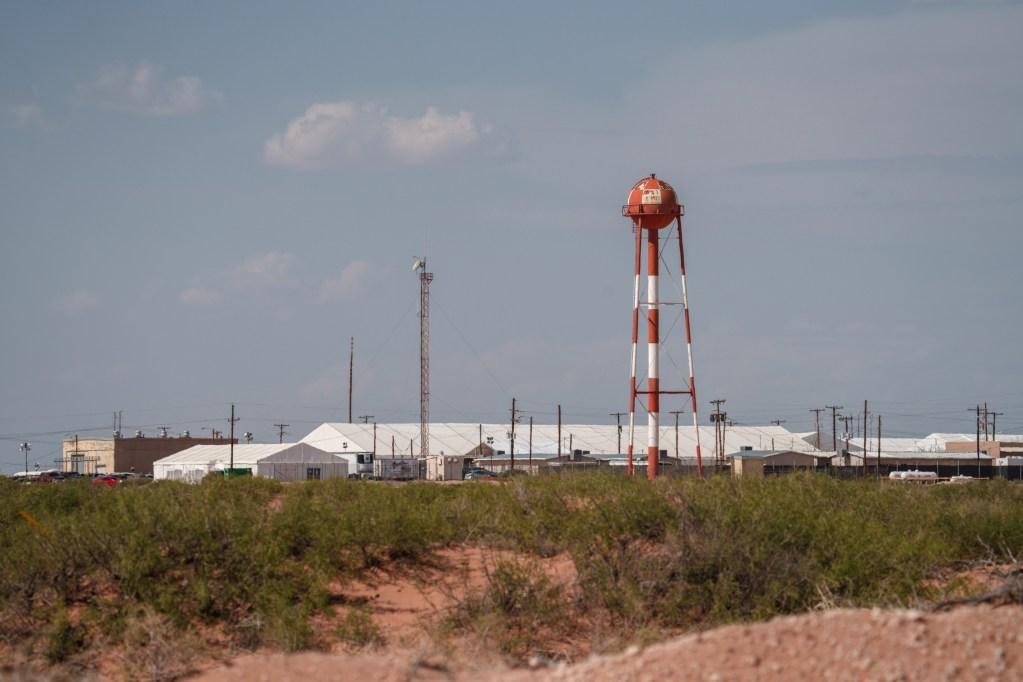
ICE’s recent report detailed Lunas Campos’ complex medical and mental health background, which included previous treatments for tuberculosis, depression, anxiety, and asthma, as well as a history of suicide attempts and long-term psychotropic medication use. While detained at Camp East Montana on the Fort Bliss U.S. Army base, he reportedly underwent regular medical evaluations, during which staff noted significant psychological distress, including incidents of self-harm and placements on suicide watch.
Six detainees from El Paso provided statements in federal court last month, recounting that Lunas Campos, a father of three who had lived in the United States for nearly two decades prior to his arrest last year, pleaded for days for his asthma medication. According to their testimonies, detention staff not only denied his requests but also threatened him with solitary confinement.
On January 3, ICE reported that Lunas Campos “attempted self-harm,” which triggered a swift response from custody and medical personnel. However, attempts to de-escalate the situation reportedly failed, and he was pronounced dead at 10:16 PM.
This new determination contrasts sharply with ICE’s earlier statement, which cited “medical distress” as the cause of death. The agency only adjusted its narrative after the medical examiner informed Lunas Campos’ family of the potential homicide ruling.
A spokesperson for the Department of Homeland Security, who remained unnamed, defended the report, asserting that Lunas Campos “violently resisted the security staff” and continued to attempt self-harm. The spokesperson claimed that during the struggle, Campos “stopped breathing and lost consciousness,” and while medical staff was called immediately, resuscitation efforts were unsuccessful.
The spokesperson emphasized that the investigation into Lunas Campos’ death is ongoing and stated, “This is the best healthcare that many aliens have received in their entire lives,” concluding with a remark on the treatment of undocumented immigrants in the U.S.
Federal prosecutors have not yet responded to inquiries regarding whether ICE’s findings might lead to criminal charges. Experts suggest that local prosecutors may have grounds to pursue such actions, despite the incident occurring on military property, which is under federal control.
U.S. Representative Veronica Escobar, a Democrat from El Paso who has visited the Fort Bliss facility multiple times, believes local authorities should hold individuals accountable, particularly as the staff involved may not be ICE employees but rather contractors. She noted that these contractors do not possess the same legal immunity as official law enforcement personnel.
Andra Litton, a special projects administrator at the El Paso District Attorney’s office, indicated that the office is currently assessing its jurisdiction to investigate potential charges, a determination that relies on the facility’s physical location rather than the roles of the employees involved.
The Camp East Montana facility was constructed rapidly last summer, following a $1.2 billion contract awarded to Acquisition Logistics, a Virginia-based company lacking prior experience with detention operations. Since its inception, the facility has faced numerous challenges.
In a troubling trend, three individuals have died at the camp within just six weeks, beginning with the death of 48-year-old Francisco Gaspar-Andres on December 3, who reportedly succumbed to liver and kidney failure. Following Lunas Campos’ death, 36-year-old Victor Manuel Diaz also died under circumstances that prompted ICE to transfer him to a U.S. Army hospital rather than the local medical examiner, raising further questions regarding the handling of autopsies.
Reports indicate that the East Montana facility lacked a clear policy on the use of force by contractors, and staff received only 40 hours of training, significantly less than the 42 days typically mandated for regular ICE agents.
Acquisition Logistics and its contractors responsible for detention and medical care did not immediately respond to inquiries following the incident.
The federal government sought to deport six detainees who witnessed the final moments of Lunas Campos’ life, despite their history of prior convictions. A federal judge intervened, halting their removal until they could provide testimony to lawyers pursuing a civil suit related to the case.
Witnesses have described a harrowing scene, detailing how Lunas Campos was dragged away in shackles after pleading for his asthma medication. They recalled sounds of him being forcefully handled, followed by his cries of inability to breathe, culminating in a chilling silence.
Experts have noted that deaths in ICE custody often stem from inadequate medical care or suicides; however, fatalities resulting from staff violence are deemed preventable and indicative of systemic failures in training and oversight.